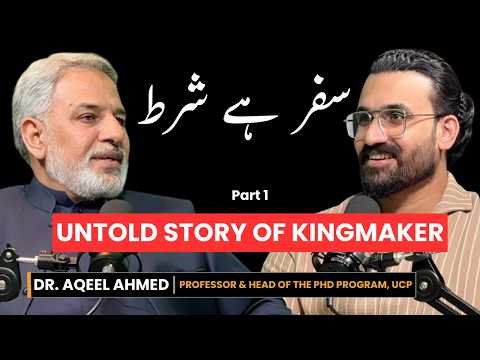
Khawar Shahzad sits down with Moeez Haider, an Assistant Transportation Officer in Pakistan Railways, to ask what CSS really is — and what happens after you clear it. Moeez cleared the exam in 2022, after three years of preparation, and talks about the journey honestly: the rote-learning system he had to unlearn, the stress that never leaves you until allocation, and why he believes self-belief matters more than any academy.
The conversation then turns to Pakistan Railways itself — why an institution the British built in 1861, once among Asia's strongest railway systems, declined so far. Moeez points to the Benazir incident, in which almost 250 to 260 coaches were burnt, myopic policy makers, and a department that was never a priority in any political agenda. He explains why railways can never be profit-making, why freight is the real backbone, and why 1,300 to 1,400 condemned bogies are still standing across Pakistan.
The episode closes with practical advice for aspirants — written practice over reading, why English carries 60 to 90 percent of the result, and why Dawn is the wrong newspaper to start with — and with Moeez's own definition of success: a widow's benevolent fund file, signed without delay, and the smile of a labourer whose problem got solved.
Moeez Haider is an Assistant Transportation Officer (ATO), grade 17, in Pakistan Railways. He cleared the CSS exam in 2022 — around 18,000 candidates appeared, about 390 passed, and 220 to 230 were finally allocated — and kept Pakistan Railways sixth on his preference list.
He was born and raised in Lahore, did his matric from Model School, and graduated in medicine from Fatima Jinnah Medical College. Both his parents were government servants, and their dream was that their children join the civil service.
This transcript was generated automatically with speech-to-text and lightly edited, so some words may be wrong, and passages that could not be made out are marked [unclear]. The first tab shows what is spoken in the video: Urdu written in Roman Urdu, with English kept as spoken. The English tab is a translation of the same transcript. The video is the authoritative version.
0:00 Railway tabaah ho gayi hai. The biggest dent, the incident of Benazir, was the biggest dent to Pakistan. Us se almost 250 to 260 coaches jal gayi thi, us se hi abhi tak railway recover nahin kar paaya. Jis tarah se attention deni chahiye thi government ki taraf se, woh is ko nahin mili. There were myopic policy makers, jinhon ne railway ko bahut zyada dent kiya. This is a big myth, ke transport kabhi bhi aap ko profit making ke liye nahin hoti, woh hamesha subsidise hone ke liye hoti hai, woh hamesha subsidise hone ke liye hoti hai, jitna revenue bhi nahin ho, na, woh zyada tar depend karta hai freight pe, proper spirit mein to phir fertiliser, aapke phosphate hain,
0:40 Yeh to rahe hain, yeh cheezein hain jo railway ko kama ke deti hain, thodi si ek hope hai, CPEC phase 2 aur aapka ML-1 implement ho jaata hai proper spirit mein, to phir inshallah railway mein behtari ka chance hai. Kya cheezein ho sakti hain, jin mein aapki difficult se difficult hoti ja rahi hai? CSS final tips and tricks from yourself. Assalam-o-alaikum everyone, welcome to Muffled Minds, Find Your Clarity. I'm your host, Khawar. Viewers, hum sab ne kabhi na kabhi competitive exams ka suna hoga. Pakistan mein CSS ka jo naam hai, woh ek respect se liya jaata hai. CSS, yaani Central Superior Services, yeh Pakistan ka top prestigious aur competitive exam hai, jise Federal Public Service Commission karti hai har saal. Jo ise clear karta hai, use Pakistan ke top administrator aur leadership roles, jo hain, woh provide kiye jaate hain.
1:38 CSS ka real safar jo hai, woh kaisa hota hai, aur us ke baad public service mein aap ko success kaise milti hai? Aaj ke episode mein hum in cheezon ke around jo hai, woh discussion karenge. And for that reason, we have someone who has done CSS and serving currently in Pakistan Railways. Please welcome Moeez Haider. Assalam-o-alaikum Moeez, kaise hain aap? Wa alaikum assalam, thank you so much for having me, Khawar. Thank you so much for giving us some time. And we have some signature questions for you. What are you, according to you? And where are you from? What are you, this is a very difficult question. Let's start from Lahore. Meri paidaish Lahore mein hui.
2:19 I was born and raised in Lahore. Matric mera, maine kiya tha Model School se. Us ke baad wahi jo hota hai, jab aap karte ho FSc, us ke baad aap ko kehte hain, ji medical karna hai, bio rakhni hai, engineering karni hai. Engineering waali side ka kabhi bhi mujhe shauq nahin tha, kyunki maths mujhe kabhi pasand nahin raha, to maine phir bio prefer ki. Us ke baad maine apni graduation ki, medical mein, Fatima Jinnah Medical College se, to then phir mera mind tha, woh CSS ki taraf tha, graduation ke darmiyaan hi mera mind ho gaya tha is taraf, kyunki mere jo parents the, donon, my father aur mother, donon jo the, woh government servant the.
2:56 To is hawaale se jo government servant hote hain, to un ki sab se badi khwahish hi hoti hai ke abhi jo un ka dream hota hai, na, service ka, wohi hota hai ke un ki aulaad CSS kar le. To mere se meri do badi behnein hain, to unhon ne un par bhi try ki, lekin un ke different paths the, ek lecturer rahi hai, ek doctor rahi hai, phir mera turn tha ke main CSS karoon, to bas un ka ek dream tha jo pursue karna tha, to is hawaale se phir yeh mera ek chhota sa journey tha. To is hawaale se, ya matlab, aap ki decision bhi thi, aapka bhi thoda sa interest tha, aisa aisa, kyunki zaahir hai, ek age ke baad hi aap kuchh aage badhte hain, to phir aap aage cheezon ko dekhte hain, ke kya service ki nature hai, aur is ke kya pros aur cons hain,
3:35 To jab aap woh evaluate karne lagte hain, to phir, what was the biggest challenge, like, while preparing for the CSS? The biggest challenge is that your preparation is a big challenge in itself, yahi hoti hai jo aapne poora jo ratta waala system hota hai, jo hamare education ka hai, woh bilkul aap ko khatam karna padta hai, aur aap ko approach ko jaldi pick kar leta hai, kisi ko time lagta hai, to yeh ek challenge tha, mere liye, mujhe lagta hai ke yeh, chhe papers ke attempt karne tak, yeh jo cheezein thi, nahin, yeh ek bada challenge hota hai aapke liye.
4:33 Mainne suna, kai logon ke to poori ke poori jawaani is mein guzar jaati hai, like attempts dene mein, saalon lag jaate hain, kai log 3-4 months pe clear kar lete hain. Achha, yeh jo log 3-4 maheene mein clear karte hain, is mein bhi peechhe koi na koi journey, background journey hoti hai, koi matlab un ka exposure, is tarah ka mila hota hai, jo woh, like, graduation se hi un ka mind hota hai CSS karna hai, un ki family mein koi, is tarah ka bureaucrat hota hai, un ke father ya koi bhi, to un logon ke liye teen-chaar maheene mein karna possible hai, lekin ek layman ke liye, ke jis ka koi family background nahin hai, jis ki graduation mein bhi jis ko ek exposure nahin hai, us ke liye teen-chaar maheene mein karna mushkil hai, unless bahut bada koi, wajah ho.
5:12 Aa raha, aa raha, aa raha, jis tarah bhi aap bata rahe hain, like koi family mein, jinhon ne already CSS kiya hua hai, to why, believe, time to time, un ki chalti rehti hogi, and then un ka mindset, again, just like ISSB ki agar baat karein, us mein bhi, father jo hai woh already army mein hain, matlab ek woh army mein hai, is wajah se hai, but yeh ke bachpan se le ke un ka mindset, un ka sochna, theek hai, bachon ki bachpan se un ki built ho rahi hoti hai, bachon ke jab attempt karte hain, CSS ki, woh clear kar jaate hain, to yahaan bhi believe same hi hai, bilkul aisa, donon mein hi hai,
5:49 To agar hum thoda sa exams waali baat karein, to like, is it worth it, mainne suna ke out of hundred, two, jo candidates hain, woh select hota hai, aisa hi hai? Achha, worth it to dekhein, subjective opinion hoti hai, har kisi ki, kuchh log kar ke bhi chhod dete hain, theek hai, mere mind mein abhi bhi examples aa rahe hain, kuchh actors ban gaye, haan, exactly, kuchh to yeh depend karta hai ke aap life se kya chaah rahe hain, worth it ki jahaan tak baat hai, to mujhe lagta hai bada subjective ek yeh matter hai, har kisi ka apna ek personal opinion is ke upar, kuchh log kar ke chhod jaate hain, aur kuchh jo na is ko pursue karte hain, un ka poora is ko career is mein banaate hain, lifelong career,
6:31 To hai, to agar aap mere se poochhein, to mujhe to lagta hai worth it hai, Pakistan jaise country mein agar aap rehte hain, to mujhe nahin lagta CSS se behtar aur achhi option hai aapke paas serve karne ke liye, unless ke aap koi, aapka apna business hai aur achha paise kama rahe hain, phir to aap altogether ek alag league mein hain, Pakistan mein, lekin agar aap ek thoda mediocre family se, background se belong karte hain, ya thoda sa ek achhi respectable social recognition bhi chaah rahe hain, respectable earning bhi chaah rahe hain, to woh CSS aap ko yeh saari cheezein provide karta hai. Subscribe, is ki detail mein hum thode der baat karenge, like mindset kya hota hai, jo CSS karne ja raha hai, hum thoda sa preparation waali side pe agar hum aate hain, to yeh competitive, is ko most, keh lein ke
7:17 Competitive exams kyun kaha jaata hai CSS ko? Achha, is ke liye main aap ko apne time ke example deta hoon, ke mainne clear kiya tha 2022 mein, 22 mein, is mein 3 years rahe, haan, exactly, to meri allocation jo hui thi, basically, to mere saath takreeban, jab mainne papers diye the, almost 18,000 bachay the, jo exam mein appear hue the, aur un mein se 390 something pass hote hain, aur 390 mein se 220, 230 hote hain, jo final allocation hoti hai in ki, aur is mein se Punjab, jo hai na, Punjab mein, agar aap hamara wahi kaha jaata hai, ke Punjab mein agar aap,
7:59 Musalmaan hain, to aapke liye waisi, jo hai na, competition bahut zyada mushkil ho jaata hai. Punjab mein hota hai quota system hai, aap ko pata ho, kyunki FPSC hai, poore us ne chaaro provinces ko le kar chalna hai, to Punjab mein 50 to 60 percent bachay aise hote hain, jo CSS pass bhi kar lete hain, matlab baara ke baara exams pass kar lete hain, lekin un ko allocation nahin milti, un ko seat nahin milti, Punjab ke, Punjab mein yeh zyada hai, aur provinces mein hai, lekin bahut kam ratio hai, ek do hote hain, is se zyada nahin hote hain, KP mein hote hain, ek do, I believe Sindh mein to koi bhi nahin hota, saare pass ho jaate hain, allocate bhi ho jaate hain. Punjab mein ek bahut bada dilemma hai, ke itna, bachay, dekhiye na, agar aap baara papers pass kar lete hain, itni taiyaari ke saath, aur aapne interview bhi diya hai,
8:41 To aap apne mind mein officer to ban gaye hain na, haan, aapke ghar waale bhi aapko officer samajhne lag jaate hain, phir woh ek bada setback hai, agar aap ko pata lage ke aap jo hai na, aap ko setback mili, aur ab aapne zero se dobara start karna agle attempt ke liye. To yeh ek competition hai, yahaan par, phir woh worth it waali bhi baat aati hai, ke aap un se poochhenge, un ke upar kya guzarti hai, ke jo itna time lagaate hain, aur woh phir nahin pass ho paate hain. Sorry for cutting out, like mainne ISSB bhi diya tha, and I got, obviously, not recommended waala, reason to nahin batate hain woh, us mein, khair, to us mein agar allocation nahin hoti hai aap ki, na, to I believe aap ke paas six months ya one year ka ek time hota hai,
9:20 Us ke darmiyaan mein agar koi seat available hoti hai, to aap ki allocation, jo hai na, woh ho jaati hai. To yahaan pe bhi waisa scene hai? Nahin, yahaan par aisa koi scene nahin, yahaan par agar aap ki allocation nahin ho ek baar, to aap ko altogether, woh stage se dobara start karna padega, aap ko dobara appear hona padega, aur aap ki attempt bhi woh consume ho jayegi, kyunki aap ko, agar attempts ki baat karein, to kitni attempts hoti hain? Teen attempts hoti hain, aur 30 years aap ki age limit hoti hai, 30 years tak 3 attempts, aap kar lo to kar lo, otherwise, thoda, hum attempts ki baat karein, ke humne bhi suna hua hai different logon se, ke like CSS without coaching, jo hai, woh nahin kar sakte hain, to aapka kya opinion hai, aapne, like, coaching, jo hai, woh rakhi thi ya nahin rakhi thi, kya opinion hai aapka? Achha,
10:04 Is mein yeh hota hai ke jis tarah bhi humne pehle baat ki, na, ke agar to aap ki family mein koi bureaucrat hai, jisne CSS kiya hai, to phir to, I believe, aap ko coaching ki is tarah ki zaroorat nahin hoti, kyunki aap ko woh grooming ghar se hi mil jaati hai, woh saara path, woh aap ko bachpan se ek set hua hota hai, aap ko subjects ke mutalliq pata hota hai, aap ko yeh basic jo information hai, CSS, woh aap ko already aapke paas hoti hai, lekin agar aap ek aise ghar se aa rahe hain, jaisa ke main tha, meri family mein, sach, koi first cousins mein se bureaucrat nahin tha, to wahaan par phir aap ko ek coaching, ek academy ki zaroorat is liye hoti hai, kyunki aap ko pathway mil jaata hai, ke aapne kya subjects karne hain, aapne preparation kis tarah karni hai, kyunki ek bada dilemma hota hai, ke pehle din
10:42 Jab aap, FPSC kya karta hai, FPSC apni website de deta hai, baara ke baara subjects ka, ab aap kya karte hain, woh saari books, taake Urdu Bazaar jaate hain pehle din, aur woh saari kitaabein le aate hain, mainne bhi yeh kiya tha, aur mainne jis se poocha hai, un sab ne yeh kiya tha, ab us mein se aadhi se zyada kitaabein, jo hain, woh abhi tak untouched padi hain, woh aap padhte bhi nahin. To is hawaale se academy ka faida yeh hota hai, ke academy jo hai, aap ko ek path bana ke de deti hai, aur aap ko ek outline, achhi, deti hai, us ke andar. To agar hum thoda sa is ko relate karein, stress or mental health se, during study, obviously aap logon se sun rahe hote ho, ke yaar mainne itna cover kar liya hai, jo ke again, university, colleges mein aapke saath same scenario, jo hai,
11:22 For example, aapke saath hota hai, to is ko kaise cope kiya jaye, yahi stress ko, ke yaar, achha, mainne preparation karni hai, main satisfied, main khud kaise satisfied hoon, baaki to chalo jo bhi hai, to woh aapne us ko kaise manage kiya? Achha, CSS mein aisa hota hai ke stress to bahut zyada hai, aur till the date of your exam, ya aap ki allocation tak, in the end, aap ko stress ek continuous rehta hai, theek hai? Baad waala jo stress hai, woh us ke baad mein hai, lekin pehle waale stress ko hum discuss karte hain. Achha, CSS mein, I believe, kabhi bhi aap ko isolation mein reh ke nahin karna chahiye, hamesha group study ko is mein prefer kiya jaata hai, kyunki jab aap saare ikatthe baithte hain, teen-chaar, doosre se taiyaari karte hain, ek doosre ke ideas hote hain, kyunki main aap ko apni approach banane ke liye, na,
12:13 Teen-chaar logon ka saath baithna, discuss karna us topic ko, bada zaroori hota hai, multiple opinions generate hoti hain, wahaan se aap, jo hai na, aap ki ek achhi analysis, aapka built hota hai, aur stress to phir aapka, jo hai na, woh aapke exam ke din tak chalta hai. Achha, mera yeh tha ke jab main taiyaari kar raha tha, to mujhe ek hamare senior bureaucrat hain, meri family mein, mere taaya lagte hain, to unhon ne mujhe yeh kaha ke CSS, na, beta, agar aap is ko divide karo, na, teen parts mein divide kar lein, to apni life mein, unhon ne kaha, aapka jo 50% hota, na, woh aap ki luck hoti hai, unhon ne kaha, aur jo 25% hota hai, woh aap ki preparation hai,
12:50 Aur jo 25% hai, woh us din jo aap deliver karke aate hain, woh hai, jo aap exam mein, to yeh 25%, us stress se bahut zyada deal karta hai, jo bhi aap baat kar rahe the, na, ke woh end tak aapka stress chalta hai, to is mein nerves ka bahut zyada game hai. Ab aapne kaha ke aap hota hai yeh, na, ke aap, let's say, do bande taiyaari kar rahe hain, ek, ek, yaar mainne to aise ka itna padh liya, mainne current affairs itna padh liya, aap kahenge, yaar mujhe to kuchh bhi nahin aata, yeh to bahut aage mere se nikal gaya hua hai, to yahaan par aapne aap ko samjhana hai, apne upar believe rakhna hai, apni cheezon ke upar, ke aapne upar self-belief, jo hai na, is poore journey mein bada important hai, apne aap ko motivate rakhein, khud, to I believe ke aap,
13:28 Jo hai na, woh behtar hota hai aapke liye. To aap ko kitne time laga tha, preparation ki agar baat karein? Achha, mera, main 2021 mein graduate hua tha, to us ke baad hi mera mind tha ke mainne CSS karna hai, to main September mein graduate hua, October mein mainne taiyaari shuru kar di. Ab pehli attempt mein banda thoda sa immature attempt hoti hai, pehli waali jo hoti hai, to us mein jab mainne attempt di, to mera essay pass ho gaya, jo ek bada mushkil ek hurdle hota hai, essay pass karna, aur mera precis ka paper, doosra, English ka doosra, woh fail ho gaya, 37 pe, matlab baaki saare papers pass the, ek paper fail hua, teen number se, to wahaan teen maheene ki preparation se, na, to wahaan mujhe idea hua ke agar main ek attempt mein teen maheene padh ke taiyaari kar sakta hoon, to kyun
14:13 Na main is ko ek baar dobara chance doon? To tab se mainne jo apna, thaana, jab woh result aaya, us din se le ke, woh phir mainne sahi taiyaari ki, aur woh, I believe, ke to paanch maheene bante hain, to pehle ke teen maheene aap daal dein, aur aage ke paanch maheene, to pehle ke aath maheene, jo, saana, mere regular study, CSS ki, yeh bhi achhi cheez hai, lagi ke aapne socha, ke yaar agar 3-4 months ki preparation se main yeh clear kar sakta hoon, to agar main thoda ho time doon, to then main baaki cheezein bhi clear, sahi. Chaliye, let's just say ke aapne jo hai woh pass kar liya, theek hai? And obviously, socha woh kaisi, woh, jar nahin hai, like interview mein kya judge kiya jaata hai, kyunki again,
14:51 Main IT se belong karta hoon, to I believe jo interview, jo interviews hain, na, woh bahut overrated bhi hai, bahut, matlab, underrated bhi hai. Interview ek aisi cheez hai, aapne beshak saal laga ke preparation ki hai, agar us 15-20 minute ke, event ke, one-on-one conversation hai, interviewer ke saath, us mein aap deliver nahin kar sakte hain, to phir, woh kaisa, yeh to obviously bahut stressful ek bahut, process hai, to woh aapka kya experience tha, aur actual mein interview mein judge kya kiya jaata hai? Basically hi hota hai ke jab aap CSS pass karte hain, to aapka ek medical hota hai,
15:28 Aur jis tarah aapne bataya, ISSB type, usi tarah ka psychological bhi hota hai, ke mainne khud do baar ISSB diya, to us ke jo ISSB hota, na, same, ISSB ka jo psychological hai, yeh bhi usi pattern ka hota hai, is mein aapka jo psychologist hota, na, woh ek report bana ke interviewer ko deta hai, jo aapke jaane se pehle wahaan pe us ke paas padi hoti hai, sahi. Ab kuchh logon ke case mein woh report bahut matter karti hai, aur kuchh logon ke case mein woh report bilkul bhi matter nahin karti, yeh ab wholly or solely depend karta hai interview ke panel pe, ke woh us ko kitna weightage deta hai. Interview basically aapka chaar dimensions mein hota hai, CSS ka interview hota hai, ek to woh hota hai aap ki personal life ke mutalliq, jo aap ki personal education hai, in saari cheezein, aapka brought up jo hai, saara,
16:12 Is se related aapse interview mein questions kiye jaenge. Second, aapse jo poocha jaata hai, woh aapke subjects se related poocha jaata hai, jo aapne CSS mein subjects rakhe hote hain, yeh aapke compulsory subjects hote hain, aapke optional hain, is se related aapke questions kiye jaate hain. Third, aapse current affairs, aur yeh saari cheezein, jo hai na, is par aap ki opinion li jaati hai, ke aap kitne, aap ko opinion strong hai, aur aap, matlab, ke aap bipolar to nahin hain, is tarah ke aap ko opinion to nahin hai, extremist koi ideas to nahin hain aapke, yeh saari cheezein wahaan pe gauge ki jaati hain. Agar aap sarkaar mein naukri karne ke liye aaye hain, na, to agar aap sarkaar ko wahan pe, to chauthi cheez jo hai aap ki, woh aapke aap CSS karna kyun chahte hain, theek hai, aur CSS karne ke baad aapke kya, jo hai na, decision making hogi, yeh cheez wahan bahut gauge ki jaati hai,
17:00 Aap ki analytical abilities, aap ki decision making, yeh teen-chaar cheezein hain, jo interview ka panel aap ko is mein lazmi gauge karta hai, kyunki is se pehle aapka ek command task ho raha hota hai, aapka ek, woh saare, jis tarah ISSB mein hota hai, to us mein aap ki saari cheezein, kahin na, woh evaluate ki ja rahi hoti hain. To ek achha story teller jo hai, woh kya woh clear kar sakta hai, interview round jo hai? Well, ab story sunani hai, na, lekin obviously aapka confidence hai, ab story kya suna rahe ho, koi cheez, aap apne aap ko bech rahe ho, bilkul hai, bahut achha interview clear kar sakta hai, jo ek achha story teller hai, jis ko pata hai ke usne apne aap ko kaise present karna hai, usne apni story, apna narrative kaise doosre ko batana hai, yeh bhi ek art hai, na, dekhiye.
17:41 Indeed, yeh to phir ek art hai, jo industry mein hai, to is wajah se mujhe to lagta hai ke, achha, ho, mainne dekha bhi hai, jo achhe story teller hote hain, achhi baat kar sakte hain. Pichhle dinon main ek podcast dekh raha tha, us mein woh bata rahe the, ke aaj kal jo highest paying jobs, woh story teller ke hain, ke let's just say ek company hai, woh story teller ko millions, jo hai na, woh pay karke hire karti hai, kis wajah se hire karti hai, ke un ki jo product hai, woh obviously kisi ne buyer, for example, to us ko bechna hai, usne kaise hain, salesman to theek hain, but usne kitni achhi story us ko sunaai hai, ke woh agla convince ho gaya, usne bech diya, to story telling is an art, aaj kal, is an art, is an art. To achha, chalein, ab aapne clear kar liya, to jise
18:30 Achha, interview ke baad kya process hota hai, final step hota hai, interview ke baad phir aap ki allocation aati hai, aapke, aapke jo trainings, aapke training hoti hai, is mein sab se pehle aap ko group allot hota hai, woh matter karta hai aapke numbers par aur aap ki preference par, 12 groups hote hain, CSS ke, to is mein aap jab interview dene jaate hain, to aap un 12 groups ko rate karte hain, 1 to 12, preference ke hisaab se, apne khud karte hain, to us mein aapke groups hain, aage jaake discuss karenge in ko, to phir us ke aap ki preferences aur aapke numbers, yeh dono cheezein match hoti hain, aur phir aapke group allot hota hai, aap apne priorities, jo hai, un ka batayein, first, second, first, second, kitni bata sakte hain waise? 12, 12 ko aapne rakhna hota hai, apne according,
19:17 And then based on marks, preferences, aur phir aapke wahaan pe, woh group allot hota hai, aur us ke baad phir aap ki training shuru hoti hai. Training mein aap ki ek common training hoti hai aur ek specialised training hoti hai, woh six to eight month training chalti hai, us ke baad phir special training hoti hai, us mein saare jo groups hain, saare jo officers hain, jo respective group ke hain, woh apne specialised training karte hain wahaan par, apne idaron mein, institutions par. Aur you chose Pakistan Railways, aur yeh aap ki kaun si choice thi? Yeh mainne Pakistan Railways sixth par apni preference par rakha hua tha. To pehle par kaun si thi aap ki? Pehle par DMG hota hai ji, Pakistan Service hoti hai, second par Police Service hota hai, is tarah saare rate karte hain, three aur four tak, to saare jo hain na, yahi teen-chaar groups,
20:13 Saath hain. Us ke baad phir aap ki preferences aur personal choice hai, woh bahut zyada matter karti hai, ke aap life se kya chaah rahe hain, aur aap kya seek kar rahe hain, to phir aap ki group ki preference aur us ki allocation par depend karta hai, unhon ne decide kar liya ke based on marks aur aap ki preferences jo hai, aur aapke paas koi option hota ke aap do months ya ek month kuchh select kar sakein, do teen months, aapne bas ek baar jo preferences de di hain, use to aap ko group allot ho jayega, sabhi, sabhi, sabhi. Achha, thoda sa railway side par, since you are working there, railway set up, I believe we are listening to the railway, railway will be stopped, we are listening to the railway, first it was good, the first, ab, when was it? In the 90s, 80s, when did it happen?
20:58 Obviously we didn't see it, we only heard that it was good. So if you explain it, when was it? I didn't see it, but it was good, jahaan tak mainne suna hai, aur ab jab main khud railways mein hoon, to mainne jo infrastructure aur jo saari cheezein dekhi hain, kyunki woh jo coaches wahan pe jali thi na, jo station jale the, I believe agar exact mujhe number yaad ho, almost, almost 250-260 coaches thi jo jal gayi thi jab yeh saare protest hue the Sindh mein, interior Sindh mein, to woh coaches se hi abhi tak railway recover nahin kar paaya, us loss se.
21:50 To aap yeh dekhein ke kitna bada loss tha, ek achha, is ko hum thoda sa, jo hai woh, is ka background, jo hum dekhein, to yeh British ke time se, ja na, yeh unhon ne set up kiya tha, railways ka poora woh system, jo hai, to yeh kaun sa year hoga, 1861 se yeh, to us ke baad, like 90s, tab jis tarah aap bata rahe hain, to us ke baad, jis tarah ek incident to aapne bataya, us ke ilaawa kya reason hai is ke drawback ki? Achha, yeh to incident, just ek bade ek scenario mein, picture ki ek kadi hai, na, jo main bhi samajhta hoon, is mein multiple cheezein, to sab se pehle, aap ki state ki priority, woh railway nahin raha kabhi bhi, jo ke hona chahiye tha, lekin us tarah se jo attention deni chahiye thi government ki taraf se, woh is ko nahin mili.
22:35 Kuchh myopic policy makers, jinhon ne railway ko bahut zyada dent kiya. Kuchh internal factors hain, India ke itne achhe ho gaye the, lekin aap ne us tarah se un ke saath pace up nahin kar paaya, to woh yeh multiple factors hain, koi ek factor nahin hai, aur phir jo dekhein, jo infrastructure structure railways ka hai, jo track British bicha ke gaye hain, hum woh hi nahin sambhaal pa rahe hain, naya bichaana door ki baat, woh hi balke band ho rahe hain, ulta, woh track, woh jo saare tracks hain, woh band hona shuru ho gaye hain, bajaye is ke ke hum ab tak naye tracks bicha chuke hote, hum se wahi waale jo track hain na, wahi revive nahin ho raha hai. Hum agar revenue ki baat karein, to ab yeh jo revenue waala sector hai, yeh aap ko achha khaasa hai, revenue jo hai,
23:18 Woh generate karke deta hai, woh kabhi bhi aap ko profit making ke liye nahin hoti, woh hamesha subsidise hone ke liye hoti hai, ab aap dekhein, aap Lahore mein metro train chal rahi hai, hamare peechhe se bhi guzregi, theek hai, Orange Line hai, ab aap kabhi yeh dekhein, aap kama ke de rahi hai? Metro train itna kama ke de rahi hai aapko? Nahin,
23:56 Woh bani hi is purpose ke liye hai ke subsidise karein. Same it is railways, jo aapka woh subsidise karne ke liye bana hai. Kya agar aap, main aap ko exact figures quote kar paaoon ya ek example se is ko samjha paaoon, to agar ek train yahaan se Karachi ja rahi hai, let's say 1200 passengers ko lekar, theek hai, us mein economy class ke passengers bhi hain, us mein business class ke bhi hain, to bada unlikely hai ke woh apna fuel ki cost na, woh hi poori kar paaye, woh ek tarah se loss mein hi, jo hai na, woh run hogi. Ab aap question yeh banta hai ke railway phir kama kaise raha hai? Commodity railway ke liye transport hoti hai, jis mein coal hai, woh ek bahut major commodity hai, aapka fertiliser hai, aapke phosphate hain, yeh to aap ki saari industry mein, aap ki saari factories mein use ho rahe hain,
24:49 Yeh cheezein hain jo railway ko kama ke deti hain, yeh jo hai na, yeh hamara jo freight ka sector hai, woh asal railway ki backbone hai, passenger to just facilitation ke liye hain. Achha, agar thoda sa hum is ko doosri country se compare karein, to kya infrastructure hamara aur un ka, obviously same, pehle to British jab inhonne banaya, tab to same hi tha na, to wahan bhi wahi infrastructure hoga, yahaan bhi wahi hoga, to kya comparison is ka, aap kya samajhte hain?
25:30 Achha, is mein, jis tarah aapne pehle kaha, na, ke comparison nahin banta, pehli baat mainne aap ko yahi karni thi, yoon kar dekhein, aap IT ke student hain, aap IT ke expert hain, ab agar main aapse yeh kahoon ke IT mein India-Pakistan ka comparison, to aap kahenge kahin bhi nahin hai. Same it is railway mein bhi, bahut badi un ki economy hai aur bahut bada un ka chunk hai population ka, jo railway ke through travel karta hai, hum do, us ke half and half bhi nahin hain. Haan, yeh baat hai ke infrastructure wahan bhi angrez ne banaya, yahaan bhi angrez ne banaya, to kyun unhonne apna itna behtar kar liya aur hamara abhi tak us tarah se behtar nahin hua? Yeh sawaal ka jawaab main already bhi thodi der pehle jo aap ko bata chuka hoon, ke policy makers ki taraf se jo ek aapka neglect tha towards this department, woh bahut zyada raha.
26:12 Zyada raha, is liye bhi yeh department jo hai na, hamesha se neglected raha, na, as such ke kisi ne is ko itna prioritize kiya nahin, apni priority list mein ya apne agenda mein, political agenda mein kabhi aapne suna hoga, sab ne yeh kaha hoga ke hum sadkein banayenge, kabhi political agenda mein kisi ne yeh nahin kaha ke hum train chalayenge, ya hum track bichhayenge, to yahi aap ko ek bahut badi example hai, yeh samajhne ke liye, ke aap ki policy makers ke dimaag mein nahin raha. Lekin agar public transport ki hum baat karein, to ek bahut bada chunk jo hai, woh yahaan se travel karta hai. Matlab abhi aap off the camera ek number jo hai, woh quote kar rahe the, agar aap us ko thoda sa explain kar dein, like, for example, itne log jo hain, woh travel karte hain, is mein ek simple si, hum us mein samajh lete hain,
27:00 Ke let's say ek train hai, woh Lahore se chalti hai towards Karachi, ab train mein at least das se baara bogiyan hongi, ek train mein, jo minimum bhi chalengi, ab har bogi mein agar aap 100 passengers bhi daalein, to aapke almost 1000 passengers, woh ek train par travel karte hain, aur agar aap yahi laga lein ke Lahore se aap 20 trains bhi chalayein, to passengers, rahein, se, aur is ke double Karachi mein aayein, to aap yeh dekhein ke kitni badi ek population ka ek chunk hai, agar aap un population ke hisaab se, apne size ke hisaab se baat karni hai, na, us se, to kitna jo hai ek population ka bada chunk is ka beneficiary hai, is department ka.
27:43 Lekin us tarah se is par kaam nahin ho pa raha, kyunki mainne aap ko bataya ke policy makers ka aur kuchh department ki apni kutahiyan thi, kuchh apne andar ke jo the, badi myopic policy thi, aur aap keh lein ke bade us tarah se public-private partnership nahin ki gayi, us tarah se department ko focus nahin kiya gaya. Self-focus to tha, woh hamesha zyada raha, kuchh officers ka ya kuchh department logon ka. Abhi koi policy waghera jo hai, woh ban rahi hai is ke around, is ke infrastructure ko behtar karne ke liye, ab to kaafi zyada, jo hai na, policy, policy shift aaya hai towards, ek jo policy hai, aap keh lein, jo ek plan hai, woh CPEC phase 2 ke naam se, us mein ML-1 ka project hai, ab basically is ko Asian Development Bank ne take over kiya hai, aur,
28:31 I wish ke woh poori tarah se implement ho jaye, jis tarah se true letter and spirit mein hona chahiye, woh hota hai, to phir woh ek railway ko, jo hai na, ek boom, aur ek jo basically rejuvenation ka ek jo process tha, na, railway ka, woh ek thodi si ek hope hai, ke yeh CPEC phase 2 aur aapka ML-1, yeh agar to apni, aap keh lein, ke implement ho jaata hai, proper spirit mein, to phir inshallah railway mein behtari ka chance hai. Aur jaise ke abhi aapne dekha hoga ke nayi trains chal rahi hain, naye rakes chal rahe hain, to woh ek jo hai na, wahi hai. Mere mind mein, na, start se, main Gujranwala se belong karta hoon,
29:08 To wahan pe bhi, na, jo jo bogi jis ki ab baat karein, to dump karne ka jo kya process hai, ke maine ek arse tak dekha, bogiyan jo hain na, woh padi hoti hain track pe, theek hai, log us mein se, jo nashai keh lein ya woh keh lein, loha nikaal ke bech rahe hain, theek hai, woh usi tarah hi wahan pe padi hain, jung lag raha hai, to kya dump karne ka yahi process hai, ke ya us ko jo hai, woh kisi aur way mein utilise karna, maybe us jo law hai, us ka us ko utilise kiya ja sake? Achha, yeh ek bada important question hai. Aur achha bhi hai, is hawaale se ke mujhe bhi bade logon ne yeh sawaal poocha, ke hum jaate hain Lahore, to wahan pe tah-e-nigah, jo hai na, mein bogiyan khadi nazar aati hain. Achha, woh kehte hote hain, loha,
29:55 Mitti ban jaata hai, loha mitti mein tabdeel ho jaata hai. Yeh main apni aankhon se Lahore ke railway station pe hote hue dekha hai. Aadhi bogi jo hai, woh lohe ki khadi hui hai aur aadhi mitti ban gayi hui hai. Bogiyon ke darmiyaan se darakht nikal rahe hain. Yeh jo hamare paas stock hai, yeh woh stock hai jo waise to running position mein is qaabil nahin hai ke woh track ke saath lag sake ya train ke saath jo hai, apne running position mein aa sake. Ab yahaan par yeh waali baat hai ke hamare paas koi aisa mechanism nahin hai ke hum is ko properly dispose off kar sakein. Hona yeh chahiye hai ke hum is ko mould karein, is ko factory mein bhejein, aur is ka koi aur product bana ke, ya isi ko jo hai na, hum keh lein, refurb karke dobara trains ke saath attach karne hain, lekin,
30:40 Itni sophisticated technology nahin hai, ek to hamare paas ho raha hai, to some extent, lekin abhi main recent agar figure quote kar paaoon, to almost hamare paas 1300 to 1400, all over Pakistan, aisi bogiyan hain jo condemned khadi hain. To is hawaale se policy makers ka, ab achha, yeh is mein yeh hai na, ke ab hona yeh chahiye ke aap un ko, ya, is ke liye scrap ke through un ko sell out kar dein. Ab us mein yeh hota hai ke har koi decision lene se thoda sa hesitate karta hai, ke hum yeh decision lein, kal ko, aap ko pata hai, NAB peechhe aa jaye, ke ji aapne is ko kam rate par kyun becha, zyada rate par kyun nahin becha, yeh is rate hai, ke aap ko pata hai, woh to rate to fluctuate hota rehta hai, to is hawaale se phir multiple is mein, jo hai na, aapke stakeholders involved hain.
31:31 Jahaan jitne zyada stakeholders ho, wahan pe ek decision utna hi zyada, jo hai woh, tough ho jaata hai. Par again, end mein aap ko profit hi hoga, na, let's say, aap scrap mein bechte ho, kuchh bhi aap karte ho, wahi profit jo hai, woh aap is ke andar add kar lo. Haan, dekhein, profit to hai, aur hum bhi yeh kehte hain ke hum yeh decision le sakein, aur to zaahir hai, jinhonne lena hai, un se hamare se abhi tak nahin ho paaya. Thoda sa hum ab civil services responsibilities ki taraf agar hum aate hain, to kya challenges hain, day to day challenges, ki agar hum baat karein, aapne mind mein goal set kiya ke yaar mainne CSS karna hai, us ke baad mainne serve karna hai apni country ko, serve karna hai, aap railway sector ke andar aaye, us mein kya challenges abhi tak aap ko, jo hai woh, face ho rahe hain?
32:15 Ho hai. Achha, is mein yeh hota hai ke basically main, kyunki grade 17 ki post hoti hai, jo bhi CSS karke aata hai, to meri post hai as an Assistant Transportation Officer, ATO, is ko short form mein hum kehte hain, to is mein jo serve ka, jo ek, aap keh lein, woh is mein bada broad hai, railways mein, kyunki, jis tarah mainne aap ko bataya hai, ke roz ek station pe almost 10-12,000 passengers hain, jo wahan par travel kar rahe hain, to jitni zyada aap ki public hai, utna hi zyada aap ko wahan par serve karne ka mauqa, chhote-chhote masle hote hain, track ke idhar-udhar cheezon ke, to yeh off and on, aapka jo serve ka, woh jo hota hai na, woh ka mauqa, aapke paas ample opportunity hogi, logon ko serve karne ke liye, kyunki har kisi ki apni jagah hai, har department ki apni ek, aap keh lein, ke ek,
33:05 Tareeka hai un ka serve karne ka. ACs hain, hamare paas ASPs hain, isi tarah hamare paas IRS ke hote hain, customs hain, different departments hain, aur har kisi ke paas apna apna ek un ka parameter hai, jahaan pe woh logon ko serve karte hain. To decision making ki agar hum baat karein, to aapke paas kitni authority hoti hai, kisi cheez ko decide karne ki, ya aap se opinion liya bhi jaata hai, ya is ke baare mein thoda sa batayein. Dekhein, aap ki decision making, na, aapke grade se bada depend kar rahi hoti hai, to jis grade pe aap hote hain, us level pe aap ko decision making ka poora ikhtiyaar hota hai, aap apne parameter, apne ambit mein reh ke aap decision lete hain, aur us decision par aap ko appreciate bhi kiya jaata hai, jis tarah hum day to day decision lete hain, office mein lete hain, field mein lete hain,
33:47 Chhote-mote decision hote hain, bade se bada decision bhi hota hai, lekin wahi baat hai ke jitna hamara ambit hai. Ab railway ki, kyunki main to railway ka hoon, to main aap se railway ki baat karunga, ab kaun sa, let's say, koi crisis aa jaata hai kabhi, theek hai, kabhi koi, ab protests ho jaate hain, track pe, jis tarah yeh ab seven ki trains chalti hain, us mein logon ko manage karna, Raiwind ki jab trains chalti hain, us mein logon ko manage karna, to yeh day to day experiences hote hain, day to day crisis hote hain, jo aap ko handle karna hai. Is liye aap ko opportunity, aapke paas aati hai. To aapke samajh se, like, civil services ka jo real impact hai, woh society pe kis tarah se badhta hai?
34:26 Like society leaders, jaise ke jab hum example lein, for example, aapke relatives, theek hai, aapne CSS kiya, to un pe koi impact padega is ka, ke aap ek us position pe hain, aap ko yeh un ko cheez samajha rahe hain, alag, jaise, koi impact padta hai, padta to hai, no doubt, lekin bada hi short-lived impact hota hai, us se zyada aap ki personality ke upar yeh cheez jo hai na, aa jaati hai, matlab aap kisi ko kab tak impress kar paenge, unless ke aapke paas aisi koi cheez hai nahin impress karne ke liye us ko, theek hai? Aap kisi ko ek baar batayenge ke ji aap falanay CSP hain, aap falanay CSP officer hain, woh ek baar sunega, do baar sunega, teesri baar nahin sunega.
35:07 To depend karta hai impact ke, ke aap value kya provide kar rahe hain un ko. Agar aap value ko, aur yeh as a relative mein nahin, yeh baahar bhi, aap, even ke, agar aap kisi layman se milenge na, to us ke saath koi farq nahin padega, aap jo bhi hain, farq tab padhna shuru hoga, jab us ke liye matter karega ke aap us ko value kya provide kar rahe hain. Main agar as an officer, railways mein travel kar raha hoon, to koi jo aam passenger hai, main usi ke baraabar hoon, unless ke main us ko koi value provide karke doon, wahan par main us ke liye koi behtari kar sakoon, wahan pe us ka koi masla hai, main woh solve kar sakoon, to same, relatives mein bhi kar lein, agar to aap un ke masle solve kar pa rahe hain, to phir aap ki social recognition bhi hai.
35:45 Agar hum apni discussion ko thoda sa redirect karein, corruption waali side karein, to same, baaki sectors, to obviously, kyonki aap railways ko represent kar rahe hain, us mein corruption waghera, aur kya cheezein ho sakti hain, jin mein corruption jo hoti hai, aur us ko kaise handle kiya jaata hai, aur kaise kiya jaata hai, us ko — I said corruption, I guess, by time, aapke difficult se difficult hoti ja rahi hai, kyonki ek to aapke accountability jo measures hain, woh bade strong ho gaye hain, doosra, ab ek aur jo phenomena recent times mein, woh hai social accountability, aapki jo aapke social media ke through aapki accountability hoti hai, to us se, I believe ke corruption kaafi had tak curtail ho gayi hai, ke dekhein, har bande ke paas phone hai, agar aap corruption karna bhi chaahein, to aapki ek video, aap ko pata, social media pe, aaj kal waise hi, jo aise
36:31 log intizaar mein baithe hote hain ke un ko thode se bhi controversy mile to woh us ko utha lein, to is hawaale se corruption ke avenues to mujhe lagta hai ke kaafi had tak yahaan se curb ho chuke hain, in do process ke through. Aur, as in, jahan yeh railway specific baat hai to corruption, dekhein, corruption har jaga hoti hai, corruption duniya, koi mulk aisa nahin hai jahan corruption nahin hoti. To agar main yeh kahoon ke nahin, railway mein bilkul corruption nahin hoti, ya Pakistan mein bilkul corruption nahin hoti, to yeh ek bada utopian statement hoga. Corruption har jaga hoti hai, depend yeh karta hai ke aap deliver kya kar rahe hain us corruption ke saath, aap us se public ko kya utility provide kar pa rahe hain, aap woh jo purpose serve kar pa rahe hain, aap dekhein na
37:16 America hai, aap ko lagta hai America mein corruption nahin hoti? Duniya mein sab se zyada corruption hoti hai. Yahaan par kyonki logon ke paas basic rights nahin hain, is wajah se jo doosron ke paas rights hain na, woh un ko chup rahe hain, to agar aap logon ko yahi basic rights un ke dena shuru kar dein, to I believe un ko corruption itna matter nahin karegi. Chalein, thoda sa hum apni discussion ko wind up karein, CSS final tips and tricks from your side, since
37:53 exams woh aane vaale hain, I believe in a week or two mein, to aapki side se koi tips and tricks for the candidates who are appearing? Achha, is mein kyonki abhi in ka written ka exam hai, pehle to written mein main to yeh kahunga ke sab se pehle, jo maine baat shuru ki thi, ke believing yourself, apna dekhein, kisi doosre ka paper na dekhein. Kisi aur ko dekh ke, yahaan aksar hota hai ke paper mein, jab aadhi sheet likhi thi, woh extra sheet maang raha hai, to is liye apne upar believe rakhein, aur apni written practice jo aapki hai, written practice aakhir mein to aapne jaari rakhein, kyonki yeh saara kaam aapne likhne ka hai. Aur jitna aapne padhna tha, woh aap padh chuke hain, ab is se zyada aapne
38:36 padhna nahin, written karne ki koshish karein, aur written jo hai apni maximum rakhein. In the end, aap ko written practice jo hai na, wohi maximum aap ko deti hai CSS mein. Main, main ek jo hai woh koi video dekh raha tha, to us mein woh bata rahe the jo English hai na, woh almost, keh loon ke, 60 to 70 percent jo hai na, woh impact jo hai woh daalti hai aapke poore CSS mein. Mujhe to lagta hai is se zyada daalti hai, 80-90%. English aapka impact daalti hai, kyonki dekhein, English essay jo hai, woh hi 80-90% students ka fail hota hai, jo main subject hai aapka, aur woh test hi aapki English ka hai. Us mein log aap ko yeh kahenge ke us mein current affairs padh lein, aap yeh nahin — English essay ka agar us mein test dena hota na, to aap ko alag se current affairs ka sau number ka
39:21 paper deta, ya Pakistan affairs ka paper deta. Woh aapka analysis us ne vahaan check karna hai. English essay just aapka English ka test hai, aur agar aapki English thodi si bhi jo hai na, us mein masla — sentence correction nahin hai, yeh dekhein, yeh basic cheezein hain: preposition, sentence correction, coherence. Yeh saari cheezein woh hain jo basic hain, aur agar aap ko yeh nahin aa rahi hai, to aap English essay bhi us tarah se paas nahin kar payenge. To English bahut bada factor hai, aur isi wajah se bahut saare log fail hote hain, kyonki dekhein, hamari national language nahin hai, ek bahut bada barrier raha hai. Hamara masla yeh ke hum sochte hain Urdu mein, aur likhte hain English mein — yeh sab se bada factor hai. Jab aap English bol rahe ho, aap soch ke bologe
40:03 pehle Urdu, and then us ko translate karoge runtime pe, to yeh sab se bada, to jo for example, jaisa current affairs ke hum ne baat ki hai, woh ke sab se bada source kya hai, ke us ko, matlab ke memorize, aap keh lein, ya us ko padhne ka digital, ya doosra for example jo newspapers hamare hote hain. Achha, main to yeh jo physical newspaper hai, us se subscribe hoon. Maine to aaj tak kabhi ek newspaper lagwaya bhi nahin ghar pe, aur na kabhi maine in se padha. But, matlab ke, sorry, aapki baat mein kaat raha hoon, ke start se hum sunte aa rahe the ke sab se pehle newspaper lagwao, agar aapne CSS karna tha. Ab dekhein na, woh us time pe tha jab aapke paas yeh opportunity nahin thi, ke aap mobile par — ab dekhein, haan, bande ke paas mobile hai, to yeh jo ke aap newspaper
40:45 mangwa lein, par aap us newspaper ka poora pulinda apne paas bana ke rakh lenge, aur in the end jab zaroorat ho to aap dhoondte hi reh jayenge, woh article kahaan gaya jo maine highlight kiya tha. To is wajah se aap padhein zaroor, newspaper to lazmi padhein, din ka aadha pauna ghanta newspaper ko dein, lekin achha, main iske against hoon ke aap Dawn padhein. Shuru mein jo ek myth bani hui hai na, ke Dawn se shuru karna hai hamne CSS ki tayyari, lekin Dawn beginner ke liye nahin hota. Dawn ki English, Dawn ka analysis, Dawn mein likhne vaale jo hain, woh bahut kam log hain jo beginning mein hi us ke saath catch up kar lete hain. Lekin aap doosra kisi Express type, jaisa maine shuru mein Dawn nahin pada, kareeban do mahine, maine Dawn ko haath bhi nahin lagaya, maine apna Express
41:27 Tribune se analysis bhi karna shuru kiya, roz padh ke, phir aahista aahista main Dawn ki taraf kiya, to is hawaale se aap newspaper padhein, lazmi padhein, apne teen-chaar authors rakh lein aap, let's say Maleeha Lodhi Dawn mein likhti hain, ab Maleeha Lodhi ke articles bahut achhe hote hain, to aap yeh rakh lein ke aapne Maleeha Lodhi ka padhna hai. Aamir Rana ke defence ke articles hote hain, defence related, aapne woh padhne hain. Us se in ke economy ke related hote hain, aapne woh padhne hain. To is sawaal se, [unclear] apni niche set karta hai, [unclear] ke aapne yeh material kahan se lena hai. Baaki to aap ko pata hai, aaj kal poora jo hai na, aapka saara material woh aapke paas digital form mein maujood hai. So, when to choose CSS?
42:07 Ek hai aapka mindset ke maine serve karna hai, society ko serve karna hai. Ek aapka mindset hai, maine authority jo leni hai society mein, ek respect jo hai na woh — to zaahir hai, us se in ke economy ke related hote hain, aapne woh padhne hain. Aap ko CSS jo hai woh choose karna chaahie. Achha, mujhe lagta hai ke agar aapke paas, aapki back of the mind yeh thought hai na, ke aapne yeh cheez karni, aap ko social recognition bhi chaahie, aap ko authority bhi chaahie, aur aap ko serve karna hai, public service woh bhi aap ko chaahie, to phir aap ko graduation mein hi apna mind bana lena chaahie, the moment aap FSc ke baad, kyonki phir yeh hota hai ke aap jo chaar saal padhte hain, us ka bada impact hota aapke CSS mein. To agar to aapka mindset hai ke aapne CSS karna hai graduation ke baad, to
42:48 aap graduation mein hi woh subjects rakhein jo aap ko CSS mein help karenge. Aap English rakh lein, aap Political Science rakh lein, aap IR rakh lein, aap yeh vaale subjects rakhein jo aap ko CSS mein help karenge. Jaisa aapka background medical se tha, obviously at that time aapka koi mind hi nahin tha ke main CSS jo hai woh karoon, to agar aapka mind tha hota, then aap us ke relevant journals, to-date current affairs, [unclear] bilkul aisa hai, main political science mein apne master's kar sakta, vahaan bhi bachelor's kar leta, ya main law mein kar leta,
43:29 ya main IR mein kar leta, agar to mujhe mera pehle sahi mindset hota, to main to abhi bhi yeh guide karta hoon ke agar aapka FSc level pe yeh aap ko explore hai, jo ke achhi baat hai, ke agar aap ko hai, kyonki phir aap ko 4 saal aap usi orientation ke saath apni saari study karte hain, aur phir aap ko badi ek help hoti hai aapki attempt mein CSS ke. In the end, ek jo question main har guest se karta hoon: what is success according to you?
44:10 I believe ke yeh public service jo hai na, woh success hai, kyonki mujhe lagta hai ke jab main field mein jaata hoon, aur vahaan mein kisi bande ka, kisi ka koi kaam, ya kisi ka koi mere office aata hai benevolent fund leke, main apne vahaan pe staff se kehta hoon ke benevolent ke jab koi file leke aaya hai — benevolent basically jo hamare paas widows hoti hain, un ke cases hote hain — to un ki jab koi file leke aaya hai na, to woh nahin rokni hai, sab se pehle mujhe laake deni hai.
44:56 Jab main us par sign karta hoon, woh khushi-khushi jaate hain, us cheque ko leke jaate hain, to mere nazar mein woh success hai, mujhe us mein khushi milti hai, mujhe us mein... Ya main jab apne field mein jaata hoon, vahaan par koi ek banda hai, koi pareshaan hai, mazdoor hai, koi hamare paas lower society ka koi tabka hai, us ka koi banda hai, woh aata hai, woh ke apna kaam kahta hai, main us ka kaam karta hoon, to us ke chehre par jo muskurahat hai, I believe tab mujhe realize hota hai ke this is a real success, sach mein aisa hai. So, like in the end, some rapid fires for you: essay writing, love it or fear it? Love it. Current affairs — although aapne answer us ka de diya — news par, yeh digital news par aapke... Aapke Digital News: Speed or Accuracy?
45:35 Accuracy. And what matters more in government decisions? Accuracy, right? Coaching necessary or optional? I guess optional. Early morning study or late night? Early morning work for me. But aaj kal jo hai... Achha, interview panel friendly aur intimidating, both. File work aur field work, where real impact happens?
46:16 Field work, I guess. But although decision making to file waali side mein hoti hai, donon ke different opportunities hain, donon ke apne, apne, jo hai na, woh criteria, as such, both hi hota hai, lekin, I guess, field mein, kyonki aap ground level pe hote hain, to aap zyada, jo hai, impact, or swift jo response hai, aap de sakte hain. Policy matters more or implementation? I guess yeh same wohi ho gaya. But, [unclear] a bad law or bad execution, which damages society more? Sorry, a bad law or bad decision, which damages society more? Bad decision. Yeah, bad law or bad execution? Bad law.
46:56 Big policies or small grassroots changes, which improves Pakistan faster? Small grassroots changes. Pakistan's biggest governance problem: corruption, capacity or...? Nahin, please. I guess corruption. Civil servants can change Pakistan: realistic or idealistic? Realistic. If you could change one thing in Pakistan's system today, what would it be? Colonial mindset. In the end, a fifth jar question: so what is the weirdest self-care ritual you have ever tried? Yeah, I believe in CSS, I tried to do meditation ki koshish ki thi, jo badi buri tarah se — ek maine dekha tha us mein ke aap deewaar ki taraf jo hai na, woh apna munh karke baith jayein, aur aap apni lights saari band kar dein, aur mujh se hua nahin tha kuchh. Main kaafi, maine try ki hai, do-teen ghante. Thank you so much, Moeez, for giving us some time. Thank you. Thank you so much, viewers, for staying with us. We have tried some things about CSS preparation, after interview preparation, aur us ko clear, for example, kaise kiya ja sake, aur us ke baad mindset, obviously depend karta hai ke aapka mindset kya, aap kis mindset se jo hai woh CSS karna chaah rahe hain, aapke goals jo hain woh kya hain, aap society ko aapne serve karna hai, ya sirf aur sirf ek authority ke liye, to woh sab se pehle aap ko, jo aapke mind mein woh cheez clear hone chaahie. If you haven't subscribed, please do subscribe, like and share, and thank you so much, see you next episode. Allah Hafiz.
0:00 The railways have been destroyed. The biggest dent — the Benazir incident — was the biggest dent to Pakistan. Almost 250 to 260 coaches were burnt in it, and the railways have still not recovered from it. The attention the government should have given it, it never got. There were myopic policy makers who dented the railways badly. This is a big myth, that transport is ever meant to make a profit — it is always meant to be subsidised, it is always meant to be subsidised. Whatever the revenue, it mostly depends on freight — in the proper spirit, then fertiliser, your phosphates,
0:40 These are the things that earn for the railways, there is a little hope — if CPEC Phase 2 and your ML-1 get implemented in the proper spirit, then, inshallah, there is a chance of improvement in the railways. What are the things that could be involved, in which it keeps getting more and more difficult for you? CSS final tips and tricks from yourself. Assalam-o-alaikum everyone, welcome to Muffled Minds, Find Your Clarity. I'm your host, Khawar. Viewers, all of us have heard about competitive exams at some point. In Pakistan, the name CSS is taken with respect. CSS, that is, Central Superior Services — this is Pakistan's top prestigious and competitive exam, which the Federal Public Service Commission conducts every year. Whoever clears it is given Pakistan's top administrator and leadership roles.
1:38 What is the real journey of CSS like, and after that, how do you find success in public service? In today's episode, we will discuss these things. And for that reason, we have someone who has done CSS and is currently serving in Pakistan Railways. Please welcome Moeez Haider. Assalam-o-alaikum Moeez, how are you? Wa alaikum assalam, thank you so much for having me, Khawar. Thank you so much for giving us some time. And we have some signature questions for you. What are you, according to you? And where are you from? What are you — this is a very difficult question. Let's start from Lahore. I was born in Lahore.
2:19 I was born and raised in Lahore. I did my matric from Model School. After that, as it happens, when you do FSc, they tell you to do medical, take biology, or engineering. I never had any interest in the engineering side, because I never liked maths, so I preferred biology. After that I did my graduation in medicine, from Fatima Jinnah Medical College, and then my mind was towards CSS — during graduation itself my mind turned in this direction, because both my parents, my father and mother, both were government servants.
2:56 So, for government servants, their biggest wish, their dream of service, is that their children do CSS. I have two elder sisters, and they tried with them too, but they had different paths — one became a lecturer, one became a doctor — then it was my turn to do CSS, so it was just a dream of theirs that I had to pursue, so this was my small journey. In that sense, I mean, it was your decision too, and you had some interest too, like this, because obviously, after a certain age you move forward, and then you look at things — what is the nature of the service, and what are its pros and cons,
3:35 So when you start evaluating that, then, what was the biggest challenge, like, while preparing for the CSS? The biggest challenge is that your preparation itself is a big challenge — you have to completely get rid of the rote-learning system that our education has, and some people pick up the approach quickly, some take time, so this was a challenge for me, I think, until attempting the six papers, these things, no — this is a big challenge for you.
4:33 I've heard that for many people their entire youth passes in this, like, it takes years giving attempts, and some people clear it in 3–4 months. Now, those who clear it in 3–4 months, behind them too there is some journey, some background journey, they have had some exposure of that kind, like, their mind has been set on doing CSS since graduation, or someone in their family is a bureaucrat of that kind, their father or anyone — so for those people doing it in three-four months is possible, but for a layman, who has no family background, who did not get that exposure even in graduation, for him doing it in three-four months is difficult, unless there is some very big reason.
5:12 It's coming together, coming together — just as you are telling it, like, in a family where someone has already done CSS, then why, believe me, from time to time they keep guiding, and then their mindset, again, just like if we talk about ISSB, in that too, the father is already in the army, I mean, he is in the army, that is why — but from childhood their mindset, their way of thinking, right, children are built up from childhood, and when children attempt CSS, they clear it, so here too, believe me, it is the same, exactly the same, in both.
5:49 So if we talk a little about the exams, then, like, is it worth it? I have heard that out of a hundred, two candidates get selected — is that true? Well, whether it is worth it, look, it is a subjective opinion for everyone — some people do it and then leave it, right, examples are still coming to my mind, some became actors, yes, exactly — so it depends on what you want from life. As far as 'worth it' goes, I think it is a very subjective matter, everyone has their own personal opinion about it — some people leave it after doing it, and some who pursue it make their whole career in it, a lifelong career,
6:31 So, if you ask me, I think it is worth it — if you live in a country like Pakistan, I don't think there is a better option than CSS for serving, unless you have your own business and are earning good money, then you are altogether in a different league in Pakistan — but if you belong to a slightly mediocre family background, or you also want some good, respectable social recognition, and respectable earnings too, then CSS provides you all these things. Subscribe — we will talk about this in detail shortly, like, what is the mindset of someone going to do CSS — if we come to the preparation side, then this competitive, you could call it the most,
7:17 Why is CSS called a competitive exam? Well, for this let me give you an example from my own time — I cleared it in 2022, in '22, it took 3 years, yes, exactly — so my allocation, basically, when I gave the papers, there were almost 18,000 children who appeared in the exam, and out of them 390-something pass, and out of 390, 220, 230 get the final allocation, and in that, Punjab, you know, Punjab — as they say about Punjab, if you are in Punjab,
7:59 a Muslim, then for you the competition becomes much more difficult. There is a quota system in Punjab, as you know, because FPSC has to carry all four provinces together — in Punjab, 50 to 60 percent of children are such that they pass CSS, that is, they pass all twelve exams, but they don't get allocation, they don't get a seat. In Punjab this is more common, and in the other provinces too, but the ratio is very low — one or two, not more than that. In KP there are one or two, I believe in Sindh there is no one at all — everyone passes and everyone gets allocated. In Punjab there is a very big dilemma — look, if a child passes twelve papers with so much preparation, and has also given the interview,
8:41 then in your mind you have already become an officer, yes, and your family also starts considering you an officer, and then it is a big setback if you find out that you have faced a setback, and now you have to start again from zero for the next attempt. So this is a competition, here, and then the 'worth it' question also comes up — you ask them what they go through, those who put in so much time and then cannot pass. Sorry for cutting in — I also gave ISSB, and I got, obviously, the 'not recommended' one — they don't tell you the reason — anyway, in that, if you don't get allocation, I believe you have a time of six months or one year,
9:20 During that, if a seat becomes available, then your allocation happens. Is there a similar scene here? No, there is no such scene here — if you don't get allocation once, you have to start altogether again from that stage, you have to appear again, and your attempt will also be consumed, because if we talk about attempts, how many attempts are there? There are three attempts, and 30 years is your age limit — up to 30 years, three attempts, do them if you can, otherwise — let's talk a little about attempts, we have heard from different people that CSS cannot be done without coaching — what is your opinion, did you take coaching or not, what is your opinion? Well,
10:04 In this, as we discussed before, if someone in your family is a bureaucrat who has done CSS, then, I believe, you don't need coaching in that way, because you get that grooming from home itself, the whole path is set for you from childhood, you know about the subjects, you already have that basic information about CSS — but if you are coming from a home like mine, in my family, truly, not even among first cousins was there a bureaucrat, then there you need a coaching, an academy, because you get a pathway, what subjects you have to do, how you have to prepare, because there is a big dilemma that on the first day,
10:42 when you — what does FPSC do? FPSC puts on its website all twelve subjects, and what do you do? You go to Urdu Bazaar on the first day and bring all the books — I did this too, and everyone I have asked did this too — and now, more than half of those books are still lying untouched, you don't even read them. So the benefit of an academy is that the academy gives you a path, and gives you a good outline within it. So if we relate this a little to stress or mental health during study — obviously you keep hearing from people, 'I have covered so much' — which, again, is the same scenario in universities and colleges with you,
11:22 For example, it happens with you, so how do you cope with this stress — 'I have to prepare, I am satisfied, how am I satisfied myself, the rest is whatever it is' — so how did you manage it? Well, in CSS, the stress is very high, and till the date of your exam, or till your allocation, in the end, you have continuous stress, right? The later stress comes afterwards, but let's discuss the earlier stress first. Well, in CSS, I believe, you should never do it staying in isolation — group study is always preferred in this, because when you all sit together, three-four people preparing with each other, each other's ideas, because for building your own approach,
12:13 three-four people sitting together and discussing that topic is very important — multiple opinions are generated, from there your good analysis is built, and the stress then continues till the day of your exam. Well, in my case, when I was preparing, there was a senior bureaucrat of ours in my family, my uncle, so he told me, 'CSS, son, if you divide it into three parts in your life' — he said, '50% of it is your luck,' he said, 'and 25% is your preparation,'
12:50 And the remaining 25% is what you deliver on that day in the exam — so this 25% deals a lot with the stress you were talking about, that your stress continues till the end — so in this, nerves play a very big game. Now, you said that it happens that, let's say, two people are preparing — one says, 'I have read so much of the essay, I have read so much of current affairs' — you will say, 'I don't know anything, he has gone far ahead of me' — so here you have to convince yourself, keep believing in yourself, in your things, that self-belief is very important in this whole journey, keep yourself motivated, yourself — so I believe that you,
13:28 you know, it is better for you. So how much time did it take you, if we talk about preparation? Well, I graduated in 2021, and after that my mind was set on doing CSS, so I graduated in September, and in October I started preparing. Now, in the first attempt, a person is a little immature — the first attempt — so when I gave the attempt, my essay passed, which is a big difficult hurdle, passing the essay, and my precis paper, the second English paper, failed, at 37 — meaning all the other papers passed, one paper failed, by three marks — so there, with three months of preparation, I got the idea that if I can prepare in one attempt by studying for three months, then why
14:13 should I not give it another chance? So from then, from the day the result came, I prepared properly, and that, I believe, makes five months — add the first three months to the next five months, so the first eight months were my regular CSS study — this is also a good thing, that you thought, 'if I can clear this with 3–4 months of preparation, then if I give a little more time, then I can clear the other things too, properly.' Come on, let's just say you have passed, right? And obviously, think about how it is — like, what is judged in the interview, because again,
14:51 I belong to IT, so I believe the interviews are very overrated, and also very, I mean, underrated. An interview is such a thing — even if you have spent a year preparing, if in that 15–20 minute event, a one-on-one conversation with the interviewer, you cannot deliver, then, obviously, it is a very stressful process — so what was your experience, and what is actually judged in the interview? Basically, it happens that when you pass CSS, you have a medical,
15:28 And just as you told us, ISSB-type, in the same way there is also a psychological test — I myself gave ISSB twice, so the psychological part of ISSB is of the same pattern — in it, your psychologist makes a report and gives it to the interviewer, which is already lying with him before you go there, right. Now, in some people's case that report matters a lot, and in some people's case that report does not matter at all — now it wholly and solely depends on the interview panel, how much weightage it gives to it. An interview is basically in four dimensions — the CSS interview is in four dimensions: one is about your personal life, your personal education, all these things, your upbringing, everything,
16:12 related to this, questions are asked in the interview. Second, what is asked is related to your subjects, the subjects you kept in CSS — your compulsory subjects, your optionals — questions are asked related to these. Third, your opinion is taken on current affairs and all these things — how strong your opinion is, and, I mean, whether you are not bipolar, whether you don't have extremist ideas — all these things are gauged there. If you have come to work in the government, then the fourth thing is why you want to do CSS, right, and after doing CSS, what your decision-making will be — this is gauged a lot there,
17:00 your analytical abilities, your decision-making — these three-four things are what the interview panel necessarily gauges in you, because before that, a command task of yours is going on, all those things, just as it happens in ISSB — so in that, all your things are being evaluated. So can a good storyteller clear the interview round? Well, now you have to tell a story, but obviously your confidence matters — what story are you telling, you are selling yourself, absolutely — a good storyteller can clear the interview very well, one who knows how to present himself, how to tell his story, his narrative to the other person — this is also an art, look.
17:41 Indeed, it is an art, which is in the industry, so that is why I think that, well, I have also seen that those who are good storytellers can speak well. The other day I was watching a podcast, in which they were saying that nowadays the highest-paying jobs are for storytellers — let's just say there is a company, it hires a storyteller paying millions, why does it hire them? Because their product, obviously, someone has to buy it, for example — so it has to be sold, the salesman is fine, but how good a story did he tell him, that the other person was convinced, and he sold it — so storytelling is an art, nowadays, it is an art, it is an art. So, well, come on, now you have cleared it, so...
18:30 Well, after the interview, what is the process, the final step — after the interview, your allocation comes, your trainings, there is training in this — first of all you are allotted a group, that depends on your numbers and your preference — there are 12 groups in CSS — so when you go to give the interview, you rate those 12 groups, 1 to 12, according to preference, you do it yourself — so in that you have groups, we will discuss them further — then your preferences and your numbers, both these things match, and then your group is allotted — tell us about your priorities, first, second — first, second, how many can you tell? 12, you have to keep all 12, according to yourself,
19:17 And then, based on marks, preferences, and then there, your group is allotted, and after that your training starts. In training, you have a common training and a specialised training — that runs for six to eight months, after that there is special training, in which all the groups, all the officers of the respective group, do their specialised training there, in their departments, in institutions. And you chose Pakistan Railways, and which choice was this for you? I had kept Pakistan Railways sixth on my preference. So which was first for you? First is DMG, Pakistan Administrative Service, second is Police Service, and so on, everyone rates them, up to three and four — so all these are the same three-four groups,
20:13 together. After that, your preferences and personal choice matter a lot — what you want from life, and what you are seeking — then it depends on your group preference and its allocation — they decided that based on marks and your preferences, and do you have any option to select for two months or one month, two-three months — you have just given your preferences once, and you will be allotted a group, all of them, all of them, all of them. Well, a little on the railway side, since you are working there — the railway setup, I believe we keep hearing that the railway will stop, we keep hearing about the railway — first it was good, at first — now, when was it? In the 90s, 80s, when did it happen?
20:58 Obviously we didn't see it, we only heard that it was good. So if you explain it, when was it? I didn't see it, but it was good, as far as I have heard, and now that I am in the railways myself, I have seen the infrastructure and all the things — because those coaches that were burnt there, the stations that were burnt, I believe, if I remember the exact number, almost 250–260 coaches were burnt when all these protests happened in Sindh, in interior Sindh — so from those coaches alone, the railways have still not recovered, from that loss.
21:50 So look at how big the loss was. Well, if we look a little at its background — this is from the British time, they set up the whole railway system — so which year would that be, from 1861 — and after that, like in the 90s, as you are telling it — after that, apart from the incident you mentioned, what is the reason for its drawback? Well, this incident is just one link in a big scenario, in a picture, as I also understand it — there are multiple things in this. First of all, your state's priority was never the railways, which it should have been, but the attention the government should have given it, it did not get.
22:35 Some myopic policy makers who dented the railways badly. Some internal factors — India's became so good, but you could not pace up with them in that way — so these are multiple factors, not one factor — and then, look, the infrastructure structure of the railways, the tracks the British laid, we cannot even maintain those, laying new ones is out of the question — rather, those tracks are being closed, on the contrary, all those tracks have started closing, instead of us having laid new tracks by now, those same tracks are not being revived. If we talk about revenue, then this revenue sector gives you quite a good revenue,
23:18 It generates revenue for you — it is never meant for profit-making, it is always meant to be subsidised — now look, you have the metro train running in Lahore, it will pass behind us too, right, the Orange Line — now, do you ever see it earning for you? Is the metro train earning that much for you? No,
23:56 It was made for this purpose, to be subsidised. Same it is with the railways, which are made to be subsidised. What if I can quote you exact figures, or explain it with an example — if a train is going from here to Karachi, let's say carrying 1200 passengers, right, it has economy class passengers too, and business class too — then it is very unlikely that it can even cover its fuel cost, it will run in a loss, in a way. Now the question arises, how is the railway earning then? Commodities are transported for the railway, in which there is coal, which is a very major commodity, your fertiliser, your phosphates — these are all being used in your industries, in all your factories,
24:49 These are the things that earn for the railways — our freight sector is the real backbone of the railways; passengers are just for facilitation. Well, if we compare it a little with another country, then what about our infrastructure and theirs — obviously the same, when the British built it, it was the same, right — so there too the infrastructure would be the same, here too it would be the same — so what is the comparison, what do you think?
25:30 Well, in this, as you said before, that no comparison can be made — the first thing I wanted to tell you is this: look, you are an IT student, you are an IT expert — now if I tell you that in IT, the India-Pakistan comparison — you will say there is no comparison at all. Same it is with the railways too — their economy is very big, and a very big chunk of the population travels through the railways, we are not even half of that. Yes, it is true that the infrastructure was built by the British there too, and by the British here too — so why did they improve theirs so much, and ours has still not improved in that way? The answer to this question, I have already told you a little while ago, that the neglect from the policy makers towards this department was very high.
26:12 It was very high, that is why this department has always been neglected — as such, no one prioritised it so much, in their priority list or their agenda — in the political agenda, you must have heard everyone say 'we will build roads' — in the political agenda no one ever said 'we will run trains' or 'we will lay tracks' — so this is a very big example for you to understand, that it was not in the minds of your policy makers. But if we talk about public transport, then a very big chunk travels from here. I mean, just now, off camera, you were quoting a number — if you explain it a little, like, for example, this many people travel — in this, let's understand it with a simple example,
27:00 Let's say a train runs from Lahore towards Karachi — now, a train will have at least ten to twelve bogies, a train, at minimum — now, if you put even 100 passengers in each bogie, then almost 1000 passengers travel on one train, and if you take it that way, even if you run 20 trains from Lahore, then passengers remain, and double that many come to Karachi — so look at what a big chunk of the population it is — if you talk about it according to the population, according to its size, then how big a chunk of the population is a beneficiary of this department.
27:43 But work is not being done on it in that way, because as I told you, there were shortcomings of the policy makers and some of the department's own — some internal things, there was a very myopic policy, and, you could say, public-private partnership was not done in that way, the department was not focused on in that way. Self-focus was there, it was always more — of some officers or some people of the department. Now, some policy or the other is being made around it, to improve its infrastructure — now, quite a lot, you know, a policy shift has come towards it — a policy, you could say, a plan, in the name of CPEC Phase 2, in which there is the ML-1 project — now, basically, the Asian Development Bank has taken it over, and,
28:31 I wish it gets implemented fully, the way it should happen in true letter and spirit — then it will be a boom for the railways, and a process of basically rejuvenation of the railways — there is a little hope that this CPEC Phase 2 and your ML-1, if they get implemented in the proper spirit, then, inshallah, there is a chance of improvement in the railways. And as you must have seen, new trains are running, new rakes are running — so that is what it is. In my mind, from the start, I belong to Gujranwala,
29:08 So there too, the bogies we are talking about — what is the process of dumping them? I have seen for a long time that the bogies lie on the track, right, people take out iron from them — call them addicts or whatever — and sell it, right, they lie there in the same way, rusting — so is this the process of dumping, or should it be utilised in some other way, maybe that law could be utilised? Well, this is a very important question. And it is also good in this sense that many people have asked me this question — when we go to Lahore, there, as far as the eye can see, bogies are standing. Well, they say, iron
29:55 turns into soil, iron turns into soil. I have seen this with my own eyes at Lahore railway station. Half the bogie is standing as iron, and half has turned into soil. Trees are growing between the bogies. This stock we have, this is stock that is not in a running position, not capable of being attached to the track or coming into running position with a train. Now, the thing here is that we have no mechanism to properly dispose it off. What should happen is that we mould it, send it to a factory, and make some other product out of it, or, you could say, refurbish it and attach it again to trains — but,
30:40 there is no such sophisticated technology — first, we do have it, to some extent, but if I can quote a recent figure, almost 1300 to 1400, all over Pakistan, such bogies are standing condemned. So, in this regard, the policy makers — well, the thing is that now what should happen is that you sell them out through scrap. Now, what happens in this is that everyone hesitates a little to take a decision — 'if we take this decision, tomorrow, you know, NAB will come after us, saying why did you sell it at a low rate, why didn't you sell it at a higher rate' — this is the rate, you know, the rate keeps fluctuating — so in this regard, multiple stakeholders are involved.
31:31 Where there are more stakeholders, a decision becomes that much tougher there. But again, in the end, you will only profit, right — let's say you sell it as scrap, whatever you do, add that same profit into it. Yes, look, there is profit, and we also say that we should be able to take this decision — and obviously, those who have to take it, we have not been able to do it with them till now. Let's come a little towards civil services responsibilities — what are the challenges, day-to-day challenges, if we talk about it — you set a goal in your mind that I have to do CSS, after that I have to serve my country, serve it — you came into the railway sector, what challenges have you faced till now?
32:15 They are there. Well, in this, basically, since it is a grade 17 post, whoever comes after doing CSS — so my post is as an Assistant Transportation Officer, ATO, we call it in short form — so the scope of serving in this is very broad in the railways, because, as I told you, every day at one station there are almost 10–12,000 passengers travelling there — so the more public you have, the more opportunity you have to serve there — small issues keep coming up, things around the track — so this, on and off, your opportunity to serve, you have ample opportunity to serve people, because everyone has their own place, every department has its own, you could say, a
33:05 way of serving. There are ACs, we have ASPs, similarly we have IRS, customs, different departments, and everyone has their own parameter where they serve people. So if we talk about decision making, how much authority do you have to decide something, or is your opinion even taken, tell us a little about this. Look, your decision making depends a lot on your grade — at whatever grade you are, at that level you have full authority of decision making, you take decisions staying within your parameter, within your ambit, and you are also appreciated for that decision, just as we take day-to-day decisions, in the office, in the field,
33:47 There are small decisions, and there are big decisions too, but the same thing — as much as our ambit is. Now, about the railways, since I am from the railways, I will talk to you about the railways — now, let's say, a crisis comes sometimes, right, sometimes protests happen on the track, just as seven trains run now, managing people in them, when the trains run from Raiwind, managing people in them — so these are day-to-day experiences, day-to-day crises that you have to handle. That is why the opportunity comes to you. So, in your understanding, like, what is the real impact of civil services, how does it grow on society?
34:26 Like society leaders — for example, if we take your relatives, right, you did CSS, so will it have any impact on them, that you are in that position, you are explaining this thing to them — separately, like, does it have an impact? It does have an impact, no doubt, but it is a very short-lived impact — more than that, this thing comes onto your personality, I mean, how long can you impress someone, unless you have something real to impress them with, right? You will tell someone once that you are such-and-such a CSP, you are such-and-such a CSP officer — he will listen once, he will listen twice, he will not listen a third time.
35:07 So the impact depends on what value you are providing them. If you provide value — and this is not just as a relative, it is outside too — even if you meet a layman, it will make no difference to him, whoever you are — the difference will start when it matters to him, what value you are providing him. If I, as an officer, am travelling in the railways, then any ordinary passenger, I am equal to him, unless I provide him some value, I can do some improvement for him there, if he has a problem, I can solve it — so, similarly, with relatives too, if you are able to solve their problems, then you also have social recognition.
35:45 If we redirect our discussion a little, towards the corruption side, then, same, other sectors — obviously, since you are representing the railways, in it there is corruption and so on, and what other things can there be, in which corruption happens, and how is it handled, and how is it done — I said corruption, I guess, with time it keeps getting more and more difficult, because, first, your accountability measures have become very strong, and second, now another phenomenon in recent times is social accountability, your accountability through your social media — so because of this, I believe corruption has been curtailed to quite an extent — look, every person has a phone, if you want to do corruption, then one video of yours, you know, on social media, nowadays, just like that, such
36:31 people are sitting waiting that if they get even a little controversy, they will pick it up — so in this regard, the avenues of corruption, I feel, have been curbed to quite an extent here, through these two processes. And, as in, where this is a railway-specific matter, look, corruption happens everywhere, corruption in the world — there is no country where corruption does not happen. So if I say that no, there is no corruption at all in the railways, or no corruption at all in Pakistan, then that would be a big utopian statement. Corruption happens everywhere — it depends on what you are delivering along with that corruption, what utility you are able to provide to the public from it, what purpose you are able to serve, look,
37:16 America — do you think there is no corruption in America? There is the most corruption in the world. Here, because people do not have basic rights, that is why the rights that others have, they keep quiet about them — so if you start giving people these same basic rights, then, I believe, corruption will not matter so much to them. Come on, let's wind up our discussion a little — CSS final tips and tricks from your side, since
37:53 the exams are coming, I believe in a week or two, so any tips and tricks from your side for the candidates who are appearing? Well, in this, since their written exam is now, first, in the written exam, I would say that first of all, what I started with, that believing in yourself — look at yourself, don't look at someone else's paper. Looking at someone else, it often happens here that in the paper, when half a sheet was written, he is asking for an extra sheet — so, for this reason, believe in yourself, and keep your written practice, which is yours, going till the end, because all this work is about writing. And whatever you had to read, you have already read it — now you don't have to read more than this,
38:36 don't try to read, try to write, and keep your written practice maximum. In the end, it is written practice that gives you the maximum in CSS. I, I was watching some video, in which they were saying that English, almost, let's say, 60 to 70 percent, the impact it has on your whole CSS — I think it has even more impact, 80–90%. English has an impact on you, because, look, the English essay is what 80–90% of students fail, which is your main subject, and it is a test of your English. In it, people will tell you to read current affairs — no — if the English essay had to be tested, then they would have given you a separate current affairs paper of a hundred marks, or a Pakistan affairs paper. They have to check your analysis there. English essay is just a test of your English,
39:21 and if your English, even a little, has a problem in it — sentence correction is not there, look, these are basic things: preposition, sentence correction, coherence. These are all basic things, and if you don't know them, then you won't be able to pass the English essay in that way either. So English is a very big factor, and that is why very many people fail, because, look, it is not our national language, it has been a very big barrier. Our problem is that we think in Urdu, and we write in English — this is the biggest factor. When you are speaking English, you will speak after thinking —
40:03 first Urdu, and then you will translate it at runtime — so this is the biggest, so, for example, as we talked about current affairs, what is the biggest source of it, that you, I mean, memorise it, you could say, or the digital way of reading it, or the second, for example, the newspapers we have. Well, I subscribe to this physical newspaper. I have never had a newspaper delivered at home till today, nor have I ever read from them. But, I mean, sorry, I am interrupting you, that from the start we kept hearing that first of all, get a newspaper delivered, if you had to do CSS. Now look, that was the time when you did not have this opportunity, to read on mobile — now look, yes, everyone has a mobile, so this, that you get a newspaper
40:45 delivered, but you will keep a whole bundle of that newspaper with you, and in the end, when you need it, you will keep searching, where did that article go that I highlighted. So for this reason, do read, do read the newspaper, give half an hour to forty-five minutes a day to the newspaper, but, well, I am against the idea that you read Dawn. In the beginning, there is a myth that we have to start with Dawn to prepare for CSS, but Dawn is not for beginners. Dawn's English, Dawn's analysis, the people who write in Dawn — very few people catch up with it right in the beginning. But you take some other Express-type, as I did not read Dawn in the beginning, for almost two months I did not even touch Dawn, I started my Express
41:27 Tribune analysis as well, reading it daily, then slowly I moved towards Dawn, so in this regard, do read the newspaper, do read it, keep three-four authors of your own, let's say Maleeha Lodhi writes in Dawn, now Maleeha Lodhi's articles are very good, so keep it that you have to read Maleeha Lodhi. Aamir Rana's defence articles are there, defence-related, you have to read those. His economy-related articles are there, you have to read those. In this regard, [unclear] sets their own niche, [unclear] where you have to get this material from. Apart from that, as you know, nowadays all your material is available to you in digital form. So, when to choose CSS?
42:07 One is your mindset that I have to serve, I have to serve society. One is your mindset that I have to take authority in society, and respect — obviously, his economy-related articles are there, you have to read those. You should choose CSS. Well, I think that if you have, in the back of your mind, this thought that you have to do this, you want social recognition too, you want authority too, and you have to serve, you want public service too, then you should make up your mind in graduation itself, the moment after FSc, because then, the four years that you study have a big impact on your CSS. So if your mindset is that you have to do CSS after graduation, then
42:48 in graduation itself, keep the subjects that will help you in CSS. Keep English, keep Political Science, keep IR, keep these subjects that will help you in CSS. As your background was in medicine, obviously at that time you had no mind at all that I have to do CSS, so if you had had that mind, then your relevant journals, up-to-date current affairs, [unclear] exactly like that, I could have done my master's in political science, I could have done my bachelor's there too, or I could have done it in law,
43:29 or I could have done it in IR, if I had had the right mindset earlier — so I still guide that if you have this exploration at FSc level, which is a good thing, if you have it, because then you study all your 4 years with that same orientation, and then it helps you a lot in your CSS attempt. In the end, one question I ask every guest: what is success according to you?
44:10 I believe that this public service is success, because I feel that when I go into the field, and there, if someone has some work, or someone comes to my office with a benevolent fund, I tell my staff there that when someone comes with a benevolent file — benevolent is basically the cases of widows we have — then when someone comes with their file, it should not be stopped, it should be brought to me first.
44:56 When I sign it, they go happily, taking that cheque — so in my eyes, that is success, I find happiness in it, I find happiness in it... Or when I go into my field, if there is a person there, someone troubled, a labourer, someone from the lower strata of society, if someone of theirs comes, he says his work, I do his work, then the smile on his face — I believe then I realise that this is real success, it is truly like that. So, like, in the end, some rapid fires for you: essay writing, love it or fear it? Love it. Current affairs — although you have already answered it — on news, on digital news, your... Your Digital News: Speed or Accuracy?
45:35 Accuracy. And what matters more in government decisions? Accuracy, right? Coaching necessary or optional? I guess optional. Early morning study or late night? Early morning work for me. But nowadays... Well, the interview panel — friendly and intimidating, both. File work and field work, where does real impact happen?
46:16 Field work, I guess. But although decision making happens on the file side, both have different opportunities, both have their own criteria, as such, it is both — but, I guess, in the field, because you are at the ground level, you can give more impact, or a swift response. Policy matters more or implementation? I guess it is the same thing. But, [unclear] a bad law or bad execution, which damages society more? Sorry, a bad law or bad decision, which damages society more? Bad decision. Yeah, bad law or bad execution? Bad law.
46:56 Big policies or small grassroots changes, which improves Pakistan faster? Small grassroots changes. Pakistan's biggest governance problem: corruption, capacity or...? No, please. I guess corruption. Civil servants can change Pakistan: realistic or idealistic? Realistic. If you could change one thing in Pakistan's system today, what would it be? Colonial mindset. In the end, a fifth jar question: so what is the weirdest self-care ritual you have ever tried? Yeah, I believe in CSS, I tried to do meditation, which went very badly — I had seen in it that you sit facing the wall, with your face towards it, and you switch off all your lights, and I just couldn't do it. I have tried quite a lot, for two-three hours. Thank you so much, Moeez, for giving us some time. Thank you. Thank you so much, viewers, for staying with us. We have tried some things about CSS preparation, after interview preparation, and how to clear it, for example, and after that, mindset, obviously it depends on what your mindset is, with which mindset you want to do CSS, what your goals are, whether you want to serve society, or only and only for an authority, then first of all, that thing should be clear in your mind. If you haven't subscribed, please do subscribe, like and share, and thank you so much, see you next episode. Allah Hafiz.
The Central Superior Services exam, conducted by the Federal Public Service Commission every year. It is Pakistan's most prestigious and competitive exam, and those who clear it are appointed to top administrator and leadership roles in government.
Three attempts, with an age limit of 30 years. If you do not get allocation in one attempt, you have to start again from the beginning, and that attempt is consumed.
According to Moeez, several factors: the Benazir incident in which almost 250 to 260 coaches were burnt, myopic policy makers, a department that was never a political priority, and infrastructure the British laid that was never maintained or replaced.
No — like the Lahore metro, railways are meant to be subsidised, not profit-making. A train carrying 1,200 passengers often cannot even cover its fuel cost; freight, especially coal, fertiliser and phosphates, is what actually earns for the railways.
Written practice: you have already read enough, so write as much as possible. And English — Moeez says it carries 60 to 90 percent of the result, because the essay tests your English, not your knowledge of current affairs.
Moeez Haider, an Assistant Transportation Officer (ATO), grade 17, in Pakistan Railways. He cleared CSS in 2022, was born and raised in Lahore, and graduated in medicine from Fatima Jinnah Medical College.
Find Your Clarity takes one big question and works through it. Here is what this conversation touches on.