In Episode 27 (Season 2) of the Muffled Minds Podcast, host Khawar Shahzad sits down with Faizan Malik, founder of Culture Shawq Entertainment Club, a stand-up comedy club in Pakistan. A mechanical engineer by degree, Faizan studied at Michigan State University in the USA, started doing stand-up at an open mic in a coffee shop in East Lansing, and after returning to Pakistan in 2023, started his own comedy club. The episode opens with a teaser of his sharpest lines, then traces the whole journey from engineering to comedy.
Faizan explains why he chose mechanical engineering, how comedy began as a healthy distraction that turned unhealthy, and how the name Culture Shawq came from the culture shock he felt going back and forth between Pakistan and America. He talks about starting a club from zero in a country with no bars, no third spaces and no infrastructure for stand-up, and about the mindset and resistance he faced, on stage and off. The conversation then turns to the stage drama artists who came before him, and to Aftab Iqbal, who took stage actors into commercial television, gave them family-friendly shows and movie roles, and had to move his show to the UAE when politics got involved.
The episode compares comedy in India and Pakistan, where India has bars, a third space and an entertainment industry tied to Bollywood, while Pakistan has no proper place for stand-up and an audience that often takes crowd work personally. It closes on comedy and mental health, with Faizan speaking openly about his own anxiety, insomnia medication and the stigma around antidepressants, and on the future of Culture Shawq, before a rapid-fire round on biryani, bombing on stage and scripted versus spontaneous comedy.
Faizan Malik is the founder of Culture Shawq Entertainment Club, a stand-up comedy club in Pakistan.
A mechanical engineer by degree, he studied Mechanical Engineering in the USA and began doing stand-up comedy in a coffee shop as a side hustle. After returning to Pakistan, he started his own comedy club.
This transcript was generated automatically with speech-to-text and lightly edited, so some words may be wrong, and passages that could not be made out are marked [unclear]. The first tab shows what is spoken in the video: Urdu written in Roman Urdu, with English kept as spoken. The English tab is a translation of the same transcript. The video is the authoritative version.
0:00 Hum saare hain to halal boys. Humne clubs mein nahi jaana, humne partiyon mein nahi jaana. And what about the crowd? The crowd was, you know, maybe a couple of black dudes with like, earrings, Goku wale baal, and then like nose rings ke saath aur lip rings ke saath, because this was the place where, taaliyon ki bajaye na, kehte hain, kya baat kar di hai. Airport ka waqt, jab mujhe unhone side pe leke kehte hain, aaj aapki random selection ho gayi, maine kaha meri selection ho gayi, main goron ko ye bata doon, if I tell them, my parents are first cousins, which they are, right, they laugh their asses off. If you laugh at a girl's joke, woh to bilkul hi over ho jayegi na, usko lagega ke haan, bas main hi hoon, ek ek cheez, you know, her attitude will just go up. Kehti hai na, gender is a spectrum, sexuality is a spectrum, I think vulgarity is a spectrum. Maine aksar apne nana ko pakda hua hai, woh akele stage, akele stage dramas dekhte the.
0:45 Maine aksar apne nana ko pakda hua hai, woh akele stage, akele stage dramas dekhte the. Jo vulgarity wala tha na, woh start kiya tha Naseem Vicky ne, matlab usne jo hai woh dramas is tarah ke jo hai woh banaye. One of my absolute favourites will always be Nasir Chinyoti, yaar, kya legend hai, guys, Aftab Iqbal is our Tony Hinchcliffe. I don't know, you guys seen Kill Tony? Jaati hai sunne ke liye, jaati hai usko yahan pe jaati hai, usko counter karne ke liye, counter karne ke liye ke ji nahi tune ghalat bol diya, nahi, hamein tanz ka maayne shayad nahi pata, hamein lagta hai taana joke hai, hamein comedians ko bhi lagta hai ke personal attack is a joke, it's not. Pakistan mein jo hai woh aapka favourite comedian kaun sa? Pakistan mein ek time pe, I think Tabish was one of my favourites, Junaid Bhai, jinki baat ho rahi thi, woh bhi achhe hain,
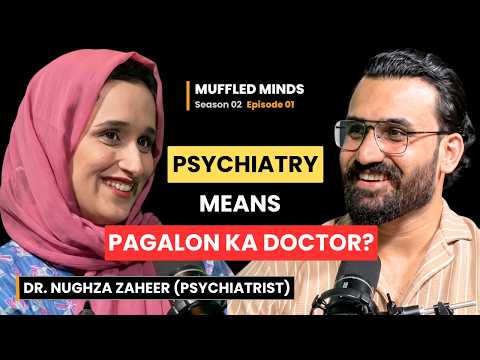
1:23 Junaid urf JD, please check him out. I think comedy and mental health definitely do have some sort of correlation. But do you think, Pakistan's most underrated comedian? Malik Hamza and Rao Mubeen? And what about overrated? Malik Hamza and Rao Mubeen? Assalamualaikum everyone, welcome to Muffled Minds Podcast Season 2, I'm your host Khawar. Viewers, hum Pakistani uthte baithte, chalte phirte ek kaam zaroor karte hain, aur woh hai comedy, aur hamare ghar mein ek jumla zaroor bola jaata hai, beta doctor ban jao,
2:08 Beta engineer ban jao. Lekin aapne bahut kam yeh suna hoga ke beta aapka humour bahut achha hai, comedian ban jao. Hum mehangai par hanste hain, hum load shedding par hanste hain, hum rishtedaron par bhi hanste hain, aur jahan do dost ikatthe khade hon ya baithe hon unmein badi intellectual jo hai woh baatein chal rahi hoti hain, magar jaise hi teesra dost add hota hai to pehle wale dost milke teesre wale dost ko jhukte lagate hain aur us pe hanste hain. For that reason we have someone jinhone in besahara logon ko jo hai woh sahara diya aur inke liye ek platform jo hai woh provide kiya, jahan ye log officially khade hokar doosron ko jhukte maarte hain aur un par hanste hain. So please welcome, founder of Culture Shawq Entertainment Club, Mr. Faizan Malik. Thank you so much for having me. First of all,
2:54 Thank you so much for having me. First of all, yaar, ek aapki baat clarify karoon ga, woh yeh hai ke mere parents kabhi bhi yeh nahi samajhte mere jokes funny hain, woh sirf tab hanste hain jab unke kisi agenda ko mere jokes match kar rahe hon, warna agar unko lage ke agar hum iske jokes pe hasenge aur kahin na kahin main encourage ho jaaun ga to actually see a future in this, they are like, nahi hansna is pe. But aapne un besahara comedians ko jagah to di na, bilkul, yeh zaroor hai, maine kaha ke mujhe sahara nahi mil raha to maybe unko push kiya jaye, aur shayad main yeh sochta tha ke, sochta hoon abhi bhi ke, like, maybe agar circle comedy ka itna bada ho jaye ke it is inevitable that this will become my bread and butter.
3:34 So maybe with that hope, I am like, why not, you know. Nice. So, first of all, hamare viewers ko batayein apne baare mein. Ji, so I grew up in Lahore and I grew up here till the age of 19, aur phir maine apne O levels aur A levels yahin se kiye, phir main university chala gaya USA, and I went to a school called Michigan State University. Wahan se maine unfortunately, guys, unfortunately, maine mechanical engineering padhi. Do saal, padhte waqt, engineering karte waqt mujhe realise hua ke yaar ye to main phas gaya hoon, kyunki us waqt maine koshish ki ke main shayad psychology ki taraf chala jaao, shayad applied sciences, applied engineering mein chala jaao, jismein business aur engineering ke courses mix hote hain, shayad mere liye yeh thoda aasaan ho jaye,
4:22 Aur usi dauraan maine open mics bhi karna shuru kar diye, and I think, like, comedy became like my, if not, maybe not release valve, because release valve is a very cliché thing to say, but maybe a very healthy distraction, and then turned into a very unhealthy distraction. Kuch classes mein phir fail karna shuru ho gaya. 20 credits mein maine fail kiye, aur start kaise ki, like, wahan pe, US mein hi, US mein start ki thi, it was summer of 2019, aur main summer semester apna le raha tha wahan par, aur uske saath ye hua tha ke
4:59 Campus was usually 60,000 people, and in that particular summer, zahir si baat hai, summer courses mein kam log hote hain, to agar 60,000 aapki population hai, student population hai, to summer ke dauraan, garmiyon mein, ye hoga, maybe like 19 to 25,000, to the whole campus used to look like a ghost town, you know, like bahut depressing sa lag raha hai, mausam bhi, halanke mausam bhi achha hai, aur aap single bhi ho, lekin, lekin hota hai, yaar, ye kya zindagi, kahan chali ja rahi hai, main 21 saal ka ho gaya hoon, na maine koi party ki, na maine, bas paanch waqt ki namazon ki koshish, not, not anymore, guys, kar raha hoon, aur kya kehte hain, mere dost achhe the, I had some friends from India,
5:42 Some from Indian backgrounds, grew up in Saudi Arabia, some of them from Africa, so like I did have a decent group of friends around me, like it was very boring on campus, so my friends and I, we decided, yaar chalo ek kaam karte hain ki hum saare hain to halal boys. Us waqt jo hai na like ye ek shayad internal ek cheez thi ke hum saare halal boys hain. Humne clubs mein nahi jaana, humne partiyon mein nahi jaana. To hum kya karte hain? Chalo let's like explore the entire city, jo bhi hum halal activity kar sakte hain, hum kyun na hum jo hain usko karein, to humne kaha, chalo yaar, let's start with the closest coffee shops, ya koi bhi closest, kah lo ke business that's close to the university's exit,
6:27 Matlab uski off campus pe, aur phir wahan se start karte hain, so, the first day, we tried that, we ended up at a coffee shop, called Blue Owl Coffee Shop, it's in Lansing, Blue Owl Coffee Shop in East Lansing actually, there's two, and we went inside, there was an open mic going on, and this was the place where, this was the place where you would see like very woke liberal people, especially women, ah, sahi hai, to I was like, okay, and then I saw a black lesbian woman in a wife-beater, woh jo vest nahi hoti, hamare wife-beater vest, talking, she really, like, throwing her grandma under the bus, right, and she was doing that, and I am like, yaar, yeh matlab, I am not trying to be like cocky or overconfident, I like, yeh to main kar sakta hoon, and that's how it started, I got the number of the woman who was running the open mic, and next week, this was every Wednesday, 6:30 pm till 9:30 pm
7:21 Next Monday, I woke up and I started writing jokes, it was, to my surprise, I was like, I just started writing, just scribbling, just doing whatever, and I think in an hour and a half I had like one and a half pages, and then Tuesday I refined it, Wednesday I refined it, and I wanted to get my group of friends to actually, like, be there for me, for my moral support, and I am like, yaar, please, tum bhi kar lo, please, tum bhi kar lo, thoda sa mujhe bhi support ho jayega, tum bhi kar lo, yaar, tum bhi kar do, boys, the, ek Lucknow ka boy tha, bahut achha, very soft spoken, very sweet guy, India se, uska naam tha Meeran Anwar,
7:58 He is also from a Muslim background, phir ek tha Ritwik Verma, woh tha Saudi Arabia ka, he grew up in Saudi Arabia, to, these two guys, aur main, ek, right, I am like, yaar, tum log bhi please saath aa jao, unhone kaha, chalo yaar, main saath aa jaata hoon, Ritwik ne kaha, kaha ke main perform kar leta hoon, lekin tum mere jokes likhoge, to phir maine apne likhne ke baad uske likhe, Meeran ne kaha, nahi, mere liye ye bahut badi cheez hai, main sirf aap dono ko support karne ke liye aa jaaun ga, theek hai, hum teenon walk karke gaye, aadhe ghante ki walk thi, to mausam bhi achha tha, 5:00 baj rahe the, you know, it was not too sunny, it was summer time, weather was really nice, the walk was really beautiful, we went there and we saw it, hum baithe aaram se, and immediately I got myself a cup of coffee. This was the first time I was about to get over my fear of public speaking.
8:42 To maine coffee pakdi, kyunki main, raha tha, maine kaha, haathon ko zara, you know, zara solid stabilise karna hai. And, and what about the crowd? The crowd was like, I can describe some of the crowd, a crowd, the crowd was like, you know, maybe a couple of black dudes with like earrings, Goku wale baal, a couple of like bisexual baddies, theek hai, and then like nose rings ke saath aur lip rings ke saath, it was a mixed crowd, it was a very mixed crowd. About the reaction, I would say, like, it was a very liberal crowd, because this was the place where, taaliyon ki bajaye na, kehte hain, kya baat kar di hai, it's like open mic poetry, poetry wali raat, you know, like
9:24 To poetry wala time tha yeh, and I was the only, me and Ritwik were the only comedians there, right, and uske liye maine jo likhe, it was about, like, his time in the Middle East, how brown people were basically the Mexicans of the Middle East, you know, hum log unka hard labor hain, like brown people are like the hard, like your Indians, your Pakistanis, your Bangladeshis, your Filipinos, your Egyptians, we are all like hard labor for the Saudis, you know, hum lowest of the low. To uske baare mein kuch jokes likhe, phir maine apne liye bhi likhe hue, so I was like, about my Nigerian friends, airport ka waqt, jab mujhe un logon ne side pe le gaye, kehte hain aaj aapki random selection hogi, maine kaha meri selection ho gayi hai, you know,
10:06 To main wahan chala gaya, uske ilawa, the reaction honestly was, was way beyond my expectations, and I think this was the thing that actually kept me going, ke achha, like, main expect nahi kar raha tha ke woh log thoda phat ke bhi hasenge, but woh kaafi, phat, ye bhi tha ke woh crowd, jab unhone suna na, ye pehli dafa kar rahe the, to they are extra encouraging, they are extra encouraging, wahan upar se coffee job bhi tha mujhe, to kuch jokes unke liye edgy the, kaafi zyada, jaise yahan pe bhi hum is tarah ki harkatein karte, unko thoda bura lagta hai, ya jo bhi, lekin woh log aapki act ko na rokte
10:44 Jo bhi, lekin woh log aapki act ko na rokte nahi hain, like, woh aapko karne dete hain, aap khatam karo, yeh karo, woh karo, it was, it's good, beyond my expectations. But why mechanical engineering? Ye sawaal main bhi apne aap se poochta rehta hoon, abhi bhi, ke why mechanical? Ab mujhe samajh aaya ke sahi kiya tha. Yaar, first of all, I came in as an undecided major, I, for my first semester, I chose the classes anthropology, economics 201, which is microeconomics, math, math 1, calculus, kehte hain usko, calculus 1, physics 1, physics for engineers, thi. Ye maine jab ye chaaron try ki na, phir main na, I got into my comfort zone. Oh, maine A levels mein maths ki thi aur decent ki thi, itna achha nahi tha, B aaya tha mera math aur physics mein. Maine kaha, oh, I'm familiar with this, maybe I will just go with engineering. Yeh wala decision tha, itna socha kuch bhi nahi tha uske andar. And why you came back to Pakistan? I came
11:40 Back to Pakistan because I could not find a job in 2023, and six out of six of my friends in the friend group, only one is in the US, baaki saare nikal gaye hue hain wahan se, to, and then, and then you started that Culture Shawq? I started Culture Shawq, before coming back to the US, I also started my university's first ever comedy club, to, that was with a Jewish friend of mine, uska naam tha Ben Kirsch, guys, please Instagram him, he is a very good friend of mine, Ben Kirsch aur maine start kiya tha, woh bhi is waqt ka student tha, woh mujhse 2 saal chhota tha, mujhse balki teen saal chhota tha, aur uska dimagh, his brain was advanced, like we were thinking of the same things, I was thinking of at the same time. To is tarah se hamari na like mental wavelength kaafi judi hui thi ikatthe. To usne kaha
12:25 Yaar isko start karein, maine kaha maine kaha main abhi exactly yahi soch raha tha, to usne kaha chalo start karte hain. And what's the thought behind this name, Culture Shawq? Culture Shawq, okay, so, two months before coming back to Pakistan, I started getting this realization ke, haan, I might have to go back, even though I could not accept it, matlab mujhe accept karne mein do saal lage hain is cheez ko, and even before that, my, I had a friend named Alena Bamfield, aur jab bhi main Pakistan jaata tha, hota hai na aap padh rahe hote, aap jaate ho sardiyon ke liye ya garmiyon ke liye, aap phir wapas aate ho, woh poochti thi Faizan, like do you ever get culture shock when you go back home, and it stuck with me, and then I realised like whatever this weird feeling is when I go back
13:06 Home and come back and feel that sense of freedom when I'm in America and feel very suffocated when I'm in Pakistan is me getting culture shock, even though it is my home, that's how you would describe it. So, before moving back to Pakistan, I realised, if I were to open up a comedy club in Pakistan, it would be called Culture Shawq, but C-U-L-T-U-R-E-S-H-A-W-Q, haan, ya, matlab jo Urdu wala, haan, haan, it's a, shawq, shock, shock, bilkul, it's a mix, it's a bilingual, ye main bahut shauq se bolta hoon, ya, ya, guys, it's a bilingual double entendre, you know, like
13:46 So, starting a club from zero, Pakistan mein, I don't think so, itne koi honge, abhi, abhi is time mein jo hai woh kaafi jo hai open ho rahe hain, bilkul, so, kya difficulties, kya challenges jo hai woh aapne face kiye? I think, in the realm of comedy, the biggest factor and the biggest difficulty you face is the psychology of people. Mindset is the biggest thing. And I think, like, usi se aapko pata lag jaata hai ke how much resistance you will face, whether you are on stage or off stage, as a business owner, as a business, and as a comedian, uh, you know, like, when you are on stage. To I think that was the biggest difficulty that I faced, as a, as someone who is running this, and someone also who does stand-up as well, you know, to, I, ya, like, I think that's one of the only ways I can describe it, because yahan ka aur wahan
14:43 Ka context bahut farq hai, to, what they might find funny here, they might not find funny there, what they might find funny there, they might not find funny here, like, agar main goron ko yeh bata doon, ya, gore bhi nahi, but like, America, it's very diverse, of course, if I tell them my parents are first cousins, which they are, right, they laugh their asses off, because to them, this is so surprising, but if you just tell, if you just tell Pakistani people, ya, my parents are cousins, like, haan, nice, mere bhi hain, you know, like, you are just like, just another Tuesday in Lahore, I guess, you know, and what about the permissions and finding comedians, these sort of things? I think finding comedians is not, finding number of applicants is not difficult here at all, because every person thinks that they are funny.
15:36 Theek hai, everyone just thinks they are funny. This, this next phenomenon is very universal, which is that you would talk to one guy in a group of three guys, and that one guy, when you tell him, you are a comedian, or you do stand-up comedy, or you are a stand-up comic, he will be like, ya, my, my friends tell me I am very funny, man, I am like, ya, well, you should try it then, he is like, no, no, I don't think I, okay, then shut up, you know, and the same goes for, like, yahan Lahore, aapko nahi pata, aap, mere saare dost kehte hain bahut funny hoon, mujhe bhi lagta hai main kar sakta hoon, you know, ye hota hai. And then with girls, it's like, if you laugh at a girl's joke, woh to bilkul hi over ho jayegi na, usko lagega ke haan, bas main hi hoon, ek ek cheez, you know, her attitude will just go up, and I am like, ya, I am just, I am just
16:20 Humouring you so that you don't hate me, I am not gonna say you are funny, you are not funny, but ya, but like, this happens a lot, here, ke, so, abhi aap, like, jo shows hain woh biweekly aapke chal rahe hain, ya daily basis pe bhi chal rahe hote hain? Abhi, I would say, biweekly chal rahe hain, once in, in two weeks, you know, I am producing my shows with Lahore Laughs these days, it's, you could say, like, a stepbrother comedy club, uh, with Rao Mubeen, I think everyone should check out Rao Mubeen, I think he has been here, to this, ya, he has been here, to this podcast, ya, he is, he is an amazing comedian, and I really, I really hope Rao Mubeen is one of those comedians who can blow up in Pakistan, because he is, he started with content, but he is also, his discipline in stand-up comedy is very, very strong, woh is tarah ka banda nahi hai ke, like, achha, agar content banaya to woh comedy nahi kar raha, woh dono kar raha hota hai, to
17:07 I, I help him, I try to help him, as much as I can, I help produce shows, and sometimes invest in the marketing, and, like, you know. Now, if we talk about the comedy plus stage dramas, things, like, jo usmein actors the, and then unhone kaise apna jo hai woh safar, jo hai woh, jo hai woh, tay kiya, so, what do you think? I think fankaar, fankaar hai, chahe woh kisi bhi background se ho, hamare yahan, I think, traditionally, the comedians who were before us were coming from a specific type of background, which was like, you know, your rural backgrounds, or your,
17:46 Completely Punjabi backgrounds, but I think stand-up has actually allowed people to really, you know, like has really, I think, widened the filter for comedians, because it doesn't really matter, aap kahan se aa rahe ho, because we used to have people like, okay, let's just stay on topic, right, I think, like, I have a lot of respect for our traditional stage drama comedians, but at the same time, I think ke, we weren't able to learn anything from them, because the moment I got back in 2023, they got banned and shut down, so, like, I could never meet my heroes.
18:25 I could not meet, what's his name, the one who passed away, man, Moin Akhtar, Moin Akhtar, ya, so I could not meet him. Bahut, bahut, like, Pakistan mein, woh clean comedians, clean comedians bhi the, one of them, Umar Sharif, and then Moin Akhtar, and even Anwar Maqsood. Umar Sharif not clean though, Umar Sharif, he was kind of, like, he became clean when he came to commercial television, he wasn't clean when he started. Haan, matlab woh humne jo dekha woh commercial woh dekha. And then, uske baad phir baaki comedians jo hain, woh the stage comedians, drama comedians, so unki bhi, unki bhi struggles jo hain woh apni jo hain woh hongi, but I believe ke pehle woh family comedy hoti thi
19:07 And then it shifted to that vulgarity thing, jab stage dramas mein bhi ye cheezein jo hai woh start hoti. So, yaar, ki baat kar, like, vulgarity exactly kya hai? Right? Because vulgarity is a whole... Kehti hai na, gender is a spectrum, sexuality is a spectrum, I think vulgarity is a spectrum. Haan, hum log, I mean to say, matlab aap family ke saath woh jo stage drama show hai, let's just say, woh aap nahi dekh sakte, nahi dekh sakte. Maine aksar apne nana ko pakda hua hai, woh akele stage, akele stage dramas dekhte the, and see, matlab ke usi wajah se, bilkul, bilkul, pehle clean thi, and then shifted to this, stage drama sirf aadmiyon ke liye, theek hai, aur baaki, baaki dramas sab ke liye nahi, haan, I get what you're saying, achha, uske baad phir obviously, I guess, Aftab Iqbal ne jo hai na ek trend jo hai woh start kiya, Hasbehaal se start
20:00 Kiya, and then phir Aftab Iqbal ne start kiya tha Hasbehaal, Aftab Iqbal ne Hasbehaal jo hai start kiya tha, achha, and then he left, then, aur phir uske baad woh doosre, usne jo hai woh le liya tha, and then he started Khabarnaak. Aapne ye dekhiye na ke comedians hi the, woh clowns the, theek hai, comedians ko as clowns treat kiya jaata tha, jab bhi, agar, ab hum, kyunki ek stigma ban chuka hua hai aur ek image ban chuki hui hai ke comedians to bas ek society mein woh wala banda hai, news ke andar, media ke andar, jisko bilkul low rakhna hai, right, we are like, maybe you could say, the clerics of the media industry, but isne trend change kiya tha, I believe, Aftab Iqbal ne. Isne kya kiya? Un stage jo actors the, unko utha ke isne commercial jo shows the, let's, jaise kisi news
20:48 Channels pe chalte hain shows, unmein jo hai woh leke aaya. Hmm, theek hai? To usmein kya tha ke woh ek family program tha, usmein clean comedy thi, woh saari cheezein. Although, ab kuch jo comedians the, unke woh jo, woh jo unke, aap keh sakte hain ke jokes the, woh wahan pe nahi chal sakte the. Just like, aap keh sakte hain ke abhi kaafi famous hai, woh kya, uska naam, origin se nikal gaya, Abbas ko, nahi nahi nahi, matlab woh stage drama ke hi actor, achha, stage drama, sorry, haan, to matlab unke jo kuch jokes hain woh wahan pe obviously nahi chal sakte the, but usne ek trend jo hai woh start kiya ke, just to earn a healthy income, you can say.
21:25 Wahan se start hua, and then, unko phir movies ke andar jo hai, woh roles milna start ho gaye, theek hai, aur, I believe jo vulgarity wala tha na, woh start kiya tha Naseem Vicky ne. Naseem Vicky, sahi, sahi, sahi. Matlab usne jo hai woh dramas is tarah ke jo hai woh banaye. One of my absolute favourites will always be Nasir Chinyoti, yaar, kya legend hai, woh bhi, matlab, stage se aaya, and then woh in shows mein aaya, Aftab Iqbal ke shows mein, and then usko movies mein jo hai woh chance mila, they were like improv, theatre, stage actors, in a lot of ways, they still are, I feel like, amazing. Aur phir uske baad unhone Indians ke saath even kaam kiya, abhi bhi kaam chal raha hai unka, Amanullah ne bahut ki, Moin Akhtar ne ki hui hain, hmm, to abhi in sabki jo hai woh movies chal rahi hain.
22:09 Achha, Indian actress, bilkul, woh Punjabi movies chal rahi hain na, aati hain movies, meri ammi dekh rahi hoti hain aksar. Haan, to matlab woh dekho na, stage drama agar wahan se dekhein to wahan pe kya unka, kya scope tha? Ab aapke saamne, bilkul, and then it shifted to these commercial shows, and then movies, to ye unka, I believe Aftab Iqbal ne jo hai na ye ek achha jo hai woh kaam ye kiya. I believe, bilkul, I believe so too, I believe so too, and I think there should be more Aftab Iqbal in the actual commercial industry, man, taaki hum jaison ko andar karaya, thoda, lekin, lekin, obviously uske saath bhi kya hua, in the end aapne dekha hi tha, usko show apna move karna pada UAE mein, usne woh UAE mein kar raha tha, nahi pehle nahi kar raha tha, pehle Pakistan mein kar raha tha, pehle to Pakistan mein kara, obviously ye political cheezein involve
22:53 Ho gayi, in different, aur phir he had to shift his show to UAE, phir woh remote jo hai woh shows karta tha, uske kuch actors Pakistan mein the, khud khud woh wahan pe tha, and then phir woh remote show jo hai na woh organize karta tha is tarah se. Guys, Aftab Iqbal is our, is our Tony Hinchcliffe, I don't know, you guys seen Kill Tony? So, agar ab hum India versus Pakistan comedy ki jo hai woh baat, bilkul. So, how, how you will compare the comedy between these two countries? I think, like, infrastructurally, India is way too advanced and they will always be advanced, on the account of we don't have any bars to perform in, in Pakistan. Nahi, like, hum, main, main woh compare karna chaah raha tha ke jo level hai, haan, ek comedy jo level hai, Pakistan ka kam nahi hai, level sabka dikhega, sir.
23:42 Matlab main ye kehna chaah raha hoon, jitne unke comedians jo hain na woh famous hue hain, itne Pakistan ke famous nahi honge. Bilkul, bilkul, bilkul, I think Abbas really has good potential, but then again, you know what happens, Pakistan has a lack of originality, and of course this is no shots fired towards anyone here, how many times do you walk out into Lahore and be like, yo, I feel so inspired today, none, aap ulta depress ho ke aa jaate ho, aap inspire ho ke nahi aate, right? Because we lack inspiration here. Everything we try to do, I mean, I'm not trying to get political or whatever, everything we try to do, right, we are shut down. Ab usse hamara dimaag bhi band hona shuru ho jaata hai,
24:23 Like aapki creativity bilkul dull ho jaati hai, to what we do is, we look outside for inspiration. And I think this is what happens, that whenever I was running Culture Shawq, I really encouraged the comedians there to, like, you know, come up with their own stuff, and come up with their own style, like, I mean, through practice, of course, but I would say, like, they are very advanced, they have their own style, because India has its own culture, its entertainment culture, which is of course tied to Bollywood, tied to the music industry, tied to the media industry, entertainment industry, that's, and then they have their own culture, they have their own, they have preserved their own history, they have preserved their own monuments.
25:05 But I, I believe, jo market size hai, and then platforms jo hain, wohi sabse pehle maine kaha tha, infrastructure, inka infrastructure bahut achha hai, pehli cheez to inke paas bars hain, you know, like unke paas, kahin baith, third space kehte hain na usko. But jitne bhi stand-up comedians hain, jinko hum dekhte hain, even ke Zakir Khan dekh lein, Samay Raina dekh lo, jitne bhi, Harsh Gujral dekh lein, ye inke, jis tarah aapka Culture Shawq hai, isi tarah ke platforms pe ye perform karte hain. Jo doosre wale bars wale hain woh to, nahi nahi sir, asal mein na bars hum woh dekhte nahi hain, lekin woh jaate bars mein hi hain. Like ye jo places bani na, comedy club hamesha on air to nahi hoti na, woh wale on air nahi hote honge, lekin wahan pe wahin pe to on bhi daalte honge ye log, aisa nahi hai, like woh, I have seen, woh yaar kya naam tha, apna Sikh boy tha yaar, bada achha performer, bhool gaya, woh rap bhi karta hai thoda sa, internet will know better.
25:55 But I think he was amazing, I think he performed in a bar, but like these comedy clubs have bars too, there is no way a comedy club doesn't have a bar, but Pakistan mein kuch issues, ye censorship ke issues, censorship, obviously audience attitude, aap keh lein, audience psychology, audience psychology is a big thing, haan, matlab wahan pe audience jaati hai sunne ke liye, jaati hai usko yahan pe jaati hai, usko counter karne ke liye, counter karne ke liye ke ji nahi tune ghalat bol diya. Nahi, who, matlab ek ek crowd work hota hai na, ek comedian hota hai, comic, ek hota hai woh crowd work bhi karta hai, theek hai. To jo maine dekha hai, for example, woh India mein crowd work agar kar raha hai ek comedian to woh usko jo hai woh accept karte hain, theek hai, enjoy karte hain. Yahan pe woh smart, woh jo hai
26:37 Na, woh personal usko jo hai sort of. Bilkul, kyunki uski bahut lambi kaun woh hai, lekin yes, woh usko personal hi le lete hain aksar. Aur yahan pe kuch, ab dekhiye na, hamare paas hamari industry developed hi nahi hai, to hamein, hamein tanz ka maayne shayad nahi pata, hamein lagta hai taana joke hai, hamein comedians ko bhi lagta hai ke personal attack is a joke, it's not. A joke is like, it could be about your appearance, could really be about your appearance, but haan ab woh jo aa jayenge, moral high horse riders, theek hai, ke ji nahi kisi ki looks pe nahi, shut up, shut up, you know, matlab kar sakta hai har cheez pe, kar sakta hai, personal attack bhi maarte hain log, but like ab us tarah se maarna jiska maza bhi aaye, phir hum log nahi karte us tarah, taana aur personal
27:20 Attack ko lagta hai, oh ji maine to roast kar diya, bhai ye roast thodi na tha, aapne to uski khaandaan uda diya bechare ka. Haan ye cheezein to aa gayi hain, so Pakistan mein jo hai woh aapka favourite comedian kaun sa hai? Pakistan mein ek time par, I think Tabish was one of my favourites, Junaid Bhai, jinki baat ho rahi thi, woh bhi achhe hain, Junaid urf JD, please check him out. One of my, of course, the mainstream comedian that I like to listen to sometimes is Abbas Bukhari, I think he's a good public speaker, he's very stable on stage, I've seen him live,
28:00 The next two I would say is, people should look into, upcoming, is Malik Hamza and Rao Mubeen, I really think people should look into those. Aur maine shows dekhe hain unke, aur Malik Hamza, main honestly bataoon aapko, usko podcast pe laana chahiye, like my suggestion would be ke you should have him. He is a brilliant writer, us bande ki jo writing hai na, it is so methodical, it is so order-wise, uska itna clean order hai na writing ka, agar woh dirty bhi clean kar sakta hai, clean dirty kar sakta hai, matlab samajh rahe hain? Like, uska dimagh comedy ke liye bana hua hai. Rao Mubeen is an extremely witty person on stage and off stage. To Rao is amazing to just be around and he is also a
28:48 Good writer as well and he writes a lot as well. To I think right now, these two comedians happened to be from Culture Shawq, to matlab they have really grinded it, abhi to aajkal, you know, Culture Shawq is taking a break, we will be back after my masters, guys, but yeah, like in logon ka yahi hai ke like, ye jo do comedian, time pe, batayein, ye week after week after week after week after week after week, they would show up, practice, they didn't get all their entire start from, uh, you could say like your social media, they started on the stage for the most part, so yeah, so hamare legends, legends jo hain woh kaafi hain, just like Amanullah, Moin Akhtar, and Umar Sharif, we have talked about these legends, one of my favourite is Sajjad Jani, like he is clean, and he
29:45 Started from roadshows, usse pehle ki bhi uski badi history hai, bilkul, agar aapne usko follow kiya ho, ek dub, basically ye start, start mein jo hai na, woh dub karta hota tha, and then struggle, again, har comedian ki tarah, iski bhi ek struggle hai. Abhi unka Sajjad Jani official ek channel hai YouTube, wahan pe ye apne shows waghera jo hai woh, Shahzad Ali, Sajjad, Sajjad, sorry, ya, so woh, woh mera aajkal jo hai na woh favourite hai. Aapne kaafi uske dubs jo hain woh dekhe honge, shayad, theek hai, to ye scene hai. Agar abhi hum comedy aur mental health ko jo hai woh relate karein, so, what's your perspective around this? I think comedy and mental health definitely do have some sort of correlation.
30:30 Of course, hum logon ne sabne ye suna hua hai, ye stereotype ke, a lot of comedians come from some sort of like tragedy or whatever. Zaroori nahi hai ke, like, jo comedian aa raha hai woh kisi trauma se aa raha hai. But most, a lot of the times, there is something going on with them, and there is something going on with them to the point where, like, getting on stage gives them, like, some sort of calmness, some sort of release, you know, I myself personally have gone through mental health issues, but not, and I don't think that has any correlation with stand-up comedy, but it has been a great outlet for me to kind of, you know, talk about whatever I'm going through,
31:14 Agar pattern dekha jaye, yes, sometimes unstable people end up becoming comedians, agar aap bahar bhi dekhein aur yahan bhi dekh lein, like koi na koi cheez missing hoti hai hamari life mein, jiski validation hum phir stage pe lene jaate hain. And self-esteem is often low, self-respect is often low, which helps you on stage, but it does not help you off the stage at all. Yeh to chalo comedians ki baat ho gayi, bilkul. Jo dekhne aate hain, bilkul, what about them? I think to them it makes a larger impact, coming to the stage makes a huge impact, because I think it gives them a fresher perspective, and then just laughing
31:53 Produces and releases a bonding chemical in your brain. It's, I don't know if it's an endorphin or, guys, you should look that up also. I, I, I think it's a social bonding thing. And then I think with laughter some dopamine is also released, so that's always good for your... And if I'm not wrong, serotonin bhi ek chemical release hota hai, jo ke aapke mood ko stabilise karta hai. To these things are actually, like, you know, neuroscientifically, like, psychologically, you know, neuropsychologically, are impacting your brain to some extent, yes, with a lot of stress going on nowadays, ya, ek ye stress relief jo hai, bilkul, bilkul kaafi achha ban jaata hai. Main yeh bhi bolna chahoon ga, comedians ko, ke yaar, like, please mental health ko aap log bhi serious lo thoda sa. A lot of my friends go through a lot of stuff, I have a couple of comedy friends who have, like,
32:44 Mujhe ek cheez samajh nahi aati, Pakistan mein, especially bahar to us tarah nahi hai, like bahar people actually take the help, but over here you people would do all sorts of crazy drugs, but like, oh ji, oh, aadmiyon ko jo hai woh antidepressant nahi leni, aur pata nahi, nahi leni, aur anti-anxiety nahi leni, uske, like, I am on them, I am on, I am on insomnia, like, you know, medication right now, it actually helps me calm down a lot before the show, if I weren't on them I would have been very nervous. Main jitna clearly bol raha hoon, utna bhi nahi bol raha hota, aur abhi main kuch cheezein miss bhi kar raha hoon thodi-thodi. To,
33:24 Haan, matlab obviously, agar required hai, required hai, to aap zaroor lo, aur like, hamara, batao, kehta hai, oh ji, mera dost psychiatrist hai, usne kaha na lo. Hum kya karte hain, hum foran raasta dhoondte hain ke koi hamein bata de ke na lo, you know, with medication, no, that shouldn't be, that should be proper checkup ke saath. Aise bhi nahi, usne kaha hai, ya usne kaha hai na lo, trust bhi hai, dono ko jo hai na, woh trust issues bhi bahut hain, haan, get some checkup, agar aapko koi issues hain, then obviously, agar medicine usne prescribe ki hai aapko, to bilkul, and I am not gonna lie, yaar, Khawar bhai, I have gained 8 kgs
34:03 In four months, in the past, exactly four months, four months, in one day, I was 49 kgs, suffering from crippling anxiety, lekin I really think that has really helped me, like, guys, there is no sponsor for this, koi hamein koi dawaai waghera sponsor nahi kar rahi hai, I wish, I wish those days would come, jahan par mental health, medication wale na, hamare podcast waghera sponsor kar rahe hain, thode se, main to aise, aise unki product sell karoon ga, aise, aise unko karoon ga, maza aa jayega, bhai, maine jo hai na, do-teen lakh kama lena hai, lekin woh allow nahi hai na, matlab,
34:39 Kyun allow nahi hai? Publicly kyun nahi allow? To ye to ab unko higher management ko poochna padega na. Ek second, iski koi regulation hai? Hain? Mera nahi khayal. I think, nahi, nahi allowed hai, nahi allowed, I don't think so. Koi bhi, koi bhi pharma kisi podcast entertainment business ko nahi kar sakti. Like, nahi, pharma is something else, sir, main isi ki pharma ki hi baat kar raha hoon na, I think koi nikal aayega, hamein is pe kaam karna chahiye, off, off screen, na, hamein is pe dekhna chahiye, ke aap dekh lenge, sir. What is the future of Culture Shawq? Culture Shawq is, two, either two things, so I am
35:17 Trying to go for my masters. I either move abroad and open up Culture Shawq after a few years in Germany, inshallah, inshallah. If I don't end up in Germany in the next year, I am staying in Pakistan, and if I do that, I am going balls to the wall, opening up a proper space. I have support, I have my family support as well, which is good. They don't want me to make that my career, I still will end up making it my career. And I think, like, over here, I would probably invest into it properly, and because these past two years were like just a research and trial phase, so, inshallah,
36:02 You know, like, the future of Culture Shawq definitely is looking good. Nahi, waise hone chahiye, is tarah ke platforms, hain na, at least, bilkul, Lahore mein, bilkul, Karachi mein to honge, bilkul, kaafi honge, and be in Islamabad, I think there are like one or two, bas woh wahi hai ke weekly open mic ya biweekly open mic hi hai, ya, there is no proper place for stand-up, like where you know, achha, ab hum yahan ja rahe hain, individuals jo hain woh to kar rahe honge, individuals hi kar rahe hain, woh to apna-apna setup, unka different hoga, woh kar rahe honge, but different ke liye, jo chhote comedians hain, aap, unke liye, I don't think so, koi itne platforms, chaliye, sir, some rapid fires for
36:40 You. Oh, I love rapid fires, dude, this is so good. Guys, check out Muffled Minds, I love that they have a rapid fire, honestly, honestly, this is amazing. Insta Reels versus YouTube Reels? Oh, dude, this is a good one, Insta Reels, I don't know why, even though I like YouTube more, even though I like YouTube more, ya. Chai or coffee? Coffee, always? No, but I love both, but agar aap rapid fire mein mujhe foran, phir main coffee bolun ga. Main aapke liye, hum dono ne pee hai abhi. Okay, what about you, chai or coffee? Ah, nowadays coffee, hmm, smart, but it's kind of a, you know,
37:20 50-50, 50-50, I believe, yeah. Biryani with or without aloo? With, with aloo? With aloo. Karachi se hain aap? Family Karachi se hai. Haan, bas phir. Bhaiya nahi hai, lekin family Karachi se hai. Bombing on stage or getting a text, "we need to talk," from Dad? Bombing on stage, bombing on, I love bombing on stage. The cringe joke you have ever told that you still regret? So many, you don't need to repeat that, there are so many, so many.
37:59 What was the question? What was the question? The cringe joke you have ever made, haan, that you still regret, ke mujhe nahi, mujhe nahi lagta mujhe karna chahiye. Ye batana hai, joke woh wala. Main nahi bata raha woh, podcast mein nahi bata raha, main hi bata raha woh. Okay, so, scripted comedy versus spontaneous, hmm, scripted, scripted, scripted, written. Why not spontaneous? Spontaneous? This is, let's talk about this, this is something I would love to talk about. So, people think spontaneous comedy is just like a whim of genius, it's really not, first of all. Second of all, if you just rely on your spontaneous stuff, you will have nothing as a writer, hmm, in stand-up.
38:43 What you like? Ye to hogi ke aap woh karna chahenge. I love spontaneous when it comes out, but I never make the, hey, thing. People make this plan, main jaaun ga spontaneously, kuch bol ke aa jaaun ga. But is that really spontaneous though? It's not, because you made the intention, you are gonna say something spontaneous on stage, that means you intended something, right? But if I write something, I write eight lines, the ninth one comes out spontaneous, that's spontaneous, you know, I would say scripted, scripted, because writing is always superior to spontaneity, wohi wali baat hai na, discipline versus talent, what's better?
39:23 Obviously, if you, talent, if talent, if the talent is disciplined, right, if the talent works hard, but like, I would go with the discipline, done, ya. Morning person or night owl? Crazy question because I have been trying to change my habits, I have become, like, naturally I am a night owl, but now it's morning, so it's, it's kind of a mixed, nowadays, it's mixed, ya, ya. Online shopping versus bargaining at bazaar? Oh, bargaining at bazaar, haan, bahar, bargaining at bazaar, maza hi apna hai. Nice. Viral fame or steady paycheck? Steady paycheck.
40:03 But, I am also smart enough to know how to maneuver through the wild fame, I, I think I have it, but I am not famous, guys, get me famous, please. Money or standing ovation? Money, don't give me a standing ovation, dude, give me the money, dude. One celebrity you roasted? Was some Instagram influencer. Rao knows, Rao ke show pe aaya tha, yaar. Ye kaun tha? Yeh drama wale boys the, koi na, drama wale boys the. Roast nahi kiya tha, but I was just like talking to them on stage. I don't think I am not much of a,
40:40 Try to be a sweet guy, I guess. So, Pakistan, what do you think, Pakistan's most underrated comedian? Underrated? Malik Hamza and Rao Mubeen? Oh, and what about overrated? Malik Hamza and Rao Mubeen. Doosre wala kaat denge hum. Unko, unki utha rahe, to unko giraye bhi to sahi na, zara maza bhi to aaye, barabar karein, zara le, sir, I guess that's all. Dude, this was amazing, I had so much fun, honestly, yaar, ye to main har mahine aapke paas aa raha hoon, gupshup lagane ke liye, aapne daal doon ga, daal dena, nahi to main aise hi aa raha hoon, bahut maza aaya hai, bro. Chal, thank you so, honestly, aapke questions, jo questions, I
41:27 Think you might be the best podcaster I ever, matlab, mera, maine kabhi sahi tarah podcast Pakistan mein us tarah se nahi kiya, but I think your questions are very thoughtful, your questions are very thoughtful, and I really appreciate that. Thank you, thank you. We need people like you here, man. Thanks, man. Thank you so much, producer sahab, bahut aala, bro, maza aaya. Thank you so much, viewers. Aise maine, mujhe maza aaya tha ke aap meri audience hain, aap hans rahe the, to maine kaha theek hai, phir lage rehte hain, phir guys, just one last thing I want to add. Please follow Culture Shawq on Instagram and please come to our shows. Chalein, thank you so much, viewers, for staying with us. If you haven't subscribed, please subscribe Muffled Minds. See you next episode.
0:00 We are all halal boys. We were not going to clubs, we were not going to parties. And what about the crowd? The crowd was, you know, maybe a couple of black dudes with, like, earrings, Goku-style hair, and then, like, with nose rings and lip rings, because this was the place where, instead of clapping, they say, "what a thing you said." The time at the airport, when they took me aside and said, "today you have been randomly selected," I said, "I have been selected," let me tell the white people this, if I tell them, my parents are first cousins, which they are, right, they laugh their asses off. If you laugh at a girl's joke, she will be completely carried away, she will think, yes, it is just me, every single thing, you know, her attitude will just go up. She says, gender is a spectrum, sexuality is a spectrum, I think vulgarity is a spectrum. I often caught my grandfather, he used to watch stage dramas alone, all alone.
0:45 I often caught my grandfather, he used to watch stage dramas alone, all alone. The vulgarity part, that was started by Naseem Vicky, I mean, he made dramas of that kind. One of my absolute favourites will always be Nasir Chinyoti, man, what a legend, guys, Aftab Iqbal is our Tony Hinchcliffe. I don't know, have you guys seen Kill Tony? They go to listen, they go there, they go to counter him, to counter him, saying, no, you said it wrong, no, perhaps we don't know the meaning of satire, we think a taunt is a joke, we comedians also think a personal attack is a joke, it's not. In Pakistan, who is your favourite comedian? At one time in Pakistan, I think Tabish was one of my favourites, Junaid Bhai, who was being talked about, he is also good,
1:23 Junaid, also known as JD, please check him out. I think comedy and mental health definitely do have some sort of correlation. But do you think, Pakistan's most underrated comedian? Malik Hamza and Rao Mubeen? And what about overrated? Malik Hamza and Rao Mubeen? Hello everyone, welcome to Muffled Minds Podcast Season 2, I'm your host Khawar. Viewers, we Pakistanis, sitting, standing, walking around, definitely do one thing, and that is comedy, and in our homes one sentence is definitely said, son, become a doctor,
2:08 Son, become an engineer. But you will have very rarely heard, son, your humour is very good, become a comedian. We laugh at inflation, we laugh at load shedding, we laugh at relatives too, and where two friends are standing together or sitting together, very intellectual conversations are going on between them, but as soon as a third friend joins, the first two friends together make fun of the third friend and laugh at him. For that reason we have someone who gave support to these helpless people and provided a platform for them, where these people officially stand and make fun of others and laugh at them. So please welcome, founder of Culture Shawq Entertainment Club, Mr. Faizan Malik. Thank you so much for having me. First of all,
2:54 Thank you so much for having me. First of all, man, let me clarify one thing you said, which is that my parents never think my jokes are funny, they only laugh when my jokes match some agenda of theirs, otherwise if they think that if we laugh at his jokes, somewhere I will get encouraged to actually see a future in this, they are like, don't laugh at this. But you did give a place to those helpless comedians, absolutely, it is true, I said that I am not getting support, so maybe they should be pushed, and perhaps I used to think, and I still think, like, maybe if circle comedy becomes so big that it is inevitable that this will become my bread and butter.
3:34 So maybe with that hope, I am like, why not, you know. Nice. So, first of all, tell our viewers about yourself. Yes, so I grew up in Lahore and I grew up here till the age of 19, and then I did my O levels and A levels from here, then I went to university in the USA, and I went to a school called Michigan State University. From there, unfortunately, guys, unfortunately, I studied mechanical engineering. For two years, while studying, while doing engineering, I realised, man, I am stuck, because at that time I tried to maybe go towards psychology, maybe go into applied sciences, applied engineering, in which business and engineering courses are mixed, maybe that would be a little easier for me,
4:22 And during that time I also started doing open mics, and I think, like, comedy became like my, if not, maybe not a release valve, because release valve is a very cliché thing to say, but maybe a very healthy distraction, and then it turned into a very unhealthy distraction. Then I started failing some classes. I failed 20 credits, and how did I start, like, there, in the US itself, I started in the US, it was the summer of 2019, and I was taking my summer semester there, and with that, what happened was that
4:59 The campus was usually 60,000 people, and in that particular summer, obviously, there are fewer people in summer courses, so if your population is 60,000, the student population, then during the summer, in the summer, it would be, maybe like 19 to 25,000, so the whole campus used to look like a ghost town, you know, like it felt very depressing, the weather too, although the weather was also good, and you are single too, but, but it happens, man, what is this life, where is it going, I have turned 21, I didn't go to any party, I didn't, just trying to pray five times a day, not, not anymore, guys, I am doing, and what do you call it, my friends were good, I had some friends from India,
5:42 Some from Indian backgrounds, grew up in Saudi Arabia, some of them from Africa, so like I did have a decent group of friends around me, like it was very boring on campus, so my friends and I, we decided, man, let's do one thing, we are all halal boys. At that time, like, this was perhaps an internal thing, that we are all halal boys. We were not going to clubs, we were not going to parties. So what do we do? Let's, like, explore the entire city, whatever halal activity we can do, why don't we do what we are, so we said, come on, man, let's start with the closest coffee shops, or any closest, call it a business that's close to the university's exit,
6:27 I mean, its off-campus, and then we start from there, so, the first day, we tried that, we ended up at a coffee shop, called Blue Owl Coffee Shop, it's in Lansing, Blue Owl Coffee Shop in East Lansing actually, there's two, and we went inside, there was an open mic going on, and this was the place where, this was the place where you would see like very woke liberal people, especially women, ah, that's right, so I was like, okay, and then I saw a black lesbian woman in a wife-beater, the vest, you know, our wife-beater vest, talking, she really, like, throwing her grandma under the bus, right, and she was doing that, and I am like, man, this means, I am not trying to be like cocky or overconfident, I like, I can do this, and that's how it started, I got the number of the woman who was running the open mic, and next week, this was every Wednesday, 6:30 pm till 9:30 pm
7:21 Next Monday, I woke up and I started writing jokes, it was, to my surprise, I was like, I just started writing, just scribbling, just doing whatever, and I think in an hour and a half I had like one and a half pages, and then Tuesday I refined it, Wednesday I refined it, and I wanted to get my group of friends to actually, like, be there for me, for my moral support, and I am like, man, please, you also do it, please, you also do it, I will also get a little support, you also do it, man, you also do it, boys, the, there was a boy from Lucknow, very good, very soft spoken, very sweet guy, from India, his name was Meeran Anwar,
7:58 He is also from a Muslim background, then there was Ritwik Verma, he was from Saudi Arabia, he grew up in Saudi Arabia, so, these two guys, and me, one, right, I am like, man, you guys also please come along, they said, come on, man, I will come along, Ritwik said, said that I can perform, but you will write my jokes, so then after writing mine, I wrote his, Meeran said, no, this is a very big thing for me, I will come only to support you two, alright, we three went walking, it was a half-hour walk, so the weather was also good, it was 5:00, you know, it was not too sunny, it was summer time, the weather was really nice, the walk was really beautiful, we went there and we saw it, we sat down comfortably, and immediately I got myself a cup of coffee. This was the first time I was about to get over my fear of public speaking.
8:42 So I grabbed a coffee, because I was, I was, I said, I need to, you know, stabilise my hands a bit solidly. And, and what about the crowd? The crowd was like, I can describe some of the crowd, a crowd, the crowd was like, you know, maybe a couple of black dudes with like earrings, Goku-style hair, a couple of like bisexual baddies, alright, and then like with nose rings and lip rings, it was a mixed crowd, it was a very mixed crowd. About the reaction, I would say, like, it was a very liberal crowd, because this was the place where, instead of clapping, they say, "what a thing you said," it's like open mic poetry, a poetry night, you know, like
9:24 So it was a poetry time, and I was the only, me and Ritwik were the only comedians there, right, and what I wrote for him, it was about, like, his time in the Middle East, how brown people were basically the Mexicans of the Middle East, you know, we are their hard labour, like brown people are like the hard, like your Indians, your Pakistanis, your Bangladeshis, your Filipinos, your Egyptians, we are all like hard labour for the Saudis, you know, we are the lowest of the low. So I wrote some jokes about that, then I also wrote some for myself, so I was like, about my Nigerian friends, the time at the airport, when those people took me aside, they said, today you will have a random selection, I said, I have been selected, you know, so I went there
10:06 I went, besides that, the reaction honestly was, was way beyond my expectations, and I think this was the thing that actually kept me going, that alright, like, I was not expecting that they would laugh even a little bit, bursting with laughter, but that was also there, that the crowd, when they heard, this is the first time they are doing it, so they are extra encouraging, they are extra encouraging, on top of that I also had a coffee job, so some jokes were edgy for them, quite a lot, like here too we do such things, they feel a little bad, or whatever, but those people don't stop your act
10:44 Whatever, but those people don't stop your act, like, they let you do it, you finish, do this, do that, it was, it's good, beyond my expectations. But why mechanical engineering? I also keep asking myself this question, even now, why mechanical? Now I understand that I did the right thing. Man, first of all, I came in as an undecided major, I, for my first semester, I chose the classes anthropology, economics 201, which is microeconomics, math, math 1, calculus, as they call it, calculus 1, physics 1, physics for engineers. When I tried these four, then I, I got into my comfort zone. Oh, I had done maths in A levels and I did decently, it wasn't that good, I got a B in my math and physics. I said, oh, I'm familiar with this, maybe I will just go with engineering. That was the decision, I didn't think much about it at all. And why did you come back to Pakistan? I came
11:40 Back to Pakistan because I could not find a job in 2023, and six out of six of my friends in the friend group, only one is in the US, the rest all left from there, so, and then, and then you started that Culture Shawq? I started Culture Shawq, before coming back to the US, I also started my university's first ever comedy club, so, that was with a Jewish friend of mine, his name was Ben Kirsch, guys, please Instagram him, he is a very good friend of mine, Ben Kirsch and I started it, he was also a student at that time, he was 2 years younger than me, actually three years younger than me, and his mind, his brain was advanced, like we were thinking of the same things, I was thinking of at the same time. So in that way our, like, mental wavelength was quite connected together. So he said
12:25 Man, let's start this, I said, I said, I am thinking exactly the same thing right now, so he said, let's start. And what's the thought behind this name, Culture Shawq? Culture Shawq, okay, so, two months before coming back to Pakistan, I started getting this realisation that, yes, I might have to go back, even though I could not accept it, I mean, it took me two years to accept this thing, and even before that, my, I had a friend named Alena Bamfield, and whenever I went to Pakistan, it happens, you are studying, you go for the winters or for the summers, you come back, she used to ask, Faizan, like, do you ever get culture shock when you go back home, and it stuck with me, and then I realised, like, whatever this weird feeling is when I go back
13:06 Home and come back and feel that sense of freedom when I'm in America and feel very suffocated when I'm in Pakistan is me getting culture shock, even though it is my home, that's how you would describe it. So, before moving back to Pakistan, I realised, if I were to open up a comedy club in Pakistan, it would be called Culture Shawq, but C-U-L-T-U-R-E-S-H-A-W-Q, yes, I mean, the Urdu one, yes, yes, it's a, shawq, shock, shock, absolutely, it's a mix, it's bilingual, I say this with great passion, yes, yes, guys, it's a bilingual double entendre, you know, like
13:46 So, starting a club from zero, in Pakistan, I don't think so, there would be that many, now, now in this time, quite a few are opening, absolutely, so, what difficulties, what challenges did you face? I think, in the realm of comedy, the biggest factor and the biggest difficulty you face is the psychology of people. Mindset is the biggest thing. And I think, like, from that you can tell how much resistance you will face, whether you are on stage or off stage, as a business owner, as a business, and as a comedian, uh, you know, like, when you are on stage. So I think that was the biggest difficulty that I faced, as a, as someone who is running this, and someone also who does stand-up as well, you know, so, I, yes, like, I think that's one of the only ways I can describe it, because the context here and there
14:43 Is very different, so, what they might find funny here, they might not find funny there, what they might find funny there, they might not find funny here, like, if I tell the white people this, or, not even white people, but like, America, it's very diverse, of course, if I tell them my parents are first cousins, which they are, right, they laugh their asses off, because to them, this is so surprising, but if you just tell, if you just tell Pakistani people, yes, my parents are cousins, like, yes, nice, mine are too, you know, like, you are just like, just another Tuesday in Lahore, I guess, you know, and what about the permissions and finding comedians, these sort of things? I think finding comedians is not, finding a number of applicants is not difficult here at all, because every person thinks that they are funny.
15:36 Alright, everyone just thinks they are funny. This, this next phenomenon is very universal, which is that you would talk to one guy in a group of three guys, and that one guy, when you tell him, you are a comedian, or you do stand-up comedy, or you are a stand-up comic, he will be like, yes, my, my friends tell me I am very funny, man, I am like, yes, well, you should try it then, he is like, no, no, I don't think I, okay, then shut up, you know, and the same goes for, like, here in Lahore, you don't know, you, all my friends say I am very funny, I also think I can do it, you know, this happens. And then with girls, it's like, if you laugh at a girl's joke, she will be completely carried away, she will think, yes, it is just me, every single thing, you know, her attitude will just go up, and I am like, yes, I am just, I am just
16:20 Humouring you so that you don't hate me, I am not gonna say you are funny, you are not funny, but yes, but like, this happens a lot, here, so, now, like, the shows you have, are they running biweekly, or do they also run on a daily basis? Now, I would say, they are running biweekly, once in, in two weeks, you know, I am producing my shows with Lahore Laughs these days, it's, you could say, like, a stepbrother comedy club, uh, with Rao Mubeen, I think everyone should check out Rao Mubeen, I think he has been here, to this, yes, he has been here, to this podcast, yes, he is, he is an amazing comedian, and I really, I really hope Rao Mubeen is one of those comedians who can blow up in Pakistan, because he is, he started with content, but he is also, his discipline in stand-up comedy is very, very strong, he is not that kind of a person that, like, alright, if he made content then he is not doing comedy, he does both, so
17:07 I, I help him, I try to help him, as much as I can, I help produce shows, and sometimes invest in the marketing, and, like, you know. Now, if we talk about the comedy plus stage dramas, things, like, the actors who were in them, and then how they made their journey, so, what do you think? I think an artist is an artist, no matter what background he is from, in our country, I think, traditionally, the comedians who were before us were coming from a specific type of background, which was like, you know, your rural backgrounds, or your,
17:46 Completely Punjabi backgrounds, but I think stand-up has actually allowed people to really, you know, like has really, I think, widened the filter for comedians, because it doesn't really matter, where you are coming from, because we used to have people like, okay, let's just stay on topic, right, I think, like, I have a lot of respect for our traditional stage drama comedians, but at the same time, I think that, we weren't able to learn anything from them, because the moment I got back in 2023, they got banned and shut down, so, like, I could never meet my heroes.
18:25 I could not meet, what's his name, the one who passed away, man, Moin Akhtar, Moin Akhtar, yes, so I could not meet him. Very, very, like, in Pakistan, those clean comedians, there were clean comedians too, one of them, Umar Sharif, and then Moin Akhtar, and even Anwar Maqsood. Umar Sharif was not clean though, Umar Sharif, he was kind of, like, he became clean when he came to commercial television, he wasn't clean when he started. Yes, I mean, what we saw was the commercial one. And then, after that, the rest of the comedians, the stage comedians, drama comedians, so their struggles too, their struggles, were their own, but I believe that first it used to be family comedy
19:07 And then it shifted to that vulgarity thing, when these things also started in stage dramas. So, man, talk about it, like, what exactly is vulgarity? Right? Because vulgarity is a whole... She says, gender is a spectrum, sexuality is a spectrum, I think vulgarity is a spectrum. Yes, we people, I mean to say, I mean, with family, that stage drama show, let's just say, you cannot watch it, you cannot watch it. I often caught my grandfather, he used to watch stage dramas alone, all alone, and see, I mean, for that reason, absolutely, absolutely, first it was clean, and then it shifted to this, stage drama only for men, alright, and the rest, the rest of the dramas are not for everyone, yes, I get what you're saying, alright, after that, obviously, I guess, Aftab Iqbal started a trend, starting with Hasbehaal
20:00 He started it, and then Aftab Iqbal had started Hasbehaal, Aftab Iqbal had started Hasbehaal, alright, and then he left, then, and after that, the other one, he took it, and then he started Khabarnaak. Look, comedians themselves were clowns, alright, comedians were treated as clowns, whenever, if, now we, because a stigma has formed and an image has formed that comedians are just that person in society, in the news, in the media, who has to be kept completely low, right, we are like, maybe you could say, the clerics of the media industry, but he changed the trend, I believe, Aftab Iqbal did. What did he do? He picked up those stage actors and brought them into the commercial shows, let's, like, some news
20:48 Channels, the shows that run on them, he brought them into those. Hmm, alright? So what was in it, it was a family program, it had clean comedy, all those things. Although, now, some of the comedians, their, their, you can say, jokes, those could not work there. Just like, you can say, right now he is quite famous, what is, his name, it slipped from my origin, Abbas, no, no, no, I mean, he is an actor of stage drama itself, alright, stage drama, sorry, yes, so, I mean, some of their jokes obviously could not work there, but he started a trend, just to earn a healthy income, you can say.
21:25 It started from there, and then, they started getting roles in movies, alright, and, I believe the vulgarity part, that was started by Naseem Vicky. Naseem Vicky, right, right, right. I mean, he made dramas of that kind. One of my absolute favourites will always be Nasir Chinyoti, man, what a legend, he too, I mean, came from the stage, and then he came into these shows, into Aftab Iqbal's shows, and then he got a chance in movies, they were like improv, theatre, stage actors, in a lot of ways, they still are, I feel like, amazing. And then after that they even worked with Indians, their work is still going on, Amanullah did many, Moin Akhtar has done many, hmm, so now all of their movies are running.
22:09 Alright, Indian actresses, absolutely, those Punjabi movies are running, movies come, my mother often watches them. Yes, so, I mean, look, stage drama, if you look at it from there, what was their, what was their scope? Now, in front of you, absolutely, and then it shifted to these commercial shows, and then movies, so this is their, I believe Aftab Iqbal did a good job with this. I believe, absolutely, I believe so too, I believe so too, and I think there should be more Aftab Iqbal in the actual commercial industry, man, so that people like us get brought in, a little, but, but, obviously what happened with him, in the end you saw it, he had to move his show to the UAE, he was doing it in the UAE, no, he wasn't doing it there before, he was doing it in Pakistan before, first he did it in Pakistan, obviously these political things got involved
22:53 In different, and then he had to shift his show to the UAE, then he used to do remote shows, some of his actors were in Pakistan, he himself was there, and then he used to organise that remote show in this way. Guys, Aftab Iqbal is our, is our Tony Hinchcliffe, I don't know, have you guys seen Kill Tony? So, if now we talk about India versus Pakistan comedy, absolutely. So, how, how will you compare the comedy between these two countries? I think, like, infrastructurally, India is way too advanced and they will always be advanced, on the account of we don't have any bars to perform in, in Pakistan. No, like, we, I, I wanted to compare that the level, yes, the level of comedy, Pakistan's is not less, everyone's level will show, sir.
23:42 I mean, what I want to say is, as many of their comedians became famous, that many of Pakistan's will not become famous. Absolutely, absolutely, absolutely, I think Abbas really has good potential, but then again, you know what happens, Pakistan has a lack of originality, and of course this is no shots fired towards anyone here, how many times do you walk out into Lahore and be like, yo, I feel so inspired today, none, you come back more depressed, you don't come back inspired, right? Because we lack inspiration here. Everything we try to do, I mean, I'm not trying to get political or whatever, everything we try to do, right, we are shut down. Now, from that, our minds also start shutting down,
24:23 Like your creativity becomes completely dull, so what we do is, we look outside for inspiration. And I think this is what happens, that whenever I was running Culture Shawq, I really encouraged the comedians there to, like, you know, come up with their own stuff, and come up with their own style, like, I mean, through practice, of course, but I would say, like, they are very advanced, they have their own style, because India has its own culture, its entertainment culture, which is of course tied to Bollywood, tied to the music industry, tied to the media industry, entertainment industry, that's, and then they have their own culture, they have their own, they have preserved their own history, they have preserved their own monuments.
25:05 But I, I believe, the market size, and then the platforms, that is what I said first, infrastructure, their infrastructure is very good, the first thing is that they have bars, you know, like they have, somewhere to sit, what they call a third space. But all the stand-up comedians we watch, even Zakir Khan, look, Samay Raina, look, all of them, Harsh Gujral, look, these people, just like your Culture Shawq, they perform on similar platforms. Those who are the bars ones, no, no, sir, actually, we don't see bars, but they do go to bars. Like, these places that are made, a comedy club is not always on air, those ones wouldn't be on air, but they must put it on there, it's not like that, like, I have seen, what was his name, there was a Sikh boy, a very good performer, I forgot, he also raps a little, the internet will know better.
25:55 But I think he was amazing, I think he performed in a bar, but like these comedy clubs have bars too, there is no way a comedy club doesn't have a bar, but in Pakistan there are some issues, these censorship issues, censorship, obviously audience attitude, you can say, audience psychology, audience psychology is a big thing, yes, I mean, there the audience goes to listen, they go there, they go to counter him, to counter him, saying, no, you said it wrong. No, who, I mean, there is crowd work, there is a comedian, a comic, there is one who also does crowd work, alright. So what I have seen is, for example, if a comedian is doing crowd work in India, they accept him, alright, they enjoy it. Here, that smart one, that one
26:37 Takes it personally, sort of. Absolutely, because his "who" is very long, but yes, they often take it personally. And here, look, our industry is not developed at all, so perhaps we don't know the meaning of satire, we think a taunt is a joke, we comedians also think a personal attack is a joke, it's not. A joke is like, it could be about your appearance, could really be about your appearance, but now those who will come, the moral high horse riders, alright, that no, not on someone's looks, shut up, shut up, you know, I mean, you can do it about everything, you can do it, people also make personal attacks, but like, now, hitting in a way that is also enjoyable, we don't do it that way, they think a taunt and a personal attack, oh, I roasted him,
27:20 Brother, that wasn't a roast, you destroyed his whole family, poor guy. Yes, these things have come, so in Pakistan, who is your favourite comedian? At one time in Pakistan, I think Tabish was one of my favourites, Junaid Bhai, who was being talked about, he is also good, Junaid, also known as JD, please check him out. One of my, of course, the mainstream comedian that I like to listen to sometimes is Abbas Bukhari, I think he's a good public speaker, he's very stable on stage, I've seen him live,
28:00 The next two I would say is, people should look into, upcoming, is Malik Hamza and Rao Mubeen, I really think people should look into those. And I have seen their shows, and Malik Hamza, let me honestly tell you, he should be brought on the podcast, like my suggestion would be that you should have him. He is a brilliant writer, that guy's writing, it is so methodical, it is so order-wise, his writing has such a clean order, if he can clean even the dirty, he can make the clean dirty, I mean, do you understand? Like, his mind is made for comedy. Rao Mubeen is an extremely witty person on stage and off stage. So Rao is amazing to just be around and he is also a
28:48 Good writer as well and he writes a lot as well. So I think right now, these two comedians happened to be from Culture Shawq, so, I mean, they have really grinded it, now, nowadays, you know, Culture Shawq is taking a break, we will be back after my masters, guys, but yeah, like, this is what these people are like, these two comedians, on time, you know, week after week after week after week after week after week, they would show up, practice, they didn't get all their entire start from, uh, you could say like your social media, they started on the stage for the most part, so yeah, so our legends, there are quite a few legends, just like Amanullah, Moin Akhtar, and Umar Sharif, we have talked about these legends, one of my favourites is Sajjad Jani, like he is clean, and he
29:45 Started from roadshows, before that too he has a big history, absolutely, if you have followed him, a dub, basically, in the beginning, he used to do dubbing, and then struggle, again, like every comedian, he also has a struggle. Now, his Sajjad Jani official channel is on YouTube, there he does his shows and so on, Shahzad Ali, Sajjad, Sajjad, sorry, yes, so he, he is my favourite nowadays. You must have seen quite a few of his dubs, perhaps, alright, so this is the scene. If now we relate comedy and mental health, so, what's your perspective around this? I think comedy and mental health definitely do have some sort of correlation.
30:30 Of course, we all have heard this, this stereotype that, a lot of comedians come from some sort of like tragedy or whatever. It is not necessary that, like, the comedian who is coming is coming from some trauma. But most, a lot of the times, there is something going on with them, and there is something going on with them to the point where, like, getting on stage gives them, like, some sort of calmness, some sort of release, you know, I myself personally have gone through mental health issues, but not, and I don't think that has any correlation with stand-up comedy, but it has been a great outlet for me to kind of, you know, talk about whatever I'm going through,
31:14 If you look at the pattern, yes, sometimes unstable people end up becoming comedians, if you look outside too and look here too, like, something or the other is missing in our lives, whose validation we then go to get on stage. And self-esteem is often low, self-respect is often low, which helps you on stage, but it does not help you off the stage at all. This was about comedians, absolutely. Those who come to watch, absolutely, what about them? I think to them it makes a larger impact, coming to the stage makes a huge impact, because I think it gives them a fresher perspective, and then just laughing
31:53 Produces and releases a bonding chemical in your brain. It's, I don't know if it's an endorphin or, guys, you should look that up also. I, I, I think it's a social bonding thing. And then I think with laughter some dopamine is also released, so that's always good for your... And if I'm not wrong, serotonin is also a chemical that is released, which stabilises your mood. So these things are actually, like, you know, neuroscientifically, like, psychologically, you know, neuropsychologically, are impacting your brain to some extent, yes, with a lot of stress going on nowadays, yes, this stress relief, absolutely, absolutely becomes quite good. I also want to say this, to comedians, that man, like, please take mental health seriously too, a little. A lot of my friends go through a lot of stuff, I have a couple of comedy friends who have, like,
32:44 One thing I don't understand, in Pakistan, especially outside it is not like that, like outside people actually take the help, but over here you people would do all sorts of crazy drugs, but like, oh, oh, men should not take antidepressants, and who knows, should not take them, and should not take anti-anxiety, after that, like, I am on them, I am on, I am on insomnia, like, you know, medication right now, it actually helps me calm down a lot before the show, if I weren't on them I would have been very nervous. However clearly I am speaking, I am not even speaking that clearly, and right now I am also missing some things, a little. So,
33:24 Yes, I mean, obviously, if it is required, if it is required, then you must take it, and like, ours, tell me, he says, oh, my friend is a psychiatrist, he said, don't take it. What do we do, we immediately look for a way that someone tells us, don't take it, you know, with medication, no, that shouldn't be, that should be with a proper checkup. Not like this either, he said it, or he said, don't take it, there is trust too, both have, those trust issues are also a lot, yes, get some checkup, if you have any issues, then obviously, if the medicine was prescribed to you by him, then absolutely, and I am not gonna lie, man, Khawar bhai, I have gained 8 kgs
34:03 In four months, in the past, exactly four months, four months, in one day, I was 49 kgs, suffering from crippling anxiety, but I really think that has really helped me, like, guys, there is no sponsor for this, no one is sponsoring us any medicine or anything, I wish, I wish those days would come, where the mental health, medication people are sponsoring our podcasts and so on, a little, I would sell their products like this, I would do such things to them, it would be so much fun, brother, I would have earned two-three lakh, but that is not allowed, I mean,
34:39 Why is it not allowed? Why is it not allowed publicly? So now they will have to ask the higher management. One second, is there any regulation for this? Is there? I don't think so. I think, no, it is not allowed, not allowed, I don't think so. No, no pharma can do any podcast entertainment business. Like, no, pharma is something else, sir, I am talking about this pharma itself, I think someone will come out. We should work on this. Off, off screen, we should look into this, you will see, sir. What is the future of Culture Shawq? Culture Shawq is, two, either two things, so I am
35:17 Trying to go for my masters. I either move abroad and open up Culture Shawq after a few years in Germany, God willing, God willing. If I don't end up in Germany in the next year, I am staying in Pakistan, and if I do that, I am going balls to the wall, opening up a proper space. I have support, I have my family support as well, which is good. They don't want me to make that my career, I still will end up making it my career. And I think, like, over here, I would probably invest into it properly, and because these past two years were like just a research and trial phase, so, God willing,
36:02 You know, like, the future of Culture Shawq definitely is looking good. No, by the way, there should be platforms like this, at least, absolutely, in Lahore, absolutely, in Karachi there would be, absolutely, there would be quite a few, and in Islamabad, I think there are like one or two, it's just that there is a weekly open mic or a biweekly open mic, or, there is no proper place for stand-up, like where you know, alright, now we are going here, individuals are doing it, individuals themselves are doing it, their own setup would be different, they would be doing it, but for different, for the small comedians, you, for them, I don't think so, there are that many platforms, let's go, sir, some rapid fires for
36:40 You. Oh, I love rapid fires, dude, this is so good. Guys, check out Muffled Minds, I love that they have a rapid fire, honestly, honestly, this is amazing. Insta Reels versus YouTube Reels? Oh, dude, this is a good one, Insta Reels, I don't know why, even though I like YouTube more, even though I like YouTube more, yes. Tea or coffee? Coffee, always? No, but I love both, but if you ask me quickly in a rapid fire, then I will say coffee. For you, we both just drank it. Okay, what about you, tea or coffee? Ah, nowadays coffee, hmm, smart, but it's kind of a, you know,
37:20 50-50, 50-50, I believe, yeah. Biryani with or without potato? With, with potato? With potato. Are you from Karachi? My family is from Karachi. Yes, then. My brother is not, but my family is from Karachi. Bombing on stage or getting a text, "we need to talk," from Dad? Bombing on stage, bombing on, I love bombing on stage. The cringe joke you have ever told that you still regret? So many, you don't need to repeat that, there are so many, so many.
37:59 What was the question? What was the question? The cringe joke you have ever made, yes, that you still regret, that I don't, I don't think I should do it. I have to tell it, that joke. I am not telling it, I am not telling it on the podcast, I am telling it. Okay, so, scripted comedy versus spontaneous, hmm, scripted, scripted, scripted, written. Why not spontaneous? Spontaneous? This is, let's talk about this, this is something I would love to talk about. So, people think spontaneous comedy is just like a whim of genius, it's really not, first of all. Second of all, if you just rely on your spontaneous stuff, you will have nothing as a writer, hmm, in stand-up.
38:43 What do you like? That would be what you would want to do. I love spontaneous when it comes out, but I never make the, hey, thing. People make this plan, I will go spontaneously, I will say something and come back. But is that really spontaneous though? It's not, because you made the intention, you are gonna say something spontaneous on stage, that means you intended something, right? But if I write something, I write eight lines, the ninth one comes out spontaneous, that's spontaneous, you know, I would say scripted, scripted, because writing is always superior to spontaneity, that's the same thing, discipline versus talent, what's better?
39:23 Obviously, if you, talent, if talent, if the talent is disciplined, right, if the talent works hard, but like, I would go with the discipline, done, yes. Morning person or night owl? Crazy question because I have been trying to change my habits, I have become, like, naturally I am a night owl, but now it's morning, so it's, it's kind of a mixed, nowadays, it's mixed, yes, yes. Online shopping versus bargaining at the bazaar? Oh, bargaining at the bazaar, yes, outside, bargaining at the bazaar, it has its own fun. Nice. Viral fame or steady paycheck? Steady paycheck.
40:03 But, I am also smart enough to know how to maneuver through the wild fame, I, I think I have it, but I am not famous, guys, get me famous, please. Money or standing ovation? Money, don't give me a standing ovation, dude, give me the money, dude. One celebrity you roasted? Was some Instagram influencer. Rao knows, he came on Rao's show, man. Who was that? These were the drama boys, never mind, the drama boys. I didn't roast them, but I was just like talking to them on stage. I don't think I am not much of a,
40:40 Try to be a sweet guy, I guess. So, Pakistan, what do you think, Pakistan's most underrated comedian? Underrated? Malik Hamza and Rao Mubeen? Oh, and what about overrated? Malik Hamza and Rao Mubeen. We will cut the other one. We are lifting them up, so we should bring them down too, so that it's fun, let's balance it, take it, sir, I guess that's all. Dude, this was amazing, I had so much fun, honestly, man, I am coming to you every month to chat, I will post it, post it, otherwise I am just coming like this, it was a lot of fun, bro. Come on, thank you so, honestly, your questions, the questions, I
41:27 Think you might be the best podcaster I ever, I mean, mine, I have never really done a podcast in Pakistan in that way, but I think your questions are very thoughtful, your questions are very thoughtful, and I really appreciate that. Thank you, thank you. We need people like you here, man. Thanks, man. Thank you so much, producer sahab, excellent, bro, it was fun. Thank you so much, viewers. Like this, I, I had fun that you are my audience, you were laughing, so I said, alright, then we keep going, then guys, just one last thing I want to add. Please follow Culture Shawq on Instagram and please come to our shows. Let's go, thank you so much, viewers, for staying with us. If you haven't subscribed, please subscribe Muffled Minds. See you next episode.
Culture Shawq Entertainment Club is a stand-up comedy club in Pakistan, founded by Faizan Malik after he returned from the USA. The name is a play on culture shock, spelled with a Q, from the shock he felt going back and forth between Pakistan and America.
He started at an open mic at the Blue Owl Coffee Shop in East Lansing, USA, in the summer of 2019, while studying mechanical engineering at Michigan State University. He started writing jokes on a Monday, refined them on Tuesday and Wednesday, and performed at the open mic that Wednesday evening.
Faizan says Aftab Iqbal had to move his show to the UAE after political issues got involved, and then ran it remotely, with some of his actors in Pakistan and himself in the UAE.
Faizan says India is far ahead infrastructurally, with bars and third spaces to perform in, while Pakistan has no proper place for stand-up. He also says Indian audiences accept crowd work and enjoy it, while Pakistani audiences often take it personally.
Yes. He speaks openly about his own anxiety and insomnia medication, about the stigma around antidepressants and anti-anxiety medicine in Pakistan, and says mental health should be taken seriously, with a proper checkup.
The guest is Faizan Malik, founder of Culture Shawq Entertainment Club, a stand-up comedy club in Pakistan. A mechanical engineer by degree, he studied in the USA, started doing stand-up comedy in a coffee shop, and returned to Pakistan to start his own club.
Find Your Clarity takes one big question and works through it. Here is what this conversation touches on.