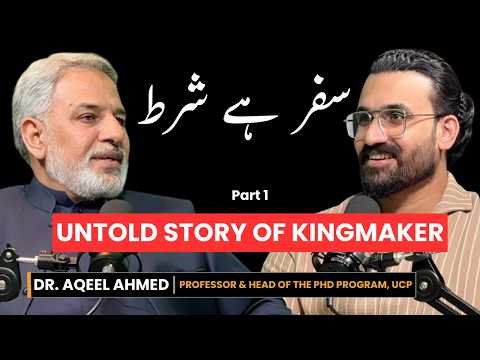
In Episode 13 of Muffled Minds, host Khawar Shahzad sits down with Naeem Wazir, music director, lyricist and the proud son of the legendary Lollywood composer Bakshi Wazir. The episode opens with the famous confrontation between Madam Noor Jahan and Bakshi Wazir: she said a singer makes a song a hit, he said the creator, the musician, does. Naeem grew up in Bhatti Gate's Mohalla Samya, a neighbourhood that produced Ghulam Ali, Shaukat Ali, Feroz Nizami, Muhammad Rafi and many more legends.
Naeem tells his own journey: a passion for the guitar that he chose not to make a profession, four years at PTV from 1989 to 1992, a master's in political science and then in business, advertising at Orient McCann and his own company for 22 to 23 years, and the telefilm Ujala that he wrote, scored and screened for 1,200 people at Aiwan-e-Iqbal. His debut as a lyricist came with his brother Bobby Wazir's film Azaadi in 2016, and he later became a music director with Thodi Life Thodi Zindagi, winning best songwriter for Lambi Judai.
The conversation then turns to his father's memories: how Bakshi Wazir proved his point with Afsha Begum and Menaj ji, the childhood studio visit where a young Naeem predicted a film would flop, Baddo Baddi still sung by nursery children fifty years on, and songs copied in India. Naeem also explains EMI Pakistan's new royalty agreements, his time on the Pakistan Idol selection committee and the Music Challenge auditions of Ibrar-ul-Haq and Shazia Manzoor, why music is a responsibility and not a career, and his father's advice on success: hard work and luck, the two wings of the bird.
Naeem Wazir is a music director, lyricist, script and story writer, and event manager from Bhatti Gate in Lahore's Walled City. He is the son of the legendary Lollywood music director Bakshi Wazir, and the seventh generation of a family that has carried the responsibility of music for seven generations.
He joined PTV in 1989, worked in advertising at Orient McCann and runs his own company, and came to film music as a lyricist with his brother Bobby Wazir's film Azaadi (2016). He won best songwriter for Lambi Judai and served on the selection committee for Pakistan Idol.
This transcript was generated automatically with speech-to-text and lightly edited, so some words may be wrong, and passages that could not be made out are marked [unclear]. The first tab shows what is spoken in the video: Urdu written in Roman Urdu, with English kept as spoken. The English tab is a translation of the same transcript. The video is the authoritative version.
0:00 Jahaan Lahore apni historical places ki wajah se mashhoor hai, wahi is mitti ne aise aise legends paida kiye hain, jinhone music industry ko shohrat ki bulandiyon tak pahuncha diya. Aaj bhi Pakistani, khaas taur par Lahore-based artist ka banaya hua music poori duniya mein suna jaata hai. Aaj hum unhi mein se ek legend ki baat karenge. Studio ki chaaron deewaron ke darmiyaan do legends aamne saamne khade the. Madam Noor Jahan ne fakhar se kaha, Khan sahab, singer bahut badi cheez hoti hai. Composer ne kaha, nahin Madam ji, creator mausikaar hota hai. Humne achhi melodies banayi hain, aapne gaayi hain, aapka naam ho gaya hai. Madam ne kaha, nahin, mere gaane se woh gaana bada ho jaata hai. Composer ne bilkul saaf lafzon mein kaha, yeh ghalat baat hai Madam ji, melody hi hit hoti hai. Haan, unmein
0:58 aap ki khubsoorat aawaaz ne chaar chaan laga diye, lekin asal kaam melody ka hota hai. Is behes ke baad us composer ne ek faisla kiya, jo music history mein hamesha ke liye yaadgaar reh gaya. Unhone socha, Madam ji ko realise karwana hoga ke mausikaar ki melody hi hit hoti hai, chaahe use koi bhi achha singer gaaye. Composer ne poocha, Kasur sheher mein aur koi gaane wali nahin hai kya? Phir Kasur se Afsha Begum ko bulaya gaya. Film Akhad ke saare saare gaane Afsha Begum ne gaaye, aur kya hua, har ek gaana super hit. Jaan kad le beimana, jaan wali gal karke.
1:46 Studio ka darwaza khula, Madam Noor Jahan andar daakhil hui. Composer ne Madam ki taraf dekha, donon hasne lage. Madam ne ikhlaas se kaha, Khan sahab, dekh lein, aapne apni baat manwa hi li. Composer ne muskurate hue kaha, dekh lein Madam ji, mausikaar is a captain of the ship. Woh azeem composer, music director the Bakshi Wazir, jinhone Pakistan ko behtareen music diya. Yeh un ki famous compositions mein se ek hai. Mera naam main kha mar janiya. Bakshi Wazir sahab to is duniya mein nahin rahe, lekin woh apne peechhe apni baqiyaat chhod gaye. Aaj un ki legacy unke bete Naeem Wazir ke haathon mein hai, jo apne baap ki riwayat ko poori shaan-o-shaukat se aage badha rahe hain.
2:41 Aayein, jaante hain Naeem Wazir ke baare mein, ke woh kaise apne father ki legacy ko lekar chal rahe hain. Assalam-o-Alaikum everyone, welcome to Muffled Minds, Find Your Clarity. I am your host, Khawar. Viewers, Pakistan film industry ki ek apni rooh hai, ek apne saaz ki khushboo hai. Aisi compositions jo sirf kaanon tak nahin, dil tak utar jaati hain. Sadabahar gaane jo aaj bhi kisi mehfil mein bajte hain to rang bikher dete hain. Lekin ek gaana sirf ek aawaaz se nahin banta. Uske peechhe kai raaton ki mehnat hoti hai.
3:21 Lyricist, composers, yeh sab woh chehre hote hain jo ke back of the stage jo hai woh kaam kar rahe hote hain. Aur unhi mein kuchh aise naam hote hain jo back of the stage rehkar bhi legends jo hain woh ban jaate hain. Aur unhi mein se ek naam Sir Bakshi Wazir ka hai, jinhein aap sab log jo hai woh jaante honge. A man whose compositions still breathe in our culture. Aur aaj we have their proud son who is basically carrying on the legacy of his father. Pichhle saat naslon se ek music industry jo hai woh us ki responsibility jo hai woh utha rahe hain. He is a music director,
3:58 lyricist, script and story writer, and on top of that an event manager too. Ek multi-talented fankaar. Please welcome Sir Naeem Wazir. Assalam-o-Alaikum Sir. Wa-Alaikum-Assalam. Kaise hain aap? Main theek thaak. Sir, ek hamara signature Muffled Minds question: like, what are you, in just one or two lines? What do you think, what are you, and where are you from? So when I think about myself, what I am, to me, like, I am a hard worker. Hard worker, that's it. And where are you from? I am from Lahore. From Lahore, and which area?
4:37 We are from Walled City. Basically, our seven generations, which I know, and I have the names of those seven generations. To hum log Androon Sheher se rehne wale hain. Mujhe yeh soch aayi ke after my education, ke meri education FC College se hui, so master's karne ke baad mujhe khayal aaya ke humne kya aisa gunaah kar diya hai ke hamein Androon Sheher mein hi rehna hai, hamein bhi nikalna hai. Uski wajah shayad yeh thi ke mere saare dost jo the, woh tab takreeban jitne bhi, most of my friends who are living beyond the canal, to mujhe unko milne aana padta tha, to mujhe bahut door lagta tha. To maine socha ke hamein bhi, matlab, wahaan se Androon Sheher se nikalna chahiye, to chunke family saari Androon Sheher mein reh rahi thi, dada, pardada, sab log, to woh unke liye bada mushkil tha ek naye culture mein jaana. To maine yeh
5:30 ek step liya. In 96, 96 mein main shift hua, pehle Iqbal Town mein, aur Iqbal Town se phir main 2000 mein Johar Town mein shift ho gaye, to pichhle 25 saal se main Johar Town mein reh raha hoon. To I was reading somewhere, you are from, like, Bhatti Gate, your parents and your grandparents, all of them. I'm from Bhatti Gate. There's a very famous area, Mohalla Samya. Mohalla Samya is famous because of the people, those who live there, and the very renowned persons used to live there, jinke main naam leta hoon, shayad poore gina na sakoon aap ko, to aap ko badi hairangi hogi, aur viewer ko bhi ek information hogi, ke sabse pehle main apne chhote dada ka naam loonga.
6:21 Ustad Chhote Ashiq Ali Khan. He was a classical singer, jo mere dada ke chhote bhai the. Mere dada Ghulam Muhammad. Uske baad main aata hoon, apne dada ke ghar se, chhote dada ke ghar se, chhote dada ke ghar mein neeche jo kiraye pe log rehte the, unmein Ghulam Ali sahab ki family, jo hamare legend ghazal singer hain, Uncle Ghulam Ali, inki family, Shaukat Ali sahab, jo hamare Pakistan ka bahut bada naam, unke parents, aur Albela sahab, jo Pakistan ka bahut bada naam, inke parents. Ye log teen families neeche raha karte the. Ab ye teen log usi ghar mein jawan hue aur inhone duniya mein naam paida kiya.
6:59 Uske baad main agar bahar nikloon us ghar se, to us ghar se nikalte hue right side pe jaoon, to bahut bada naam, Feroz Nizami sahab, Pakistan film industry ke bahut bade music director, Feroz Nizami sahab, jo hamare mashhoor cricketer Nazar Mohammad sahab ke bhai the, aur Mudassar Nazar ke chacha. Uske baad main thoda aage aaoon, to ek music director the, Mushtaq Ali, woh wahaan raha karte the. Mere walid sahab, mausikaar Bakshi Wazir. Iske baad usi ilaake mein aap agar baat karein to M. Ashraf sahab, mausikaar Tafu, aur bahut se beshumaar naam, even Amjad Hussain, ek hamare folk singer, Karachi se apne aap ko introduce karwaya, woh bhi usi ilaake ke rehne wale hain. Iske ilawa Samina Peerzada,
7:54 Samina Peerzada ke parents bhi usi ilaake mein rehte the. To yeh ek bada aisa, matlab, blessed area hai, ke jahaan pe fankaar hi fankaar. Master Anayat Hussain, ek bahut bada naam the, Pakistan film industry ka, woh bilkul hamare ghar ke peechhe unka ghar tha. Master Tufail Hussain, ek music director the, woh rehte the. Phir Jauji Anjam, ek music director the, woh wahaan pe rehte the. So isi tarah mujhe yaad aate rahenge. To main film maker wahaan rehte the, film directors wahaan rehte the, film producers wahaan rehte the. To yeh ek bahut hi blessed, main aap ko dobara kahoonga, ka area hai ke jismein bahut zyada fankaar hain. Main aapka bachpan to un logon mein guzra hoga, jo ke itself jo hai woh poore ka poora ek knowledge, books keh sakte hain aap us ko. Ji, main poora ka poora knowledge ka world. Exactly.
8:40 Main main aap ko bata raha hoon ke ek jagah mujhe bolne ka mauka mila to mainne wahaan yahi kaha ke hum jab cricket khelte the bachpan mein to ball jaati thi kisi ghar mein to mostly kisi na kisi fankaar ke ghar mein jaati thi. To itne zyada fankaar wahaan, aur yeh nahin ke saare hi fankaar the, bade bade achhe, matlab, usmein army ke officers bhi rehte the, doctors bhi rehte the, jo hamare mohalledaar the. To yeh ek bada hi khubsoorat sa ek mohalla hai, Mohalla Samya, to jismein, matlab, artiston ki bharmaar hai. To shayad udhar ka paani aisa hai ke jisne bhi peeya hai, matlab, mera koi mood nahin tha ke main kabhi lyricist banoonga, ya main kabhi music doonga, ya main kabhi music ke hawale se koi baat kar sakoon ga, to shayad wohi paani aaj jaa kar dikha gaya.
9:17 To I guess, woh aap bata rahe the, Rafi sahab, Muhammad Rafi sahab? Ji, Muhammad Rafi sahab, agar Feroz Nizami sahab se thoda aage jayein, unke ghar se to aage Mohalla Noor Mohalla, wahaan pe Muhammad Rafi sahab rehte the. To Muhammad Rafi sahab ka business place bhi uske saath hi tha, Bhatti ke area ke andar hi. To matlab, isse bade bade naam paida hue jo us area mein rehne wale. Bilkul, bilkul.
9:56 Agar aapki journey ki baat karein, like how you started all of this, like music and all. Sir, mere father ne mujhe, matlab, mujhe bahut shauq tha guitar ka, aaj bhi shauq hai ke main guitar bajaoon. But mujhe guitar jab mainne seekhna shuru kiya, after my graduation, to mujhe laga ke mujhe yeh professionally adopt karni padegi. To I don't want to be a musician. Mujhe musician nahin banna tha, mujhe kuchh aur karna tha. To mere father ne mujhe kaha ke, why you are not taking interest in learning the guitar? To mainne kaha ji, mujhe shauq hai, lekin mujhe lag raha hai ke mujhe yeh as profession adopt karni padegi, and I don't want to be. To unhone kaha, achha, theek hai. To unhone phir mere faisle ko saraha, mera saath diya, aur woh guitar mere bhanje ko de di gayi, jo us waqt bahut chhota tha, aur woh hai Shuja Haider, Shuja Haider, jo aaj Pakistan ka ek bahut bada singer, music producer hai, Pakistan Idol ka music de raha hai. To woh guitar Shuja ko de di gayi, aur Shuja ne us guitar se start liya, aur aaj woh, mashallah, Pakistan ka bahut bada naam hai,
10:38 To woh main phir us ke baad, mujhe mauka mila, ke main chunke direction ka mujhe bahut shauq tha, to main PTV join kiya as assistant producer. To mujhe wahaan, chunke ek music director ka beta tha, to unhone mujhe music producer ke saath, Farrakh Bashir sahab ke saath mujhe as assistant laga diya. To mainne unke saath kaam kiya. To main 89 se mainne onward 92 tak PTV pe kaam kiya. Uske saath hi mainne apna masters kiya. To I want to be TV producer. To jab masters kiya, to uske baad PTV ke halaat bhi different ho gaye, aur kuchh mera zehen bhi change ho gaya, to mainne socha ke kuchh aur kiya jaaye. To my father take me to the film, Filmistan, Rahal Park ke andar film ke logon ke offices the, aur woh saara tha.
11:22 To my father asked me ke what do you want to be? Main kaha, I want to be a film director. You take me to the film office. Wahaan ek film ke director the, unse meri mulaqaat karvaai, aur mujhe leke ek kamre mein chale gaye, aur wahaan pe hamari discussion hui. To woh ek analysis discussion thi. To main wapis aaya, aur aakar mainne gaadi mein baitha. Gaadi mein baith ke mainne apne walid sahab ko dekha, to unhone kaha ke haan ji. To mainne kaha ji, unhone jo mujhe story sunaai hai, usmein unhone bataya ke 24 saal woh apne ghar ek rupya nahin leke gaye. To mere father ne kaha, phir mainne kaha ji, 28 saal tak mujhe bhi nahin leke jaane denge. To unhone kaha, phir mainne kaha ji, yeh to badi khatrnaak field hai. To mujhe to laga tha ke
12:01 film director bahut badi cheez hota hai. To unhone kaha ke beta, this is the decline time of the film industry. Aur yeh baat hai ke 92, 92 ki. To unhone, 91 mein mainne masters kiya tha political science mein. To unhone kaha ke agar ab aap film industry ka hissa banoge na, to yeh decline time chal raha hai, aap bagair kuchh kiye, bagair kisi gunaah ke, us gunaah ke zimmedaar ho jaoge jo film industry ke decline ke sabab ban rahe hain. To aap usmein se ek ka cause discuss hoge ke you are part of that industry jo decline kar gayi. Abhi isko chhod do. Abhi aap is tarah karo ke aap kuchh aisa profession dekho jismein tarakki ho. Kyunki film
12:44 woh industry hai jahaan pe puraani cheez ko sadak pe phenk diya jaata hai, jahaan baarish, dhoop, garmi sab aate hain aur woh cheez tabaah ho jaati hai. Har jagah par store mein cheez rakhi jaati hai, puraani store mein garmi, sardi to hoti hai, lekin baarish aur toofan nahin aata. To is industry ko aap agar join karoge to aap ko mainne, ek being music director, main aapke liye jitna kuchh kar sakta tha, woh mainne kar diya, mainne to aap ko maximum padha diya. Ab aap ko apni shaadi karni hai, apna ghar khareedna hai, apni gaadi khareedni hai, abhi aap jis gaadi mein baithe ho, yeh ek family car hai. To yeh saara kuchh yahaan mumkin nahin hai.
13:26 To aap kisi aisi field mein jao jahaan din badin tarakki ho. To jab banda senior ho to us ki salary badh jaaye. Film industry mein senior ke paise kam ho jaate hain. To aaj agar aap baat karein kisi senior artist ke, to agar apne rooj pe 50,000 le rahe the, to aaj un ko 10,000 mein cast kiya jaata hai. To yahaan cheez devalue hoti hai. Corporate sector mein aap jayein to jis bande ka 30 saal ka tajarba hota hai, to us ki salary bahut increase kar jaati hai. To then I realized ke mujhe kya karna hai. Main looking to myself ke meri field kya banti hai. To mujhe phir attract kiya advertising. Mainne masters kiya business mein, usmein mujhe advertising padha. To mujhe laga ke yeh creative area hai, to mujhe ismein jaana chaahiye. So, mainne creativity ke area ko chuna aur mainne Orient McCann
14:13 jo us waqt Pakistan ki sabse badi agency thi, advertising agency, us ko join kiya. Wahaan mainne do, dhai saal kaam kiya. Us ke baad then I started my own. To mainne apni company start ki, aur Alhamdulillah us ko main lekar chal raha hoon, ko 22-23 saal. Usmein mainne corporate sector ke andar bahut kaam kiya. Ismein Nestle, ICI, Dulux, Mobilink, LUMS aur Tetra Pak, is tarah ke bahut saare clients ke saath kaam kiya. Mostly jo mainne kaam kiya, woh Nestle ke saath kiya, aur Nestle ke saath I'm the only person jisko Nestle se 4 appreciation letters mil chuke hain.
14:52 Aur iske ilawa mainne Mobilink ke history mein 2006-2007 mein sabse bade events hue, unke Mobilink Mobile Fair, woh that was conceived by myself, executed by myself, even anchored by myself, woh events kiye. Us ke baad abhi recently main advertising aur event management ke saath munsalik hoon, woh kar raha hoon. To ek badi kamaal cheez hui ke mujhe kuchh likhne ka shauq aane shuru ho gaya. Mujhe, I was not aware ke main kabhi writer banoonga. Yeh mujhe koi shauq nahin tha. Haan, Urdu adab padhi thi, mere ustad Ahmed Aqeel Rubi sahab se mainne woh padhi. Bahut bade shaayar hue Pakistan ke, script writer bahut bade hue, jinhone woh gaana likha tha, "Koi to hoton ka vaada hai achha", aur is tarah ke bahut se, "Laiyaan, lai lai re, na dolna", is tarah ke gaane unhone likhe hue.
15:42 To Aqeel Rubi sahab, chunke mere ustad bhi the aur mere baap ke tarah bhi the. Jab main pehle saal mera daakhla hua to unhone mere father se kaha ke mujhe matric pass ka haath le, mere se MA pass ka haath le le chaahiye. So he insisted me to join FC College. Duniya mein jitne bhi college, yeh FC College dekha tha. To wahi chhe saal padhke, to mainne masters kiya. To woh Aqeel Rubi sahab se jo padha tha, woh thoda kaam aaya. To main kuchh aisi, mujhe scenes aane shuru ho gaye. Main likhta tha, gaadi mein rakh deta tha. Woh ek din mainne woh saara clipboard haaya aur office mein ladke ko diya aur mainne is ko type karo. Usne type kiya. To mainne kaha lao. Woh jab mainne joda to woh poora script ban gaya ek film ka. To main bada pareshan hua ke yeh to ek film ban gayi.
16:26 Phir mainne apne office ke ladkon ko kaha ke mere saath baithkar criticise karo, tareef nahin karni. Unhone criticism shuru ki. Mainne woh criticism saari justify ki. To woh dekha to ek film ka script ban gaya. To mainne kaha, yaar, yeh karte hain. To usse pehle mainne socha ke main ek film karoon as assistant director, aur us ke baad ek film apni banaoonga. I went to studio. Mere bhai the, Crown Plaza Hotel ke General Manager, Bhai Murad Love Bakhsh, unki corona ke dinon mein death ho gayi. To unke Syed Noor sahab se bade achhe muraasim the. To I asked him ke mujhe Syed Noor sahab ka shagird karwayein. Main unke saath ek film banaoonga. Un dinon Syed Noor sahab ek film banane lage the, Heer Ranjha.
17:05 To mainne kaha main us film ko assist karoonga aur us ke baad apni film banaoonga. To woh main teen dafa gaya to Syed Noor sahab mile hi nahin, un dinon main office mein nahin mil saka. Then he came back and I thought that I would be my own. So because I had no experience in cinema and I had no experience in the film, I had a little experience in the film, I had a little experience in the TV, camera and videography, so I made this film as a telefilm, and it was a great cast. Mainne ismein Shafqat Cheema, Annie Tayra, Noman Ijaz, Rashid Mehmood, Azhar Rangeela aur Sufiya Ahmed,
17:43 bahut saari achhi cast leke, mainne is ka music banaya, script likha, saara. To woh mainne phir shoot ki, aur woh film mainne phir socha ke agar main kisi channel ko doonga to mere to saare jaanne wale busy log hain, to busy woh to kabhi dekhenge TV pe, kaun dekhega. To mainne phir Aiwan-e-Iqbal book kiya aur usmein badi screen laga ke 1200 logon ko invite kiya aur un ko dinner karwaya aur apni film dikhaai. Aur sab ko wada diya, dhanyavaad, thank you, best of luck. Wada diya ji, Ujala. Abhi main us ko YouTube pe main soch raha hoon ke main daaloon taaki log mujhe aksar poochte hain. To mainne us film ko YouTube pe bhi nahin daala, kahin nahin daala, bas dikha ke to mainne rakh di. Nahin nahin, aap us ko jo hai woh upload karein. Ji, main bilkul ab karoonga, InshaAllah, mujhe shauq aaya ke ab main karna chaahiye.
18:30 Us ke baad main, mere bhai the chhote, Bobby Wazir, he was music director, aur un ko ek film kar rahe the, Azaadi, 2016 mein. To us ke un ko koi shaayar nahin mil raha tha, jo us film ke gaane likh sake. To main thoda bahut aise hi chauk mein, mazaak mein likh deta tha, koi lines, chaar lines. To main Bobby ke saath baitha, to usne mujhe kaha ke yeh situation hai, is tarah ka gaana hai, to yeh woh likhna hai. To humne woh gaane likhne shuru kiye. To is film ke saare gaane mainne likh diye, Azaadi, ARY Films ki film. Achha, unhone release ki thi, Moammar Rana ki, woh super hit film hui thi 2016 mein. To us film se, that was my debut film as lyricist. To mujhe laga ke haan, main kuchh kar sakta hoon, matlab mera... mere mein... wo wale, matlab, obviously wo gems the. Ji ji, of course, of course. To wo main wo gems pe aata hoon abhi.
19:18 Haan, you will be astonished ke wo gems jo hain, wo kaise bole, haan, bilkul, matlab, obviously wo ek generation hai, seventh generation, wo chal rahi hai, cycle. Mainne sir, PTV pe rehte hue jitna music mainne kareeb se dekha hai na, woh saara PTV pe dekha hai. Mainne koi dhai hazaar raag rang record kiye hain. Achha. Mainne har bade bande ko record kiya, unke saath kaam kiya. Mere last programme tha Tarannum, jo Madam Noor Jahan ka PTV pe hua. To Madam Noor Jahan ki ghazalein banni, "Raat pehli hai, teri surmai aanchal ki tarah", aur hum, "Hum na nikhat hain na gul hain". Yeh saari ghazalein mere saamne bani, mere saamne record hui, aur mere saamne is ka saara edit hua. I was part of that production.
19:58 To saara music wahaan suna, raag sune, light music suna, drame kiye. To woh saara jo tha na, jitna bhi funoon-e-lateefa tha na, woh saara mujhe PTV par aage badh ke kareeb se professionally dekhne ka mauka mila. Us ke baad phir mainne jab yeh ek film ke gaane likhe, to us ke baad ek do aur films ke liye kaam karne ka mauka mila, script likhne ka mauka mila. Hamare Pakistan ke ek bahut achhe director hain, Nadeem Cheema, unke saath mainne do teen films mein main unka hissa raha hoon, aur un films ke gaane bhi likhe, script mein bhi unke saath raha.
20:35 To phir meri M. Arshad sahab se mulaqaat hui, mausikaar M. Arshad, jinhone Nusrat Fateh Ali Khan ka tamaam music arrange kiya hai. Ab Nusrat Fateh Ali Khan sahab ka koi bhi gaana sunne hain, jo Pakistan mein banaya hai, us ka music jo hai, M. Arshad sahab ne tarteeb diya. To M. Arshad sahab bahut achhe insaan hain, bahut aala fankaar hain, hamare is mulk ke living legend hain. Unse hui to he insisted ke aap mere saath kaam karein. To mainne unke saath likhna shuru kiya. To humne milke koi saat aath films ke liye unke saath kaam kiya. Unhone mujhe Syed Noor sahab se milwaya. To Syed Noor film ke "Lalkaar Singh in Lahore", woh ab aa rahi hai, InshaAllah jald aayegi, us ke gaane likhe. To isi tarah ek silsila chal pada. Isi duraan mein mujhe ek mere dost hain, Khursheed Rizvi sahab, woh bhi bahut bade film maker hain.
21:23 Rizvi sahab ke bete hain, jo unke walid sahab film producer, film director rahe hain, Baapu ke naam se un ko film industry jaanti hai. Unke bhai, jinhone Pakistan mein pehli science fiction film banaai thi. To inhone mujhe ek film ke liye ka script likhna hai, woh likha. Hamare ek dost jo Hollywood se film padhke aaye the, aur wahi America mein hote hain, California mein, unhone woh script likha. Us script ko humne matlab re-write kiya, unke liye jo cheezein thi, thodi bahut unhone assistance li, mainne usmein kiya.
22:00 Us film ke liye mainne gaane likhe. To main jab gaana likhta tha, to main bataata tha ke gaana is tarah karke banna chaahiye, to woh kehte hain. To jab film ka script khatam hua, to mainne kaha ji, aap call the music director for making the music of the film. He said, we don't need music director. I said, we'll make the music. Unhone kaha, you, I'm not a music director. Unhone kaha, jis tarah aap ne is film ke music ko collaborate kiya na, you understand the music, doosra nahin karta. To hum chaahte hain ke aap yeh karein. To us film ko mainne as music director kiya. Woh meri film ke gaane bade hain, YouTube pe aap dekhenge, "Thodi Life, Thodi Zindagi". "Thodi Life, Thodi Zindagi". Ab log ne kaha ke yeh kya naam hai, "Thodi Life, Thodi Zindagi". To main bataata chaloonga ke life woh hoti
22:40 hai jo maa-baap ke paison par hoti hai, aur zindagi woh hoti hai, to woh family story thi. To us ka naam bhi rakha gaya, "Thodi Life, Thodi Zindagi". To us ka saath mere naam ke saath music director lag gaya. Kyunki koi bhi creative aadmi hai, us ka ultimate goal jo hai, that is silver screen. To jab aap silver screen pe na koi kaam karein, utti der tak aap register nahin hota hai. Main apne aap ko jitna marzi song writer kahta rahoon, lekin agar mere gaane film mein nahin aaye, to main aap proper song writer... Kyunki jisne film ke liye kaam kiya hai, jo bhi funoon-e-lateefa ke kisi bhi branch se hai, kisi bhi sector se hai, agar usne us ka istemaal film ke liye kiya, ya film ne us ko accept kar liya, idhar hi singer, music director, actor, writer,
23:30 song writer nahin, camera man, agar film ke liye to phir woh ek register banda hai. Is se aage kuchh nahin hai, film ke liye. Film ke liye phir mainne gaane likhe. Abhi mujhe is hi month mein teen awards mile hain. Do mujhe event management par mile hain. Main do clients ke liye event kiya aur donon ne mujhe awards diye. Ek Salsal Technologies aur ek mera client hai World Wide Cable. In donon ne mujhe awards diye. Aur teesra award mujhe mila hai ji, best songwriter ka, mere film aayi thi, "Lambi Judai", us ke liye gaana, to us ke liye gaana likha tha. To us ke liye gaane ke mere... Alhamdulillah, mujhe ab laga ke mere kaam ko accept kiya ja raha hai market mein, aur professionally log mujhe... Abhi mainne Shahzad Rafique sahab ke saath ek film ki hai,
24:19 "Welcome to Punjab". Us ke andar mera gaana tha, aur woh ek history ban gaya, kyunki woh mausikaar Zulfiqar Ali sahab ka aakhri gaana tha, un ki life ka. Mohsin Abbas Haider ne woh gaaya tha. M. Arshad sahab ne us ka music arrange kiya tha, aur composition thi Zulfiqar Ali sahab ki. To woh bhi mainne likha. Jaise mainne start mein discuss kiya ke ek song ke peechhe kitni jo hai woh struggle hoti hai, kitni mehnat hoti hai, kai raaton ki mehnat hoti hai, lekin stage ke upar sirf ek singer zyada zyada woh nazar aata hai, ya jisne woh gaana likha, woh nazar aata hai. Jo composition, matlab, kaafi cheezein involve hoti hain, un ko bahut kam log jaante hain. Iske liye aap ko ek badi khubsoorat waqya bataata hoon apne father ka.
24:58 Madam Noor Jahan ji ne kaha ke singer bahut badi cheez hota hai, jo gaana main gaati hoon, woh hit hota hai. Mere father ne kaha ke Madam, takhleeq kaar jo hota hai, gaana us ka hota hai. Aap jab gaane aati hain, aap ko nahin pata hota ke kitni mehnat se, kitni riyaazat se, kitni dafa tod ke jod ke yeh composition develop ki gayi hai. To aap to final stage pe aati hain, aap ko kaha, yeh kar dein, aapne woh kar diya. To asal property to us ki hai, jisne is ko create kiya hai. The real creator is that person. He should be recognized for that thing instead of singer. Unhone kaha, nahin nahin, main main main gaati hoon to woh hit hota hai. To aap kisi aur se gawa ke dekhein.
25:42 Father ne kaha, theek hai. Ek film un ko mili, Akhad ke naam se, Punjabi film. Unhone kaha, yaar, I want another voice, koi nai aawaaz chaahiye mujhe. Phir Afsha Begum ko bulaya gaya. Afsha Begum, Pakistan ka bahut bada naam, unse unhone gaane gawaye. Is film ka saare gaane hit ho gaye. "Jaan kad le beimana, jaan wali gal karke, ang ang vich masti ban ke, rache tera pyaar lutlela, mauj bahar". Is tarah saare gaane. To Madam ji aayi studio, to abbu ne unki gaadi roki aur un ko kaha ke Madam, aap kehti thi singer bada hota hai. Mainne aap ko kaha tha music director bada hota hai. Yeh meri saari film ka music hit hua hai. Aapne ek gaana nahin gaaya. To Madam ne kaha ke
26:21 haan, baat to theek hai, lekin woh bhi meri hi bhatiji lagti hai, jisne gaaya hai. To credit to mujhe hi hua na. Unhone kaha, okay. Un ko ek film mili, Ijaz Durrani sahab ki film thi, "Mera Naam Pate Haan". That film was recommended by Khwaja Khurshid Anwar, the great music director. Khwaja Khurshid Anwar sahab bhi Bhatti ke rehne wale hain, sathaan se. Ek aur naam add ho gaya. Ek naam aur add ho gaya, Allama Iqbal bhi udhar se hi, unka aaj bhi thada andar Bhatti ke andar. To Khwaja sahab ke paas wo gaye, Ijaz Durrani sahab, unhone kaha ke ek film karni hai, to aap us ka music karo. Unhone kaha, main film industry chhod chuka hoon. To unhone kaha, phir main kisse loon? To unhone kaha ji, Bakshi Wazir se le lein. To mere abbu ke paas aaye. Unhone kaha ji, film karni hai, is ka music. To unhone kaha ke yeh gaana main usse gaaunga jis ladki ko Punjabi na aati ho aur Punjab se na ho.
27:07 To unhone kaha, Punjabi na aati ho to Punjabi gaana kaise gaegi? Unhone kaha, yeh phir music director ka kamaal. To Menaj ji, Allah bakhshe, bahut bada naam Pakistan film industry. To Menaj ji ko bulaya gaya wahaan se, Karachi se. Woh Urdu medium thi. Unse Punjabi gaana gawaya gaya aur woh Punjabi gaana bhi super hit ho gaya. "Ranjhan yaar, main tere rang rangi". To is tarah unhone apne aap ko prove kiya. To baat yeh hai ke singer jo hai, woh aap ki baat sahi hai ke asal creation jo hai, woh hoti hai music director ki. Shaayri mein humein mere ustad Aqeel Rubi sahab kehte the ke beta, yeh Khwaja Pervez sahab bhi Pakistan ka bahut bada naam, woh bhi yahi kehte the ke
27:45 heere bhi paro de na aap shaayri mein, to agar us ko achhi melody na mile to woh bekaar ho jaati hai. Aur aap aam si shaayri likhein hain aur us ko achhi melody mil jaati hai to woh hit ho jaati hai. "Kine kine jaana hai, bilo dekaar", is tarah ke beshumaar cheezein hain. Master Anayat sahab ki main misaal doonga ke Saifuddin Saif sahab ne mushkil tareen shaayri likhi, "Jaane bahara, rashk-e-chaman, kuncha-dahan, sevi-badan", woh aajkal Ali Zafar ke, matlab, unhone recreate ki. Ab Master Anayat sahab ke saath yeh ek imtehaan tha ke kaise aisa banaya jaaye ke aam banda bhi gaaye. Mainne taange wale ko bhi gaate hue dekha yeh gaana, shev karne wale ko bhi gaate hue dekha yeh gaana.
28:28 Unhone ek CD create ki, music ki. Yeh gaana aise tha, likh ke aasmaan par rakh diya gaya hai, poetry. Unhone ek CD create ki, jisse aam banda bhi chadh ke is gaane ko gaake wapis aa jaaye. To yeh bade logon ke bade kaam the. Master Anayat sahab ne yeh gaana itna sahal kar diya ke aaj har banda, bacha bacha gaata hai. Poetry shaayad samajh na hai kisi ko, meanings kya hai, lekin Ali Zafar tak ga gaye hain. To woh youngsters ko woh gaana pasand aa gaya. To yeh creation hai music director ki. Is ko kehte hain music director, jo apne kaam ko samajhta hai aur jo us ke mutaabik kaam karta hai. Isi tarah Pakistan mein jitne bade-bade naam ho hain, saar, yeh saare apne mahaan log the.
29:06 To woh aap story bata rahe the, like, apke bachpan ki, jismein aapne kaha tha ke yeh film jo hai woh flop ho jayegi. [laughter] Ji, woh main, actually meri kuchh din pehle hi baat ho rahi thi unse, Hasan Kaifi, Kaifi sahab ke bete, woh achhe dost hain, to hum aksar phone pe baat karte hain. To unse baat ho rahi thi, to woh mujhe pooch rahe the, koi film waqya, to mainne unko bataaya. Mainne kaha, yeh baat hai, main bahut chhota tha, matlab, two-three class ka hoga student. To main studio, waise to hum banned the, hum ja nahin sakte the, father ne mana kiya hua. To mere taya ji mujhe leke jaate the studio mein, unke saath jaaya karta tha. Mere taya ji the, Manzoor Hussain sahab. To main unke saath jaata tha studio. To main gaya, to woh film background karne ke liye dekhi jaati thi. Film pehle black and white chala kar, to film chala ke walid sahab dekh rahe hain. To main unke saath khada, chhota tha,
29:53 un ka haath pakad kar. To film saari chalti rahi, main dekhta raha. Woh likhwa rahe the ke ismein mujhe kya kya chaahiye, assistant ko saath likhwa rahe the. To woh saari cheezein likh rahe the ke kya chaahiye, kya nahin chaahiye. To main film dekh raha tha, saare log dekh rahe the, aur teen-chaar log the, jo main concern, producer, director, mausikaar aur writer bhi honge. Main jaanta nahin tha jyatar logon ko. Kaifi sahab ko main jaanta tha, jo us film ke producer bhi the aur director bhi the. To ekdam se mainne film jab end hui, to mainne apne walid sahab ka haath kheencha aur mainne kaha, yeh film fail ho jayegi. To mere walid sahab ekdam se chaunke aur mujhe kehte hain ke, oye, ki keh raha hai? To mainne kaha, haan, yeh film fail ho jayegi. To woh Kaifi sahab ne sun liya, to unhone kaha, kya kaha bacha? To unhone kaha, nahin nahin, kuchh nahin, kuchh nahin, aap aap continue kar. Kehte, nahin nahin, kuchh kaha hai isne, kya kaha hai? To unhone kaha, nahin nahin, kuchh nahin. To Kaifi sahab aaye, unhone mujhe pakad liya. Kehte ke, beta, aapne kya kaha hai? Mainne kaha, mainne kaha ke
30:42 yeh film fail ho jayegi. To unhone kaha, beta, aap kaise keh sakte hain yeh film fail ho jayegi? Humne to badi mehnat se banaai hai. Aur yeh saari film... Mainne kaha, ji, mainne dekha hai, woh jo end pe ek baaraat aa rahi hai aur woh rok li gayi hai, aur wahaan pe kuchh talakh kalaami shuru ho gayi hai, aur koi ladai ka scene hua hai. Kehte hain, haan haan, bilkul. To mainne kaha, ji, dulha pehle woh ladai dekhta raha. Uske baad dulhe ne ekdam se apna sehra utaara hai aur zameen pe phenka aur ladna shuru kar diya. To keh rahe, beta, ismein fail hone wali kaun si baat hai? Mainne kaha, ji, us sehre par "La ilaha illallah Muhammadur Rasulullah" likha hua tha, aur usne us ko zameen par phenk diya. To mere khayal mein yeh film fail ho jayegi, koi yeh achhi achhi baat nahin hai. To woh film fail ho gayi thi, waqai fail ho gayi.
31:20 To film ki observation mujhe bachpan se mere saath thi, to woh aaj bhi hai. Main jo film dekhta hoon, to main us ko bade different angle se us ki cheez nikaalta hoon, jo film maker hote hain, hmm, yaar, yaar, yeh baat to zehen mein nahin, to woh kuchh hai, matlab, yeh genes ki baat hai, jo jaise music diya, woh apne genes ko chheda. To mainne film ka music de diya. Mujhe yaad hai ke main "Thodi Life, Thodi Zindagi" ka jab music de raha tha, to mainne ek gaana tha, us ki asthaai bana di, opening stanza, aur singer ko phone kar diya. Woh ek Pindi se hamare Mohammad Ali sahab hain,
31:57 Islamabad se. To mainne un ko kaha ke aap se main gaana gawaaunga, film ka. Woh ek function mein mujhe mile, hamari company event tha, to unhone kaha, sir, bade logon ne vaade kiye hain, aur matlab, aise hi koi nahin kahta. Mainne kaha, nahin, main aap se gawaaunga. To mainne un ko bulaya, ab woh Islamabad se chal chuke hain, Gujranwala pahunch gaye hain, to mera gaana abhi poora complete nahin hua hai. To main pareshan ke kya karoon. To mainne aankhein band ki, aur mainne apne abbu ko focus kiya, to mainne kaha, ji, agar nahin banega to mere se zyada aap ki beizzati hai, kyunki yeh kaam to aapka hai na, mera to nahin hai. To aap meri madad karein, warna yeh badi beizzati ka kaam hoga. To itne mein mere walid sahab ne mujhe us gaane ka antara jo tha, woh kaha.
32:47 Aur woh computer par us ko record kar raha hai. To jab mainne poora keh ke chhoda, to usne ekdam se hairaan hoke mujhe kehta hai ke, chachu, yeh kahaan se aaya? Mainne kaha, jahaan se aaya, bas is ko record kar le. To woh antara bhi itna achha tha ke main, I don't believe ke mere jaisa banda woh create kar sakta, jo unhone woh banaaya, aur woh gaana hua, film ke andar bada achha laga. Kya baat hai. Achha, agar hum father ki memories ki baat karein, to agar main wahaan koi ke, I'm son of music director Bakshi Wazir, to woh nursery ke bachche bhi unka gaana sunke woh gaate hain aaj bhi. Aur woh gaana hai, "Baddo Baddi".
33:37 Jad aakhdi, "Baddo Baddi". To yeh gaana jo, jisko Chahat Fateh Ali Khan sahab ne, main unke baare mein kehta hoon ke, chunke entertainer jo na, is like parent, to woh apne bachchon ko jis tarah aap bachchon ko khilone laa ke dete hain, un ko entertain karne ke liye, to isi tarah jo aapka creator hai, woh bhi entertain karne ke liye awaam ke liye cheez banaata hai. Gaana ka aur maksad kya hai, entertain hi karna hai, khilona bhi entertain karta hai. Ab kuchh bachche hote hain jo khilone ko bade der tak sambhaal kar rakhte hain, aap ko nikaal ke dikhaenge, aap ko kahin dost honge, yaar, yeh mere bachpan mein papa ne laa ke diya tha, mama ne laa ke diya. Aur kuchh bachche hote hain, ghante mein tod dete hain. To Chahat Fateh Ali Khan un bachchon mein se hai, jisne woh khilona pakda aur us ka beda gharak kiya.
34:16 To humein matlab, khushi is baat ki hai, saari family us ke bade shukar guzaar hai, ke usne after 50 years hamare us gaane ko dobaara se popular kar diya, aur aaj nursery tak ke bachche "Baddo Baddi, Baddo Baddi" karte phir rahe hain. Aur doosra gaana mere walid sahab ka, woh ultimate, the favourite song of, I think, everybody, aur woh hai "Jaddon Holi Jai Lainda Mera Naam, main kha mar jaan". Aur iske ilawa bahut se gaane hain jo shaadiyon pe gaaye jaate hain. "Mahi, Hasiya, Bahaara, Khipya", phir woh bahut se, jaan wale, te... "Main suna na saki dil wali gal, ve gandla saag, makhan mai, do jaya miliya, paya pukaara, pyaar diya, main akela hoon, phir Ranjhan yaar, ve main tere rang rangi, jaan kad le beimana, jaan wali gal karke, main mujrama, tu mehram hai, kar maaf, suhagan ho jaavaan". Bahut se gaane hain, main zar naam loonga to program ko time khatam ho jayega.
35:04 Bahut se gaane hain, matlab, main naam loonga to program ka time kharab ho jayega. Nahin to, like, agar hum thoda sa un copy rights wali ki baat karein, matlab, aaj bhi agar aap dekhein to hamare puraane jo songs hain, jo aap keh sakte hain ke sadabahar jo gaane hain, un ki copies jo hai woh chal rahi hai. Sir, yeh badi achhi baat ki aapne. Laxmikant Pyarelal ne ek film "Mom Ki Gudiya" ka music diya. "Baahon mein bahaar aaye, phoolon pe nikaar laai, aaja". Yeh gaana aapne suna hoga, bada famous song. Anand Bakshi sahab ne likha aur gaaya, aur Lata ji ne gaaya. Us gaane ka jo antara hai, woh mere walid sahab ke gaane ka antara, yahi "Jaddon Holi Jai Lainda Mera Naam". Achha, inka antara tha, "Mard de vaade jhoothe, jhootha hunda pyaar, aur us ka kaliyon ke mukhde pe khushboo ka raag hai, khushboo ka raag".
35:53 To main jab walid sahab se kehta tha ke woh dekhein, yeh bahut se log aage kehte the, to woh kehte the, nahin yaar, baat yeh ke jab koi kisi ke cheez ko copy karta hai, to us ko izzat deta hai, us ko admit karta hai. Mere walid sahab India gaye, Delhi gaye, Chandigarh gaye, bahut jagon pe gaye, Bombay nahin gaye. To us se poochte, "Paaji, Bombay kyun nahin ja rahe?" To unhone kaha, yaar, main Laxmikant, ek bade log hain. Woh jab mere saamne aayenge, to unhone mera gaana copy kiya hai. To sharmindgi unke chehre pe hogi, ya woh mujhe thank you karenge, to mujhe achha nahin lagega, yaar. Main is ehsaas mein nahin gaya ke yaar, woh chaar log baat karenge ke ji aapka gaana inhone copy kiya, to woh mujhe achha nahin lagta. Abhi yeh Coke Studio India mein hua. Usmein mere walid sahab ka gaana unhone copy kiya. Nahin, "Aaj koi jogi aaye". Achha, yeh Rashid Ali Khan aur Richa Sharma ne gaaya. Woh mere walid sahab ne Pakistan mein Shahnai film ke liye kiya tha. Phir Shahnai film ka hi ek gaana tha, "Mehndi la ke gehne paa ke", woh Kuch Kuch Hota Hai film mein unhone daala. Woh...
36:35 His... Gaana copyright mein ek bada achha kaam, ji, ek baat yeh liya gaya, EMI Pakistan, aapne naam suna, Pakistan ki bahut badi... yeh His Master's Voice ke naam se ek idaara tha, jo international... yeh aapne dekha hoga, ek doggy bana hua hai aur us ke saath ek horn bana hua hai, jiska logo, bilkul yeh thi. To woh... ke yeh Pakistan mein EMI thi, yeh kabhi... To EMI ke paas Pakistan ke music ke rights the,
37:18 woh rights is tarah the ke Pakistan film industry ka jo music banta tha, us waqt puraane waqt ki baat hai, 60s, 50s ke, film studio bahut door the. Matlab, aaj to yeh kareeb hai na, zara itne ho gaye hain ke aap easy pahunch jaate. Us waqt yeh studios bahut door the. To saara film ka gaana banaane ke baad, us ki jo rehearsals hoti thi, woh saari hoti thi EMI mein, kyunki one-go take hoti thi, koi bhool jaata tha, phir shuru se karna padta tha. To isliye woh yeh kiya jaata tha ke sabko ek jagah ikattha karke, pehle achhi tarah gaana yaad karwa ke, to 8-10 din, 10-10 din yeh rehearsals hua karti thi, yahaan pe EMI ke office mein. Yeh Mall pe tha, Al-Falah Cinema ke bilkul opposite building mein, first floor tha.
38:01 Wahi hum PTV ki recordings bhi wahi karte rahe. To EMI ka ek pattern tha ke aap wahaan pe rehearsals karenge, us ke baad woh gaana aap studio mein record karenge. Record karne ke baad woh gaana aap shoot karenge. Shoot karne ke baad aap ki saari audio EMI ko wapas aa jaayegi. EMI us audio ko ikattha karke film ke gaanon ki cassette release karta tha. Wohi ek pattern chal raha tha. Aur us pe woh ek agreement tha, logon ka, artists ka bhi, unke saath producers ka bhi, sab ka, woh jitni bhikti thi, usmein se kuchh ek percent, jo bhi percentage unhone apni officially rakhi, woh artists ko diya karte the. To yeh ek chalta raha silsila, lekin 30 years ke baad, kyunki copyright khatam ho jaate hain. Achha, yeh unka rule tha. Yeh matlab, mere walid sahab ne yeh kaha tha ke jaise dekhiye, 30 years hota hai, after 25 years generation change hoti hai.
38:51 To copyright bhi shaayad isi pattern par bane hue hain, ke 25 years, 30 years ke baad copyright change nahin hota, kyunki next generation aa jaati hai. Jis ghar mein baap rehta ho, wahaan beta jawan ho ke wahi usi level par aa jaata hai, yeh usi protocol mein aa jaata hai. To woh EMI Pakistan ab khareedi, Naveed sahab ne. To Naveed sahab ek hamare saath PTV pe businessman hain, lekin hamare saath PTV pe ek anchor bhi kaam karte rahe hain. He is a very good friend of hamare ustad ji, Par Bashi sahab. To Naveed sahab ne woh khareedi, aur unhone us music ko dekha, aur un ko pata chala ke ab to yeh rights khatam ho chuke hain.
39:33 Unke ek public relation manager hain, Tameer Afridi sahab. Tameer Afridi, basically ek music director bhi hai, singer bhi hai, aur besides all of this, he's a very good person, a human being, bahut achhe hain, aur music ke logon ko bahut pyaar karta hai. Unhone ek group banaaya, WhatsApp group, Naghma ke naam se, Naghma group, jo hai, usmein tamaam Pakistan se, Pakistan ke jitne bhi artists hain, almost tamaam us ke member hain, including Faisal, usmein artists ki families bhi hain, aur artists jo is waqt kaam kar rahe hain, woh saare bhi, artist se muraad jo music se related hai, shaayar,
40:13 mausikaar, mausikaaron ke bachche, musicians aur gulukaar, yeh saare us ke member hain. Aur uske ab unhone kya kiya, unhone EMI ne yeh kiya ke us agreement ko revise karne ke liye unhone sab se raabte kiye. Most of the artists jo seniors the, woh duniya se ja chuke the, un ki families ke saath raabta kiya gaya, un ko ek certain amount di gayi, ke unke previous royalty ke buniyaad pe di gayi, woh amaant di gayi, aur unke saath naye agreement kar liye gaya. Ab woh Lahore mein aate hain, Karachi se, to mere saath unka bada pyaar hai, ke unka, I'm a member of the group, Naghma. To phir mainne un ko bahut saare artists ki family se milwaya. Mainne locate kiya, kyunki being a son of artist, jab humein paise mile, to mera yeh first tha ke main baaki logon ko bhi unka haq dilwaata. To humne bahut saare log
41:06 jo is waqt, matlab, duniya se ja chuke hain, aur un ki families kahaan hain, kisi ko nahin pata tha. To mainne bahut se logon ko talaash kiya, unke behalf pe, un ko saath leke gaya. Un logon se naye agreement hue, aur un logon, agar koi bhi gaana Pakistan film industry ka, jo EMI ke paas maujood hai, agar agar koi banda use karta hai, aur ya us ko copy karta hai, ya us ko use karna chahta hai, kisi commercial mein, kisi film ke background mein, ya us gaane ko, kisi bhi matlab, commercial way mein use karna chahta hai, to he has to ask EMI, us ko EMI se ijaazat leni padti, aur woh rights khareedne padte hain for that specific project.
41:45 Iske liye EMI us ko charge karti hai, aur EMI ne bahut clearly woh ek agreement banaaya hua, jismein jo payment aati hai, usmein se unhone ek percentage, pehle un ki apni hai, aur baaki ke mein se shaayar, mausikaar aur singer, in logon mein divide kiye. Woh un ko, ek formula unka apna hai, jo unke legals ne banaaya hai. To woh jo aap ko payment dekhe jaate hain, agar denge, mausikaar ki family, hum log hain, humein dete hain, ya singer ki family ko, ya singer ko, jisko bhi dete hain, woh saath ek performa aata hai, jis par likha hota hai ke falaan gaana, falaan company ne humse khareeda, humne usse itne paise liye, kitne paise EMI ko gaye, itne paise singer ko diye, itne paise mausikaar ko diye, aur itne paise shaayar ko.
42:29 Woh saath ek performa aap ko bhi copy mein dete hain, aur cheque aap ko denge, aur yeh life time hota hai. Yahaan ji, ab life time, unhone sab se implement kar liya, ji, families are very happy, kyunki mujhe yaad hai ke hum kahin aisi mausikaaron ki family ko payment dene gaye, to unhone kaha ke jab se woh duniya se gaye hain, aaj pehli dafa kisi ne aake humein poochha hai ke aap humki family... Bahut bade bade shaayaron ko millions ke andar itne bade cheque main khud dekhe hain, unke saath jaake. Bahut se mausikaaron ko millions mein paise mile hain, aur bahut se singers ko paise mile hain. To yeh aajkal jo status hai, woh yeh hai. Aajkal jo ek Pakistan mein program chal raha hai, Pakistan Idol, usmein bhi jo gaane istemaal ho rahe hain, woh EMI se liye ja rahe hain. Usmein
43:14 sabse khushi ki baat yeh hai ke Attaullah Esakhelvi sahab ne apna saara music un ko de diya hai, rights ko de diya hai, ke mera music jo bhi bacha gaana chaahiye, yeh bahut badi baat hai. Attaullah sahab ko main salute ada karta hoon ke unhone Pakistan mein nai nasal ko, Pakistan ke music ke liye yeh bahut bada kaam jo inhone kiya, yeh un ki sacrifice bhi hai aur unka contribution bhi hai towards... Aur ab EMI ne unke saath hai, chunke woh part ka hissa hai, is ka, Tameer Afridi sahab bhi Pakistan Idol ke jo promote kar rahe hain, aur us ki training ka jo hissa hai, aur us ke andar EMI se un ko gaane bhi woh de rahe hain, woh saare rights unke paas hain,
43:56 To woh jo hamare Pakistan ke singers nahin diye apne rights, apne gaane nahin diye, theek hai, humki marzi hai, humki apni cheez hai, woh na rights rakhte hain, har bande ke paas us ka right hai, janaab, apni cheez ka, to un ki marzi hai. Lekin yeh hai ke aajkal jo status hai, woh yeh hai, about rights, of the rights. Chale, agar hum Pakistan Idol ki baat karein, to you were there as a judge, to woh kaisi journey thi, us ke baare mein batao. Ji, woh main, actually main clear kar doon ke hum log jo selection committee thi, us ke andar jo log the, main I was part of them.
44:34 Judges ka marhala agla tha. Humein judges hi kaha jaata hai, kyunki woh jo aa rahe the audition dene, woh yahi soch rahe the ke yeh judge hain. To judge hum is tarah nahin the ke humne woh, tab kuchh chaar gaanon sune, aur unmein se ek koi select karke koi naam dena tha. Kyunki main Music Challenge program bhi karta raha hoon, to usmein, ismein main koi har hafte mein 250 logon ko suna karta tha. To mera experience 90s ka hai, isi kaam ka. To naye logon ko sunna bada mushkil kaam hota hai, unka dil bhi na toote, woh dobaara se mehnat karein aur apne aap ko lekar aayein, to un ko bade tareeke se hota hai, leke chalna. To ismein, ji, mere saath hum log koi nau log the, jinmein lead kar rahe the, mausikaar M. Arshad sahab.
45:13 Ismein Amjad Bobby sahab ke bete the, Faisal Bobby, jo abhi kisi school mein teacher hain, music ke. Mausikaar Nazeer Ali sahab ke bete the, Sajid Nazeer Ali, jinhone film ka music bhi diya. Inmein Shahid Kamal the, mausikaar Kamal Ahmed ke bete, jo film ka music de chuke hain. Inmein Tariq Tafu the, mausikaar Tafu sahab ke bete. Aur ismein main tha, mausikaar Bakshi Wazir sahab ka beta, Naeem Wazir. Main bhi ek film ka music de chuka hoon. Aur is tarah ke yeh ek team thi, jisne usmein kiya. Hamare paas ek boom tha, aur humne koi dedh-sau logon ko, 150 ke kareeb logon ko subah 8 baje se leke maghrib tak suna.
45:52 Aur unmein se humne select kiya. Aur yeh saare, chunke music karne wale, inmein main ek naam bhool gaya hoon, Rashid sahab, jo Pakistan mein Ustad Rashid Ali Khan, jo saxophone player hain, aur Rashid sahab, to woh bhi ismein the, ek chaach. To unmein se humne jin logon ko select kiya, woh tadaad mein bahut zyada the, matlab, itne chaahiye nahin the, jitne humne select kar diye, kyunki hum kisi ka dil nahin tod sakte. To phir woh un logon ko re-audition hua, wahi par, aur us audition mein phir un mein se final kiye gaye. Aur phir un mein se dobaara jo log pick honge, yeh saara process, yeh nahin tha ke sirf hum sun rahe hain, mere saath camera bhi laga tha, mere paas mic bhi laga hua tha, aur bachche aake saamne jo keh rahe the, jo main un ko keh raha tha, jo mere aur unke
46:31 Ke conversation thi, jo unka gaana tha, woh sab record bhi ho raha tha, ke agar main koi likhne mein galti kar doon, ya main kisi ko ignore kar doon, ya main kisi ko misjudge kar doon, to woh us ka, unke paas record maujood ho. Aur agar kal ko woh claim karta hai ke I was a very good singer, but the guy who was taking audition, I had personal grudges with him, and he didn't select me, to woh us ko bhi, matlab, justify kar sake. To it was a very professional way of judging the people, and we were there for the selection. To final, Karachi gaye, aur finalist ne jaake wahaan par gaaya. Wahaan jo judges, jinhone aage proper un mein se select karke Pakistan ko singers dene the, un pe bhi bahut saare itraaz aa rahe hain. Aur itraaz karne wale jo hai, main nahin
47:13 samajhta ke woh unmein se ek itraaz Fawad Khan ke liye, ji, Fawad Khan ke liye bahut saara itraaz jo mainne bhi dekhe hain aur sune hain. Achha, Fawad Khan ke baare mein aap ko pata, to hamari industry mein jo bhi hai, woh aaya kisi aur kaam, hai yeh Pakistan film industry ki ek khubsoorti yeh bhi hai ke yahaan jo bhi hai, woh aaya kisi aur kaam, hai kiya usne kuchh aur kaam. Ab Nadeem sahab gaane ke liye aaye the, singer banne aaye the, aur woh hero ban gaye, ab isi tarah, Noor sahab ne acting bhi ki hai,
47:52 aur woh writer bane, aur phir kisi aur kaam aaye aur woh kuchh aur kar gaye. To Fawad Khan aaye the is industry mein as a singer. Unhone EP naam se ek band banaaya tha, aur us ke andar woh gaaya karte the, to achha gaate the, apne shauq ke liye. Aur aap ko pata, jiske andar shauq hota hai is cheez ka, us ke andar us ki badi mahaarat hoti hai. Lekin ab kudrat ne un ko as an actor kabool karva diya, aur acting kar rahe hain. To main aam public, kyunki, yeh samajhti nahin hai ke judges TV pe jo program chalta hai na, usmein bahut si cheezein hoti hain. To visualize us ka hona, ke visual kaisa aayega. Phir us ke sponsor kaise aayega? Phir us ka, matlab, logon ka caliber kya hoga, jo wahaan pe baithenge aur jo karenge. To jo music ke ustad keh rahe hain, jo asaadhza jo baat kar rahe hain, woh bilkul theek kar rahe hain, ke woh jitna
48:47 music ko samajhte hain, classical music ko samajhte hain, ya jo doosre baat kar rahe hain, woh apne hisaab se theek baat kar rahe hain, lekin chunke jo itne bade project ko leke chale hain, dekhein, itna bada project aap jab karte hain, to yeh ek din mein nahin hota. Bahut si R&D hoti hai is par, research and development hoti hai. Bahut se pehluon ko dekhke phir yeh decide kiya jaata hai. Aur is ki behtareen misaal main yeh doonga ke unhone aaj tak koi jawab nahin diya is par, kyunki yeh jo keh rahe hain, in ko nahin pata, hum jo kar rahe hain, humein pata hai. To mere khayal hai ke humein judges ki taraf tawajjo nahin deni chaahiye, humein un gaane walon ki taraf tawajjo deni chaahiye, un mein se bachche jo achha ga rahe hain, to main koshish honi chaahiye ke main usmein se achhe gaane wale
49:31 ko chunoon aur us ko apne kisi project ke andar mauka doon, chaahe woh jeeta hai, chaahe haara hai, agar woh achha, mujhe achha laga hai, to main us ko aage liye hoon. Koi singer ko agar koi achha nahin lag raha, to us ko bulaae aur us ke saath apna gaana kare. Theek hai na, yeh maazi mein hua na. Woh ek hamari singer hai, Maria Meer, us ko reject kar diya gaya, aur Hadiqa Kiani ne us ke baare mein kaha ke aap saari zindagi singer nahin ban sakti, aur woh bhi bahir aa gayi. Aaj woh Pakistan ki behtareen singer hai, hamari films ke liye usne gaane gaaye, woh ab abaad hai. To baat yeh hai ke woh bhi insaan hai, judges bhi insaan hote hain, unse judgment galat ho sakti hai, koi baat nahin, lekin kudrat jo upar baithi hui, usne jisko izzat deni hai, usne to deni hai.
50:11 To mainne suna hai, like, aapne Ibrar-ul-Haq aur Shazia Manzoor, unke bhi auditions jo hai, woh liye hain. Ji, jo jab hum Music Challenge program kar rahe the, to usmein yeh log aaye the. Aur yeh kis year ki baat hai? Yeh hai 90s ki. 90s mein, 1991, 92. To Ibrar Islamabad se participate kiya ismein, Music Challenge mein. Phir humne Lahore mein ek program kiya, Eid ke liye tha. Us ke andar humne naye logon ko, matlab, us waqt jo koshishein thi, woh yahi thi ke Pakistan industry ko achhe singers, hala, us waqt saare achhe singers live the, maujood the. Suraiya Khanum thi, Arifa Siddiqui thi, us ke andar Mehwish thi, Jarka thi, Tarannum Naaz thi, Shahida Parveen thi, Shahida Aziz thi, aur Ghulam Abbas sahab the, Riaz Imtiaz sahab the, us ke andar Mehdi Hasan sahab the, Nusrat Fateh Ali Khan sahab the, Ghulam Ali sahab the. Matlab, us waqt to itna singers tha ke humein select
51:09 karna mushkil ho jaata tha ke hum apne program mein kis ko le aur kis ko na le. To us waqt bhi in logon ne itna zor lagaaya ke Munir Hussain sahab the, inhone kaha ke humne naye aur junior ka mila ke hum program karein. Hum Adil Khan sahab, humne nayi ladki ko gawaya. Humne Munir Hussain sahab ke saath Shazia Manzoor ko gawaya. Phir humne Ibrar ko manwaaya aur woh gaaya. To Ibrar subah subah Islamabad se aa gaye aur mera naam lekar dhoond rahe. To main chunke us waqt masters kar raha tha, to main apne college aata tha subah. To wahaan meri classes khatm hoti saade 11 aur main 12 baje ke baad aata tha. Phir humne is ko is program ke andar apne add kiya. Shazia Manzoor, yeh padh rahi
52:07 thi yahaan pe Queen Mary College mein. To ek Safdar sahab hote the, Allah bakhshe, woh dholak player the, PTV pe gaanon mein bajaaya karte. Aur Safdar sahab is ko lekar aaye aur unhone kaha ke yeh ek bachchi hai, to is ko suno, yeh achha gaati hai. To main is ko avoid kar raha tha, matlab, to mere walid sahab us waqt music director the, to unhone kaha, woh koi achhi aawaaz aa nahin rahi thi, hum jisko bhi audition kar rahe the, yeh May ke andar hum kar rahe the, to jisko bhi hum bula rahe the, to woh, matlab, koi achhi aawaaz nahin mil chal rahi thi. To unhone kaha ke, yaar, woh ladki ko bulao. To yeh thi thodi boyish thi, aur matlab, personality aisi thi ke main thoda sa reluctant tha. To unhone kaha, nahin, is ko bulao. To is ko bulaya, to yeh jab gaai, to yeh bahut achha gaai. To mere walid sahab
52:50 ne kaha, main tumhein kaha na, ke us ki shakal se mujhe lag raha tha ke achha gaati hai, is ko bulao. To yeh is ka humne audition kiya aur is ko phir select kiya, us ke Music Challenge ke liye. Umaira Arshad, yeh hamare ghar majlis padhne aaya karti thi. Un dinon main yeh program kar raha tha, to Muharram mein meri walda ne mujhe kaha ke inki walda ne kaha ke meri beti ko usmein music mein gawa dein. To meri madar ne mujhe kaha ke is ko gaana hai, to mainne kaha, haan ji, woh to majlis padhti hai, to woh gaana gaayegi. To meri mother ne kaha ke beta, us ki mother ne kaha hai, they are interested, to aap ko kya aitraaz hai? To mainne kaha, theek hai, aap bhej dein. To yeh aayi, phir in ko humne suna, in ko select kiya. To yeh woh log hain, jinko humne select, to mainne bahut se kiye. Sir, mainne aise aise log select
53:26 kiye Music Challenge mein, ke aaj aap sune to aap hairaan ho jaenge. Mainne carpenter ki dukaan par kaam karne wale ladke ko select kiya, jiske paas, video karne karte waqt jab woh aaya, to us ke paas kapde nahin the, achhe jo woh pehan ke ga sakta. To mainne ek ladke ko, usi program ke ek singer ko, us ke kapde leke us ko pehnaaya. Us singer ko mainne bathroom mein band kiya, utni der, aur us bande ki video ki. Mujhe yeh tha ke koi gareeb aadmi saamne aa jaaye, us ka future ban jaaye. Ek rickshaw wale ko mainne gawaya, woh young bachcha tha, rickshaw chalaata tha. Mujhe us ke koi 8 saal baad woh kahin mila, yeh Gulberg mein, to mujhe kehta hai ke, sir, aapne mujhe pehchaana? To usne topi pehni hui thi, jismein sirf naak aur aankhein nikli hoti. Achha, mainne kaha, bhai, jis tarah ki aapne topi pehni, aap ki biwi bhi nahin pehchaane gi. To kehta,
54:10 kahta hai, nahin, sir, Music Challenge program mein main gaaya tha. To mainne kaha, yaar, tab se rickshaw hi chala rahe ho? Mainne to koshish ki tumhein behtar ho jaao. Mainne darzi gawaya usmein, mainne teachers ko gawaya, bahut se logon ko gawaya, kyunki humne koi, main Alhamdulillah, main chunke selection ki total zimmedaari mere upar thi, to main Allah ka shukar hai ke mainne jin logon ko select kiya, aaj woh Pakistan mein bahut bada naam hai, aur jo nahin ban sake, woh unke naseeb the. To aap kehte hain na, ke music is not a career, it's a responsibility, to like, what do you think? Sab dekhein, music wahid jagah hai, ab ek wahid field hai,
54:48 jismein do numbari nahin chalti. Purity hai. Aadha sur kuchh nahin hota. Poora sur lagaana padta hai. Aapne singer ki recording nahin dekhi. Humne recording karte hue saath saath ghante bade-bade singers ko khade hue dekha hai, ke woh mausikaar jo keh raha hai, wahaan hi lag raha. To yeh poora ek is ki science hai. Aapne aapne sa ko sa hi kehna hai, pa ko pa hi kehna hai, sa pa hai, to sa pa donon, alag alag, alag bolenge, aap ko sa ki jagah ni nahin laga sakte, ni ki jagah pa nahin laga sakte, to aap ko jo sur hai, woh bolna padega. To yeh ek poori responsibility hai, aap ko us ke andar rehna hai, jis raag mein aap ja rahe hain, jis raag ke sur lage hain, aap usse baahar nahin ja sakte. To yeh main aksar kehta hoon
55:35 ke purity, karte hain, pure kaam karte hain. Music bahut hi pure kaam hai, lekin us ke saath munaafqat karte hain, yeh mujhe samajh nahin. Agar hum Pakistani music ki baat karein, us ke future ki, to aap ko kya lagta hai ke woh standard ka hai, ke woh maybe international level par compete kar sake? Dekhein ji, Pakistan ka music, music ko na, hum jab tak hum Pakistani music kar rahe the, hum bahut achhe the. Jab se humne music ki zubaan mein kehte hain mishal mail, mishal mail hota hai, raagon ko mila ke ek kuchh cheez develop karte hain, ek raag mein nahin karein, woh mukhtalif raagon ko milke,
56:14 to jab humne angrezi ko bhi daal liya, qawwali ko bhi daal liya, ab aajkal gaana banta hai na, to us ke mein angrezi bhi daalte hain, qawwali bhi daalte hain, phir OST ka culture bhi daal dete hain us ke andar, to ek hi gaane mein das cheeze mila dete hain, to woh gaana humein sound good nahin hota hai, sound bad ho jaata hai. Ke shuru mein ek aaista suna, main, aaista vaala gaana, main, ek soft gaana sunne vaala banda, agar main us ko sunta hoon, soft shuru, ek dam se tez hota hai, tez hone ko rap aa jaata hai, rap ke baad end pe qawwali pe end ho jaata hai. To jo qawwali pasand karne vaala, us ko end pe maza aayega, jo soft sunne vaala, us ko shuru mein maza aayega. To genre ko pehchaanna bada zaroori hai, ke aap kis kaam ko karne ja rahe hain, us ke andar
56:48 rahe, ke aap kaam karein, to jyaada behtar hai. Phir yeh ek mausikaar, singer, shaayar, yeh teen log hone chaahiye, jab teenon ek hi banda kar raha hota hai, to phir us ko jo easy padta hai, to zaroori nahin hai ke aap ko jo pasand hai, woh sabko pasand aayega. Aap dekh lein, aaj ke gaane ek hafte ke gaane hote hain. Mere mind mein, balke yahi aa raha tha, ke yahi reason hai, phir ke jo puraane gaane, woh aaj bhi sune jaate hain, aur log us ko, matlab, shauq se sunte hain, lekin jo aajkal ke movies ke, ya waise drama ke jo songs hain, woh zyaada se zyaada, maheena, do maheena, yeh bilkul waise hi hai na, roti aapke ghar mein roz pakti hai.
57:27 Theek hai, pizza aap kabhi kabhi karte hain. Yeh pizza, shauq mein, pasta, yeh kabhi kabhi ki cheeze hain, yeh proper nahin. Jaise roti, chai, chalti rahegi, to woh jo purity hai na, woh gandam ki bani hui purity hai, aur us ke saath ek us ki apni feel hai. To yeh gaane mein se feel hi ud gayi hai. Shaayri mein se woh shaayri nahin rahi, koi concept hi nahin raha, jo dil karta hai, woh likh dete hain. Matlab, main gaana sun raha tha, to mujhe badi hasi aayi, woh shaayar ne likha, "Mukhtasar mulaqaat hai", to us ka mausikaar ne jo woh gaana banaaya, to mukhtasar itna lamba kar diya.
58:08 Mukhtasar, bhaai, usne mukhtasar kaha hai, to aap mukhtasar karna, is ka mukhtasar hai. To yeh sense badi zaroori hai, music director ko yeh sense honi chaahiye, ke woh jo lafz keh raha hai. Yeh puraane mausikaaron mein yahi quality thi, ke woh lafzon ko proper leke chalte the. Main apne walid sahab ko dekha, music banaate, woh ginte the, us ki timing karte the, ke is ko mainne kis thaat mein leke jaana hai, is ko kis rhythm mein leke jaana, yeh gaana kaisa lagega, ismein koi lafz phas gaya hai, to woh yeh lafz tootna nahin chaahiye. To yeh saari cheezein jo hain, seekhne se aati hain. Hamare paas asaadhza maujood hain, hamare bahut bade bade naam maujood hain, jo log aaj bhi jinko hum sunte hain, to hum ek dam se hairaan ho jaate hain, kya baat hai, asal music to yeh, aap pachaas gaane sun lein, nai
58:59 rahega, jab aap Ghulam Abbas sahab ko sunte hain, to aap ko maza hi ho raha tha. Aur yeh Alhamdulillah, hamari logon ko yeh samajh aa chuki hai. Abhi, Yaad-e-Salaamat, ek program hua hai, Ustad Salaamat Ali Khan sahab ke bachchon ne woh karvaaya, us ke andar jam-packed tha, teen din. To usse saabit hua ke duniya sunna chahti hai pure music, log sunna chahte hain. Woh yeh nahin tha ke agar aap dekhein, pop ka, Sajjad Ali ke concert hua hai, to woh bhi, duniya usmein bhi jam-packed thi. To yeh classical hua hai, to classical mein bhi duniya, awaam aa jaate hain.
59:40 Woh jab aandhi khatam hoti hai, shopper saare chale jaate hain, [laughter], aur majboot patthar wahi ke wahi rahte hain. Right? To like, young creators ke liye koi ek advice aap ki taraf se? Sir, main dekhein, pehli baat to yeh hai ke main bada adna sa creator hoon. Main kisi ko kya keh sakta hoon. Lekin yeh hai, creativity, sir, ki nahin jaati. Creators are selected. Allah taala ki sifat hai. Creator woh hai. Takhleeq kaar woh hai. Musawwir woh hai. Jo takhleeq hai na, yeh us ki marzi se aati hai. Woh jisko chaahe select kar le.
1:00:18 Aap dekhein na, woh kehte hain ke hawaon ka malik, agar main kuchh likhne baithta hoon, to yeh kidhar se aata hai, yeh woh hi deta hai. Jab koi mausikaar baithke koi toon banaata hai, to yeh toon us ko kidhar se aati hai, yeh Allah taala hi us ko deta hai. Woh apni sifaat kisi ke saath, us ko izzat dene ke liye, share kar leta hai. Matlab, yeh nahin ke woh musawwir ho gaya, woh creator ho gaya, woh saara kuchh ho gaya, nahin, woh nahin hota hai. Woh us ki sifaat usi ke paas hai, us ko bata nahin, kise par raham aa jaata hai, kise par kitna pyaar aa jaata hai, ke us ko takhleeq kaar bana hai.
1:00:56 Takhleeq kaar to vahi hai. To jo bhi creator hai, woh apni apni jagah par bahut achha kaam kar rahe hain. Dekhiye, sir, har ek ki na, apni ek perception hai, apni ek feel hai, apni us ki, us ki, matlab, limit hai. Hawaon mein khone ki ek limit hai. Samandar pe khade hone ka bhi ek, ek hosla hai. Aap un lehron ko kab tak dekh sakte hain? Koi banda hoga, woh saara din, saari raat baitha rahega. Aisa banda, koi banda, 10 minute baad ukta jaata hai, yaar, bahut tez hawa hai, yaar, zyaada. To yeh, yeh takhleeq jo hai na, yeh, yeh, it takes you to another world. Main khud cheezein likhke baad mein sochta hoon ke, yaar, yeh mainne likhi, mujhe khud nahin samajh aati, I can't write that.
1:01:36 Aamad, jisko aap normally kehte hain, subscribe... Agar hum apne discussion ko thoda se wind up karein, koi ek advice jo aap ko, Sir Bakshi Wazir ki, koi ek advice jo aap ko yaad ho, bhi, bhi, obviously kaafi honge. Ji, bahut. Koi ek, bas, woh is waqt ke waale se main yahi kahoonga ke woh kehte the ke jo takhleeq kaar hota, artist hota, woh gussa nahin karta. Aap, suno, so, Naeem, bana lein, jiske liye aapne banaai hai, agar woh accept nahin kar raha hai, to woh zero hai.
1:02:13 You have to satisfy the person to whom you are working. Aap bahut achha gaana bana lein, aap bahut achha likh lein. Mere saamne vaala, jiske liye main likhne, woh keh raha, nahin, mere, aur main us ko justify nahin karoon. Mujhe ladna nahin hai. Mujhe us ko satisfy karna hai. Mainne jo pehla gaana likha tha, India mein, sahab aaye the India se, to unke liye likha tha. To poori raat un ko pasand nahin aaya tha. Pehla jo likha, unhone kaha, this is 5% what I need. To din chadh gaya, main phaad ke phenkta ja raha tha. Jo din ko mainne un ko likhke diya tha, din, woh aakhri gaana. To unhone kaha, this is 250% of that I want. To mujhe unhone kaha ke, what will you do with this? Maine kaha, this is trash. I am here just to write for you. Unhone kaha, yaar, mainne aap ko itni takleef di, itna kuchh kiya, aur aapne itna mere liye likha, to aap ismein agar ab, mujhe lagta hai, aap mujhse bahut charge karenge, kyunki karna bhi chahiye. To mainne kaha, I will not charge you a single penny. Unhone kaha kyun? Maine kaha, aapne meri practice bahut karwa di. [laughter] Meri learning bahut hui.
1:03:11 Ek aur jo off the camera hum discuss kar rahe the, mujhe woh yaad aa gaya, ke agar hum quickly us ko jo hai discuss kar sakein. Jo aapke father ne kaha tha, ke, maybe, jab you got appointed in some... Haan ji, main 89, jab Benazir daur tha na, sab ki baat hai, main, I was appointed as a senior auditor, AG office, to meri appointment hui thi wahaan pe Jhelum mein. To main jab jaane laga, to mere father ne mujhe bithaya aur ne kaha ke, chaudahvein scale ki job... To ne kaha, do you know what he is, a senior auditor? To I said, no, I don't know. To mainne us waqt BA kiya tha,
1:03:49 to main science student tha, to mujhe idea hi nahin tha, ke to mainne kaha, beta, yeh woh job hai ke tum dinon mein crorepati ho jaoge. To I was very happy ke dinon mein crorepati ho jaoga, aur kya chahiye. To mainne kaha, very good. To kehte, lekin tumhein ek baat bataoon, yeh itna kaha ke unki aankhon mein aansu aa gaye, to main, main bada pareshan. Maine kaha, ji. Keh rahe, yaar, yeh paisa haram ka hoga, rishwat ka hoga. To meri ek request hai, meri nasal mein rishwat ka paisa na lao, yaar. Maine zindagi mein kabhi haram ki kamai nahin ghar mein laaya. To beta, yeh na lao. Agar tumhare naseebon mein kothi gaadi hogi na, to Allah tumhein de dega. To mainne kaha, aap kya chahte hain?
1:04:30 To mere parents ne kaha ke tum na jao is naukri par. To mainne woh appointment letter phaada aur main chala gaya. Kya baat hai. Agar is ko wind up karein, ek question jo main har guest se karta hoon, in the end, what is success according to you? Sir, mere walid sahab kehte the ke zindagi mein kamyabi ka panchhi bhi na do hi paron se udta hai. Ek hard working aur ek luck. Agar sirf hard working ho, tab bhi panchhi success ki taraf nahin ja sakta, wo ek side pe jayega.
1:05:12 Aur agar luck kaam kar rahi hai aur hard working na ho, to tab bhi wo ek side pe jayega. To if you want to get success in your life, your both things should work. One is hard working and one is luck. Ye dono par kaam karenge to aap success ki taraf jaate hain. Warna maine bahut se log dekhe hain. Maine bade bade karigar farigh dekhe hain aur bade chhote se ilm wale bande bade kamyab dekhe hain. To bilkul, kyunki mehnat se insaan achha karigar ban jaata hai, kaamyaabi dua se milti hai.
0:00 Where Lahore is famous for its historical places, this soil has also produced such legends who took the music industry to the heights of fame. Even today, music made by Pakistani artists, especially Lahore-based artists, is heard all over the world. Today we will talk about one such legend. Between the four walls of the studio, two legends stood face to face. Madam Noor Jahan proudly said, "Khan sahab, a singer is a very big thing." The composer said, "No, Madam ji, the creator is the musician. We made good melodies, you sang them, and your name became famous." Madam said, "No, the song becomes bigger because I sing it." The composer said in very clear words, "This is wrong, Madam ji, it is the melody that becomes a hit. Yes, in them"
0:58 your beautiful voice added four moons to it, but the real work is the melody's. After this argument, the composer made a decision that would remain memorable in music history forever. He thought, Madam ji must be made to realise that it is the musician's melody that becomes a hit, no matter who sings it well. The composer asked, "Is there no other singer in the city of Kasur?" Then Afsha Begum was called from Kasur. Afsha Begum sang all the songs of the film Akhad, and what happened — every single song was a super hit. "Jaan kad le beimana, jaan wali gal karke."
1:46 The studio door opened, and Madam Noor Jahan entered. The composer looked towards Madam, and both started laughing. Madam said with sincerity, "Khan sahab, see, you have had your way after all." The composer said with a smile, "See, Madam ji, the musician is the captain of the ship." That great composer, music director, was Bakshi Wazir, who gave Pakistan wonderful music. This is one of his famous compositions. "Mera naam main kha mar janiya." Bakshi Wazir sahab is no longer in this world, but he left his legacy behind. Today that legacy is in the hands of his son Naeem Wazir, who is carrying forward his father's tradition with full honour.
2:41 Come, let us know about Naeem Wazir, and how he is carrying his father's legacy forward. Assalam-o-Alaikum everyone, welcome to Muffled Minds, Find Your Clarity. I am your host, Khawar. Viewers, the Pakistan film industry has its own soul, its own fragrance of instruments. Such compositions that do not just reach the ears, they go straight to the heart. Evergreen songs that, even today, when played at any gathering, spread colour. But a song is not made by a voice alone. Behind it lies the hard work of many nights.
3:21 Lyricists, composers — these are the faces who work behind the stage. And among them are some names who, even while staying behind the stage, become legends. And one such name is Sir Bakshi Wazir, whom you all must know. A man whose compositions still breathe in our culture. And today we have their proud son, who is basically carrying on the legacy of his father. For the past seven generations, they have been carrying the responsibility of the music industry. He is a music director,
3:58 lyricist, script and story writer, and on top of that an event manager too. A multi-talented artist. Please welcome Sir Naeem Wazir. Assalam-o-Alaikum Sir. Wa-Alaikum-Assalam. How are you? I am fine. Sir, one signature Muffled Minds question: like, what are you, in just one or two lines? What do you think, what are you, and where are you from? So when I think about myself, what I am, to me, like, I am a hard worker. Hard worker, that's it. And where are you from? I am from Lahore. From Lahore, and which area?
4:37 We are from Walled City. Basically, our seven generations, which I know, and I have the names of those seven generations. So we are residents of Androon Sheher. It occurred to me that after my education — my education was from FC College — so after my master's, I thought, what sin have we committed that we must live in Androon Sheher, we should also move out. The reason was perhaps that all my friends were, almost all of them, most of my friends who are living beyond the canal, so I had to come to meet them, and it felt very far to me. So I thought we should also, I mean, move out of Androon Sheher, but since the whole family was living in Androon Sheher — dada, pardada, everyone — it was very difficult for them to go to a new culture. So I took this
5:30 one step. In 96, in 96 I shifted, first to Iqbal Town, and from Iqbal Town I shifted to Johar Town in 2000, and for the past 25 years I have been living in Johar Town. So I was reading somewhere, you are from, like, Bhatti Gate, your parents and your grandparents, all of them. I'm from Bhatti Gate. There's a very famous area, Mohalla Samya. Mohalla Samya is famous because of the people, those who live there, and the very renowned persons used to live there, whose names I will mention — I may not be able to count them all for you, so you will be quite surprised, and the viewer will also get information — that first of all I will mention my chhote dada.
6:21 Ustad Chhote Ashiq Ali Khan. He was a classical singer, who was my dada's younger brother. My dada, Ghulam Muhammad. After that I come to, from my dada's house, from my chhote dada's house — in my chhote dada's house, downstairs, the people who lived on rent included Ghulam Ali sahab's family, who are our legendary ghazal singer, Uncle Ghulam Ali, his family, Shaukat Ali sahab, who is a very big name of Pakistan, his parents, and Albela sahab, who is a very big name of Pakistan, his parents. These three families used to live downstairs. Now these three people grew up in the same house and made a name in the world.
6:59 After that, if I go out of that house, going out of that house, if I go to the right side, then a very big name, Feroz Nizami sahab, a very big music director of the Pakistan film industry, Feroz Nizami sahab, who was the brother of our famous cricketer Nazar Mohammad sahab, and the uncle of Mudassar Nazar. After that, if I go a little further, there was a music director, Mushtaq Ali, he used to live there. My father, musician Bakshi Wazir. After that, in the same area, if you talk about it, M. Ashraf sahab, musician Tafu, and many countless names, even Amjad Hussain, one of our folk singers, who introduced himself from Karachi, he was also a resident of the same area. Besides that, Samina Peerzada,
7:54 Samina Peerzada's parents also used to live in the same area. So this is a very, I mean, blessed area, where there are artists everywhere. Master Anayat Hussain, he was a very big name, of the Pakistan film industry, his house was right behind our house. Master Tufail Hussain, he was a music director, he lived there. Then Jauji Anjam, he was a music director, he lived there. So in this way, I will keep remembering. So film makers lived there, film directors lived there, film producers lived there. So this is a very blessed, I will tell you again, area, in which there are a lot of artists. My childhood must have been spent among those people, which in itself is a whole world of knowledge, you can call it books. Yes, I am a whole world of knowledge. Exactly.
8:40 I, I am telling you that once I got a chance to speak somewhere, I said there that when we played cricket in childhood, the ball would go into some house, and mostly it would go into some artist's house. So there were so many artists there, and it is not that everyone was an artist, there were big, good, I mean, army officers also lived there, doctors also lived there, who were our neighbours. So this is a very beautiful neighbourhood, Mohalla Samya, in which, I mean, there is an abundance of artists. So perhaps the water there is such that whoever drank it, I mean, I never intended to become a lyricist, or to give music, or to be able to talk about music, so perhaps that same water has now shown itself.
9:17 So I guess, you were telling, Rafi sahab, Muhammad Rafi sahab? Yes, Muhammad Rafi sahab, if you go a little further from Feroz Nizami sahab's house, ahead is Mohalla Noor, Muhammad Rafi sahab lived there. So Muhammad Rafi sahab's business place was also right next to it, within the Bhatti area. So, I mean, such big names were born who lived in that area. Absolutely, absolutely.
9:56 If we talk about your journey, like how you started all of this, like music and all. Sir, my father, I mean, I had a great passion for the guitar, even today I have the passion to play the guitar. But when I started learning the guitar, after my graduation, I felt I would have to adopt it professionally. I don't want to be a musician. I didn't want to become a musician, I wanted to do something else. So my father said to me, why are you not taking interest in learning the guitar? So I said, I have the passion, but I feel I will have to adopt it as a profession, and I don't want to be. So he said, okay, fine. So he then praised my decision, supported me, and that guitar was given to my nephew, who was very small at that time, and he is Shuja Haider, Shuja Haider, who today is a very big singer of Pakistan, a music producer, he is giving the music of Pakistan Idol. So that guitar was given to Shuja, and Shuja started with that guitar, and today he is, mashallah, a very big name of Pakistan,
10:38 So then after that, I got a chance, since I had a great passion for direction, so I joined PTV as an assistant producer. So there, since I was the son of a music director, they appointed me as an assistant with the music producer, Farrakh Bashir sahab. So I worked with him. So from 89, I worked at PTV onwards till 92. Along with that, I did my master's. So I want to be a TV producer. So when I did my master's, after that the conditions at PTV also changed, and my thinking also changed, so I thought something else should be done. So my father took me to the film, Filmistan, inside Rahal Park there were offices of film people, and all that.
11:22 So my father asked me, what do you want to be? I said, I want to be a film director. You take me to the film office. There was a film director there, he arranged my meeting with him, and he took me into a room, and there we had a discussion. So that was an analysis discussion. So I came back, and coming back I sat in the car. Sitting in the car, I looked at my father, so he said, yes. So I said, the story he told me, in it he said that for 24 years he did not take a single rupee home. So my father said, then I said, for 28 years they will not let me take you either. So he said, then I said, this is a very dangerous field. So I thought that
12:01 a film director is a very big thing. So he said, son, this is the decline time of the film industry. And this is about 92, 92. So he, in 91 I did my master's in political science. So he said, if you become a part of the film industry now, this decline time is going on, without doing anything, without any sin, you will become responsible for the sin that is causing the decline of the film industry. So you will become one of its causes, that you are part of that industry which has declined. Leave it for now. Now do this, look for a profession in which there is progress. Because film
12:44 is the industry where old things are thrown on the road, where rain, sun, heat all come and that thing gets destroyed. Everywhere, things are kept in a store, in an old store there is heat and cold, but rain and storms do not come. So if you join this industry, I have done as much as I could for you, being a music director, I have educated you to the maximum. Now you have to get married, buy your house, buy your car, the car you are sitting in right now is a family car. So all this is not possible here.
13:26 So go into a field where there is progress day by day. So when a person becomes senior, his salary should increase. In the film industry, a senior's money decreases. So if you talk about a senior artist today, if at his peak he was getting 50,000, today he is cast for 10,000. So here things get devalued. If you go to the corporate sector, a person with 30 years of experience, his salary increases a lot. So then I realized what I have to do. I was looking at myself, what my field would be. So advertising attracted me. I did my master's in business, in it I studied advertising. So I felt this is a creative area, I should go into it. So, I chose the area of creativity and I joined Orient McCann
14:13 which at that time was the biggest agency of Pakistan, an advertising agency, I joined it. There I worked for two, two and a half years. After that, then I started my own. So I started my own company, and Alhamdulillah I am running it, for 22-23 years. In it I did a lot of work in the corporate sector. In it, Nestle, ICI, Dulux, Mobilink, LUMS and Tetra Pak, I worked with many such clients. Mostly the work I did was with Nestle, and with Nestle, I'm the only person who has received 4 appreciation letters from Nestle.
14:52 And besides that, in the history of Mobilink, in 2006-2007 the biggest events happened, their Mobilink Mobile Fair, that was conceived by myself, executed by myself, even anchored by myself, I did those events. After that, recently, I am associated with advertising and event management, I am doing that. So a very amazing thing happened, I started developing a passion for writing. I was not aware that I would ever become a writer. I had no such passion. Yes, I had studied Urdu literature, from my ustad Ahmed Aqeel Rubi sahab I studied it. He was a very great poet of Pakistan, a very great script writer, who wrote that song, "Koi to hoton ka vaada hai achha", and many such, "Laiyaan, lai lai re, na dolna", such songs he wrote.
15:42 So Aqeel Rubi sahab, since he was my ustad and also like my father. When I was admitted in the first year, he said to my father, give me a matric-pass hand, take an MA-pass hand from me. So he insisted me to join FC College. Of all the colleges in the world, I saw this FC College. So studying there for six years, I did my master's. So what I studied from Aqeel Rubi sahab, that helped a little. So I started getting some scenes. I used to write, keep them in the car. One day I brought that whole clipboard and gave it to a boy in the office and told him to type it. He typed it. So I said, bring it. When I joined it, it became a whole script of a film. So I was very worried that this has become a film.
16:26 Then I told the boys in my office to sit with me and criticise, not to praise. They started criticising. I justified all that criticism. So it was seen that a film's script was made. So I said, yaar, let's do this. So before that I thought I would do one film as an assistant director, and after that make my own film. I went to the studio. My brother was the General Manager of Crown Plaza Hotel, Bhai Murad Love Bakhsh, he passed away in the corona days. He had very good relations with Syed Noor sahab. So I asked him to make me a student of Syed Noor sahab. I will make a film with him. In those days Syed Noor sahab was about to make a film, Heer Ranjha.
17:05 So I said I will assist that film and after that make my own film. So I went three times, but Syed Noor sahab was not available, in those days I could not meet him in the office. Then he came back and I thought that I would be my own. So because I had no experience in cinema and I had no experience in the film, I had a little experience in the film, I had a little experience in TV, camera and videography, so I made this film as a telefilm, and it was a great cast. I took Shafqat Cheema, Annie Tayra, Noman Ijaz, Rashid Mehmood, Azhar Rangeela and Sufiya Ahmed in it,
17:43 taking a very good cast, I made its music, wrote the script, everything. So I then shot it, and then I thought about that film, if I give it to a channel, all my acquaintances are busy people, busy, they will never watch it on TV, who will watch it. So I then booked Aiwan-e-Iqbal and put a big screen there, invited 1200 people, gave them dinner and showed them my film. And I promised everyone, thank you, best of luck. The promise was given, Ujala. Now I am thinking of putting it on YouTube so that people often ask me. So I have not put that film on YouTube either, I have not put it anywhere, I just showed it and put it away. No, no, you should upload it. Yes, I will definitely do it now, InshaAllah, I have developed the passion that I should do it now.
18:30 After that, my younger brother, Bobby Wazir, he was a music director, and he was making a film, Azaadi, in 2016. So at that time, he could not find any poet who could write the songs of that film. So I used to write a little, just for fun, in jest, a few lines, four lines. So I sat with Bobby, so he told me, this is the situation, this is the kind of song, this is what has to be written. So we started writing those songs. So I wrote all the songs of this film, Azaadi, an ARY Films film. Well, he released it, Moammar Rana's, it was a super hit film in 2016. So from that film, that was my debut film as a lyricist. So I felt, yes, I can do something, I mean, my... in me... those, I mean, obviously those gems. Yes, yes, of course, of course. So I will come to those gems now.
19:18 Yes, you will be astonished how those gems spoke, yes, absolutely, I mean, obviously it is one generation, the seventh generation, it is going on, a cycle. Sir, I have seen as much music as I have seen closely while at PTV, I have seen all of it at PTV. I have recorded some two and a half thousand raag rang. Okay. I recorded every big person, worked with them. My last programme was Tarannum, which was Madam Noor Jahan's on PTV. So Madam Noor Jahan's ghazals were made, "Raat pehli hai, teri surmai aanchal ki tarah", and we, "Hum na nikhat hain na gul hain". All these ghazals were made in front of me, recorded in front of me, and all their editing happened in front of me. I was part of that production.
19:58 So I heard all the music there, heard raags, heard light music, did dramas. So all that was, whatever funoon-e-lateefa was, I got the chance to see it all closely and professionally at PTV. After that, when I wrote songs for a film, after that I got the chance to work for one or two more films, the chance to write scripts. There is a very good director of Pakistan, Nadeem Cheema, I have been a part of two or three films with him, and I also wrote the songs of those films, and I was with him in the script as well.
20:35 Then I met M. Arshad sahab, musician M. Arshad, who arranged all the music of Nusrat Fateh Ali Khan. Now, whatever song of Nusrat Fateh Ali Khan sahab you hear, which was made in Pakistan, its music was arranged by M. Arshad sahab. So M. Arshad sahab is a very good person, a very great artist, a living legend of this country. I met him, so he insisted that you work with me. So I started writing with him. So together we worked on some seven or eight films with him. He introduced me to Syed Noor sahab. So Syed Noor's film "Lalkaar Singh in Lahore", it is coming now, InshaAllah it will come soon, I wrote its songs. So in this way a series started. During this, I have a friend, Khursheed Rizvi sahab, he is also a very great film maker.
21:23 He is the son of Rizvi sahab, whose father was a film producer, film director, the film industry knows him by the name of Baapu. His brother, who made the first science fiction film in Pakistan. So he asked me to write a script for a film, I wrote it. We have a friend who came back from Hollywood after studying film, and he lives in America, in California, he wrote that script. We re-wrote that script, I mean, for the things in it, he took a little assistance, I did it in it.
22:00 I wrote songs for that film. So when I write a song, I tell that the song should be made like this, so they say. So when the film's script was finished, I said, you call the music director for making the music of the film. He said, we don't need a music director. I said, we'll make the music. He said, you, I'm not a music director. He said, the way you collaborated on the music of this film, you understand the music, no one else does. So we want you to do this. So I did that film as a music director. The songs of that film are big, you will see on YouTube, "Thodi Life, Thodi Zindagi". "Thodi Life, Thodi Zindagi". Now people said, what is this name, "Thodi Life, Thodi Zindagi". So let me tell you that life is
22:40 what is on parents' money, and zindagi is what... so it was a family story. So its name was also kept, "Thodi Life, Thodi Zindagi". So with that, the title of music director got attached to my name. Because any creative person, his ultimate goal is the silver screen. So until you do some work on the silver screen, you are not registered. I can keep calling myself a song writer as much as I want, but if my songs have not come in a film, then I am not a proper song writer... Because whoever has worked for film, whoever is from any branch of funoon-e-lateefa, from any sector, if he used it for film, or film accepted him, then the singer, music director, actor, writer,
23:30 not a song writer, a camera man, if for film, then he is a registered person. There is nothing beyond this, for film. For film, then I wrote songs. Now, in this very month, I have received three awards. Two I received for event management. I did events for two clients and both gave me awards. One, Salsal Technologies, and one of my clients is World Wide Cable. Both of them gave me awards. And the third award I received, best songwriter, for my film, "Lambi Judai", for that, a song, so I wrote a song for that. So for that song... Alhamdulillah, now I feel my work is being accepted in the market, and professionally people... Now I have done a film with Shahzad Rafique sahab,
24:19 "Welcome to Punjab". In it was my song, and it became a history, because that was the last song of musician Zulfiqar Ali sahab, of his life. Mohsin Abbas Haider sang it. M. Arshad sahab arranged its music, and the composition was Zulfiqar Ali sahab's. So I wrote that too. As I discussed in the start, behind a song there is so much struggle, so much hard work, the hard work of many nights, but on the stage only one singer is mostly seen, or the one who wrote that song is seen. The composition, I mean, many things are involved, very few people know them. For this, I will tell you a very beautiful incident about my father.
24:58 Madam Noor Jahan ji said that a singer is a very big thing, the song I sing becomes a hit. My father said, Madam, the creator is the one whose song it is. When you come to sing, you don't know with how much hard work, with how much practice, how many times it was broken and joined to develop this composition. So you come at the final stage, you are told, do this, you did that. So the real property belongs to the one who created it. The real creator is that person. He should be recognized for that thing instead of the singer. She said, no, no, I sing, so it becomes a hit. So you get it sung by someone else and see.
25:42 Father said, okay. He got a film, by the name of Akhad, a Punjabi film. He said, yaar, I want another voice, I need a new voice. Then Afsha Begum was called. Afsha Begum, a very big name of Pakistan, he had her sing the songs. All the songs of this film became hits. "Jaan kad le beimana, jaan wali gal karke, ang ang vich masti ban ke, rache tera pyaar lutlela, mauj bahar". All such songs. So Madam ji came to the studio, so abbu stopped her car and told her, Madam, you used to say the singer is big. I had told you the music director is big. All the music of my film has become a hit. You did not sing a single song. So Madam said,
26:21 yes, the point is correct, but she is also my niece, the one who sang. So the credit went to me. He said, okay. He got a film, it was Ijaz Durrani sahab's film, "Mera Naam Pate Haan". That film was recommended by Khwaja Khurshid Anwar, the great music director. Khwaja Khurshid Anwar sahab was also a resident of Bhatti, from Sathaan. One more name got added. One more name got added, Allama Iqbal is also from there, his thada is still inside Bhatti. So they went to Khwaja sahab, Ijaz Durrani sahab, he said, a film has to be made, so you do its music. He said, I have left the film industry. So he said, then from whom should I get it? So he said, get it from Bakshi Wazir. So they came to my abbu. He said, a film has to be made, its music. So he said, I will get this song sung by a girl who does not know Punjabi and is not from Punjab.
27:07 So he said, if she does not know Punjabi, how will she sing a Punjabi song? He said, this is the music director's skill. So Menaj ji, may Allah bless her, a very big name of the Pakistan film industry. So Menaj ji was called from there, from Karachi. She was Urdu medium. She was made to sing a Punjabi song, and that Punjabi song also became a super hit. "Ranjhan yaar, main tere rang rangi". So in this way he proved himself. So the point is that, singer, you are right that the real creation is the music director's. In poetry, my ustad Aqeel Rubi sahab used to tell us, son, Khwaja Pervez sahab is also a very big name of Pakistan, he also used to say that
27:45 even if you string diamonds in your poetry, if it does not get a good melody, it becomes useless. And you write ordinary poetry and it gets a good melody, then it becomes a hit. "Kine kine jaana hai, bilo dekaar", there are countless such things. I will give the example of Master Anayat sahab, that Saifuddin Saif sahab wrote very difficult poetry, "Jaane bahara, rashk-e-chaman, kuncha-dahan, sevi-badan", which nowadays Ali Zafar, I mean, he recreated it. Now with Master Anayat sahab, this was a test, how to make it such that even a common person can sing it. I have seen a tonga-wala also singing this song, I have seen a barber also singing this song.
28:28 He created a CD, of music. This song was such, written and placed in the sky, the poetry. He created a CD, with which even a common person can climb up, sing this song and come back down. So these were the great works of great people. Master Anayat sahab made this song so easy that today every person, every child sings it. Perhaps no one understands the poetry, what the meanings are, but even Ali Zafar has sung it. So the youngsters liked that song. So this is the creation of the music director. This is called a music director, who understands his work and works according to it. Similarly, all the big names in Pakistan, sir, these were all great people.
29:06 So you were telling a story from your childhood, in which you said that this film would flop. [laughter] Yes, actually, I was talking to him a few days ago, Hasan Kaifi, the son of Kaifi sahab, he is a good friend, so we often talk on the phone. So I was talking to him, so he was asking me, any film incident, so I told him. I said, this is the thing, I was very small, I must have been a student of two-three class. So I used to go to the studio, otherwise we were banned, we could not go, father had forbidden it. So my taya ji used to take me to the studio, I used to go with him. My taya ji was Manzoor Hussain sahab. So I used to go to the studio with him. So I went, and the film was being watched to do the background. First the film was played in black and white, so playing the film, walid sahab was watching. So I was standing with him, small,
29:53 holding his hand. So the film kept playing, I kept watching. He was dictating what he needed in it, he was dictating to the assistant. So he was writing all the things, what is needed, what is not needed. So I was watching the film, everyone was watching, and there were three-four people, who were the main concern, the producer, director, musician and writer would also be there. I did not know most of the people. I knew Kaifi sahab, who was also the producer of that film and also the director. So suddenly, when the film ended, I pulled my father's hand and I said, this film will fail. So my father was suddenly startled and he says to me, oye, what are you saying? So I said, yes, this film will fail. So Kaifi sahab heard it, so he said, what did the child say? So he said, no, no, nothing, nothing, you continue. He says, no, no, he said something, what did he say? So he said, no, no, nothing. So Kaifi sahab came, he caught me. He says, son, what did you say? I said, I said that
30:42 this film will fail. So he said, son, how can you say this film will fail? We have made it with great hard work. And this whole film... I said, I have seen it, that at the end a baraat is coming and it was stopped, and there some harsh words started, and a fight scene happened. He says, yes, yes, absolutely. So I said, the dulha first kept watching that fight. After that, the dulha suddenly took off his sehra and threw it on the ground and started fighting. He says, son, what is there in this to fail? I said, on that sehra, "La ilaha illallah Muhammadur Rasulullah" was written, and he threw it on the ground. So in my opinion this film will fail, this is not a good thing. So that film failed, it really failed.
31:20 So the observation of films has been with me since childhood, and it is still there. Whatever film I watch, I extract its things from a very different angle, which film makers are, hmm, yaar, yaar, this thing is not in the mind, so there is something, I mean, this is a matter of genes, as I gave music, I stirred my genes. So I gave the music of the film. I remember that when I was giving the music of "Thodi Life, Thodi Zindagi", I had made the asthaai of a song, the opening stanza, and I phoned the singer. He is our Mohammad Ali sahab from Pindi,
31:57 from Islamabad. So I told him, I will get a song sung by you, of the film. He met me at a function, it was our company's event, so he said, sir, big people have made promises, and I mean, no one says such things. I said, no, I will get it sung by you. So I called him, now he has left Islamabad, he has reached Gujranwala, so my song is still not complete. So I was worried, what should I do. So I closed my eyes, and I focused on my abbu, so I said, if it is not made, then it will be more your insult than mine, because this work is yours, not mine. So help me, otherwise this will be a very insulting thing. Just then, my father told me the antara of that song.
32:47 And he was recording it on the computer. So when I finished saying it, he suddenly, in surprise, says to me, chachu, where did this come from? I said, wherever it came from, just record it. So that antara was also so good that I, I don't believe that a person like me can create what he made, and that song happened, it sounded very good inside the film. What a thing. Okay, if we talk about father's memories, if I say somewhere, I'm son of music director Bakshi Wazir, so even nursery children, hearing his song, sing it even today. And that song is, "Baddo Baddi".
33:37 "Jad aakhdi, Baddo Baddi". So this song, which Chahat Fateh Ali Khan sahab, I say about him that, since an entertainer is like a parent, so just as you bring toys for your children to entertain them, similarly your creator also makes things to entertain the public. What is the purpose of a song, to entertain, a toy also entertains. Now some children keep a toy safe for a long time, they will take it out and show you, you will have friends somewhere, yaar, my papa brought this for me in childhood, my mama brought it. And some children break it within an hour. So Chahat Fateh Ali Khan is among those children, who picked up that toy and destroyed it.
34:16 So, I mean, we are happy about this, the whole family is very grateful to him, that he made our song popular again after 50 years, and today even nursery children are going around saying "Baddo Baddi, Baddo Baddi". And the second song of my father, that ultimate, the favourite song of, I think, everybody, and that is "Jaddon Holi Jai Lainda Mera Naam, main kha mar jaan". And besides that, there are many songs that are sung at weddings. "Mahi, Hasiya, Bahaara, Khipya", then those many, jaan wale, te... "Main suna na saki dil wali gal, ve gandla saag, makhan mai, do jaya miliya, paya pukaara, pyaar diya, main akela hoon, phir Ranjhan yaar, ve main tere rang rangi, jaan kad le beimana, jaan wali gal karke, main mujrama, tu mehram hai, kar maaf, suhagan ho jaavaan". There are many songs, if I take names, the program's time will end.
35:04 There are many songs, I mean, if I take names, the program's time will be wasted. Otherwise, like, if we talk a little about the copy rights, I mean, even today, if you see, our old songs, which you can say are the evergreen songs, their copies are going on. Sir, you have made a very good point. Laxmikant Pyarelal gave the music of the film "Mom Ki Gudiya". "Baahon mein bahaar aaye, phoolon pe nikaar laai, aaja". You must have heard this song, a very famous song. Anand Bakshi sahab wrote it and Lata ji sang it. The antara of that song is the antara of my father's song, this very "Jaddon Holi Jai Lainda Mera Naam". Well, its antara was, "Mard de vaade jhoothe, jhootha hunda pyaar, aur us ka kaliyon ke mukhde pe khushboo ka raag hai, khushboo ka raag".
35:53 So when I used to tell my father, see, many people used to come and say, so he used to say, no yaar, the thing is that when someone copies someone's thing, he honours it, he admits it. My father went to India, went to Delhi, went to Chandigarh, went to many places, did not go to Bombay. So people used to ask him, "Paaji, why are you not going to Bombay?" So he said, yaar, Laxmikant is a big person. When he comes before me, he has copied my song. So there will be embarrassment on his face, or he will thank me, so I will not like it, yaar. I did not go with this feeling that, yaar, those four people will talk that, your song, he has copied it, so I do not like that. Now, this happened in Coke Studio India. In it, they copied my father's song. No, "Aaj koi jogi aaye". Well, this was sung by Rashid Ali Khan and Richa Sharma. That, my father did in Pakistan for the Shahnai film. Then, the Shahnai film's own song, "Mehndi la ke gehne paa ke", they put it in the Kuch Kuch Hota Hai film. That...
36:35 His... A very good thing in song copyright, one thing was taken, EMI Pakistan, you must have heard the name, a very big... of Pakistan, this was an institution by the name of His Master's Voice, which was international... you must have seen it, a doggy is made and with it a horn is made, whose logo, exactly this was it. So that... that this was EMI in Pakistan, this was once... So EMI had the rights of Pakistan's music,
37:18 those rights were such that the music made by the Pakistan film industry, at that time, the old times, the 60s, 50s, film studios were very far away. I mean, today they are near, they have become so close that you can reach easily. At that time, these studios were very far away. So after making a whole film song, its rehearsals used to happen at EMI, because it was a one-go take, if someone forgot, it had to be done from the start again. So that is why it was done that everyone was gathered at one place, first the song was memorised well, so rehearsals used to happen for 8-10 days, 10-10 days, here at EMI's office. This was on the Mall, in the building exactly opposite Al-Falah Cinema, on the first floor.
38:01 There we also used to do PTV's recordings. So EMI had a pattern that you would rehearse there, after that you would record that song in the studio. After recording, you would shoot that song. After shooting, all your audio would come back to EMI. EMI would collect that audio and release a cassette of the film's songs. That was the pattern going on. And on that, there was an agreement, of people, of artists as well, of producers with them as well, of everyone, whatever it sold, from it some percentage, whatever percentage they officially kept, was given to the artists. So this series kept going, but after 30 years, because copyrights end. Well, this was their rule. I mean, my father had said that, look, 30 years is, after 25 years the generation changes.
38:51 So copyrights are also perhaps made on this pattern, that after 25 years, 30 years, the copyright does not change, because the next generation comes. In the house where the father lives, there the son, growing young, comes to the same level, he comes into the same protocol. So that EMI Pakistan was now bought by Naveed sahab. So Naveed sahab is a businessman with us at PTV, but he also worked as an anchor with us at PTV. He is a very good friend of our ustad ji, Par Bashi sahab. So Naveed sahab bought it, and he looked at that music, and he found out that now these rights have ended.
39:33 He has a public relation manager, Tameer Afridi sahab. Tameer Afridi, basically he is also a music director, also a singer, and besides all of this, he's a very good person, a human being, he is very good, and he loves music people a lot. He made a group, a WhatsApp group, by the name of Naghma, the Naghma group, in which, from all over Pakistan, almost all the artists of Pakistan are its members, including Faisal, in it there are also the families of artists, and the artists who are working at this time, all of them too, by artist is meant those related to music, poets,
40:13 musicians, children of musicians, musicians and singers, all of them are its members. And then what did they do, EMI did this, that to revise that agreement, they contacted everyone. Most of the artists who were seniors had passed away, their families were contacted, they were given a certain amount, which was given on the basis of their previous royalty, that trust was given, and new agreements were made with them. Now they come to Lahore, from Karachi, so I have a lot of love with him, that, I'm a member of the group, Naghma. So then I introduced him to the families of many artists. I located them, because being a son of an artist, when we got the money, my first thing was that I should get the others their right too. So we did many people
41:06 who at this time, I mean, have passed away, and where their families are, no one knew. So I searched for many people, on their behalf, I took them along. New agreements were made with those people, and those people, if any song of the Pakistan film industry, which is with EMI, if any person uses it, or copies it, or wants to use it, in a commercial, in the background of a film, or that song, in any, I mean, commercial way, wants to use it, then he has to ask EMI, he has to take permission from EMI, and those rights have to be bought for that specific project.
41:45 For this, EMI charges him, and EMI has made a very clear agreement, in which, from the payment that comes, they have a percentage, first their own, and from the rest, it is divided among the poet, the musician and the singer. That, a formula of theirs, which their legals made. So the payment that is given to you, if they give, the musician's family, we are the people, they give us, or to the singer's family, or to the singer, to whoever they give, with it comes a performa, on which it is written that such-and-such song, such-and-such company bought from us, we took this much money from them, this much money went to EMI, this much money was given to the singer, this much money was given to the musician, and this much money was given to the poet.
42:29 With it, they also give you a performa in copy, and they will give you a cheque, and this is for life time. Here, now for life time, they have implemented it with everyone, families are very happy, because I remember that we went to give payment to the family of such musicians, so they said, since he passed away, today for the first time someone came and asked us, you are his family... I have myself seen cheques of such big amounts, in millions, for very big poets, going with them. Many musicians got money in millions, and many singers got money. So this is the status nowadays. Nowadays, a program is going on in Pakistan, Pakistan Idol, in it also the songs being used are being taken from EMI. In it
43:14 the happiest thing is that Attaullah Esakhelvi sahab has given all his music to them, given the rights to them, that any child who wants to sing my music, this is a very big thing. I salute Attaullah sahab, that he has done this very big work for the new generation of Pakistan, for the music of Pakistan, this is his sacrifice as well and his contribution towards... And now EMI is with them, since he is a part of it, Tameer Afridi sahab is also promoting Pakistan Idol, and is a part of its training, and in it, EMI is also giving them songs, all those rights are with them,
43:56 So those singers of Pakistan who did not give their rights, did not give their songs, fine, it is our wish, it is our own thing, they keep the rights, every person has his right, sir, of his own thing, so it is their wish. But this is that, nowadays, the status is this, about rights, of the rights. Come, if we talk about Pakistan Idol, you were there as a judge, so what was that journey like, tell us about it. Yes, actually, let me clear that, the selection committee that we were, the people in it, I was part of them.
44:34 The judges' stage was next. We were called judges, because those who were coming to give auditions, they thought these are the judges. So we were not judges in the way that we heard four songs and selected one of them and gave a name. Because I also used to do the Music Challenge program, so in it, I used to listen to some 250 people every week. So my experience is from the 90s, of this work. So listening to new people is a very difficult job, their heart should not break, they should work hard again and bring themselves, so they have to be carried along with great care. So in it, we were some nine people with me, among whom, leading, was musician M. Arshad sahab.
45:13 In it were the son of Amjad Bobby sahab, Faisal Bobby, who is now a teacher in a school, of music. The son of musician Nazeer Ali sahab was Sajid Nazeer Ali, who has also given the music of a film. In it was Shahid Kamal, the son of musician Kamal Ahmed, who has given the music of a film. In it was Tariq Tafu, the son of musician Tafu sahab. And in it was me, the son of musician Bakshi Wazir sahab, Naeem Wazir. I have also given the music of a film. And this was a team that did that. We had a boom, and we listened to some one hundred and fifty people, about 150 people, from 8 in the morning till Maghrib.
45:52 And from them, we selected. And all these, since they were music people, in them I have forgotten one name, Rashid sahab, who in Pakistan is Ustad Rashid Ali Khan, who is a saxophone player, and Rashid sahab, so he was also in it, one uncle. From them, we selected those people, they were very many in number, I mean, not as many as were needed, as many as we selected, because we cannot break anyone's heart. So then those people were re-auditioned, right there, and in that audition, the final ones were selected from them. And then, from them again, those who would be picked, this whole process, it was not that we were only listening, a camera was also attached to me, a mic was also attached to me, and the children, coming in front, what they were saying, what I was telling them, what was the conversation between me and them, what was their song, all of that was also being recorded.
46:31 The conversation between me and them, what their song was, all of that was also being recorded, that if I make a mistake in writing, or I ignore someone, or I misjudge someone, then that record is available with them. And if tomorrow he claims that I was a very good singer, but the guy who was taking the audition, I had personal grudges with him, and he didn't select me, then that too, I mean, could be justified. So it was a very professional way of judging the people, and we were there for the selection. So the final went to Karachi, and the finalists went there and sang. There, the judges, who had to properly select from them and give singers to Pakistan, there were also many objections on them. And those who object, I don't understand that, one of those objections is about Fawad Khan, yes, there are many objections about Fawad Khan, which I have also seen and heard.
47:13 I understand that one of those objections is about Fawad Khan, yes, there are many objections about Fawad Khan, which I have also seen and heard. Well, about Fawad Khan, you know, in our industry, whoever there is, he came for some other work, this is also a beauty of the Pakistan film industry, that whoever is here, he came for some other work, he did some other work. Now Nadeem sahab came to sing, came to become a singer, and he became a hero. Similarly, Noor sahab also did acting,
47:52 and he became a writer, and then he came for some other work and he did something else. So Fawad Khan came into this industry as a singer. He made a band by the name of EP, and in it he used to sing, so he sang well, for his passion. And you know, whoever has a passion for something, he has great expertise in it. But now nature has accepted him as an actor, and he is acting. So I, the general public, because it does not understand that in the program that runs on TV with judges, there are many things. To visualize it, how the visual will come. Then how will its sponsors come? Then, I mean, what will be the caliber of the people who will sit there and do it. So what the music masters are saying, what the teachers are saying, that is absolutely right, that as much as
48:47 they understand music, understand classical music, or what others are saying, they are saying the right thing in their own way, but since those who have taken on such a big project, see, when you do such a big project, it does not happen in one day. There is a lot of R&D on it, research and development happens. After looking at many aspects, then it is decided. And I will give the best example of this, that they have not given any answer on it till today, because those who are saying this, they don't know, what we are doing, we know. So in my opinion, we should not pay attention towards the judges, we should pay attention towards those singers, among them the children who are singing well, so the effort should be that I choose the good singers from them
49:31 and give them a chance in one of my projects, whether he wins or loses, if he is good, I liked him, then I will take him forward. If a singer does not seem good to someone, then call him and do your song with him. Okay, this happened in the past. There is a singer of ours, Maria Meer, she was rejected, and Hadiqa Kiani said about her that you cannot become a singer for your whole life, and she also came out. Today she is the best singer of Pakistan, she has sung songs for our films, she is now flourishing. So the point is that she is also a human, judges are also humans, their judgment can be wrong, no problem, but nature, sitting above, whoever it has to give honour, it will give.
50:11 So I have heard, like, you also took the auditions of Ibrar-ul-Haq and Shazia Manzoor. Yes, when we were doing the Music Challenge program, these people came in it. And which year is this about? This is about the 90s. In the 90s, 1991, 92. So Ibrar participated from Islamabad in this, in Music Challenge. Then we did a program in Lahore, it was for Eid. In it, we took new people, I mean, the efforts at that time were that Pakistan's industry should get good singers, although at that time all the good singers were alive, present. Suraiya Khanum was there, Arifa Siddiqui was there, in it was Mehwish, Jarka was there, Tarannum Naaz was there, Shahida Parveen was there, Shahida Aziz was there, and Ghulam Abbas sahab was there, Riaz Imtiaz sahab was there, in it was Mehdi Hasan sahab, Nusrat Fateh Ali Khan sahab was there, Ghulam Ali sahab was there. I mean, at that time there were so many singers that it became difficult for us to select
51:09 which one to take in our program and which one not to take. So even at that time, these people put in so much effort, Munir Hussain sahab was there, he said, we will do a program mixing new and junior. We, Adil Khan sahab, we had a new girl sing. We had Shazia Manzoor sing with Munir Hussain sahab. Then we convinced Ibrar and he sang. So Ibrar came from Islamabad in the morning, in the morning, and was looking for me, calling my name. So since I was doing my master's at that time, I used to come to my college in the morning. So there my classes used to end at 11:30 and I used to come after 12. Then we added him in this program. Shazia Manzoor, she was studying
52:07 here at Queen Mary College. So there was a Safdar sahab, may Allah bless him, he was a dholak player, he used to play in songs on PTV. And Safdar sahab brought her, and he said, this is a child, listen to her, she sings well. So I was avoiding her, I mean, my father was the music director at that time, so he said, no good voice was coming, whoever we were auditioning, we were doing it in May, whoever we were calling, I mean, no good voice was being found. So he said, yaar, call that girl. So she was a little boyish, and I mean, her personality was such that I was a little reluctant. So he said, no, call her. So she was called, so when she sang, she sang very well. So my father
52:50 said, I told you, from her face I felt she sings well, call her. So we auditioned her and then selected her for the Music Challenge. Umaira Arshad, she used to come to our house to recite majlis. In those days I was doing this program, so in Muharram, my mother told me that her mother said, get my daughter to sing in music. So my mother told me, she has to sing, so I said, yes, she recites majlis, so she will sing. So my mother said, son, her mother said, they are interested, so what is your objection? So I said, fine, send her. So she came, then we listened to her, selected her. So these are the people we selected, so I selected many. Sir, I selected such
53:26 people in Music Challenge, that today if you hear, you will be surprised. I selected a boy working at a carpenter's shop, who, when he came at the time of making the video, did not have good clothes that he could wear and sing. So I took the clothes of a boy, a singer of the same program, and made him wear them. I locked that singer in the bathroom for that long, and made the video of that boy. I wanted that some poor man should come forward, his future should be made. I made a rickshaw driver sing, he was a young boy, he used to drive a rickshaw. I met him somewhere after some 8 years, here in Gulberg, so he says to me, sir, did you recognise me? So he was wearing a cap, in which only his nose and eyes were visible. Well, I said, brother, the way you have worn the cap, even your wife will not recognise you. So he says,
54:10 no, sir, I sang in the Music Challenge program. So I said, yaar, since then you are still driving a rickshaw? I tried to make you better. I made a tailor sing in it, I made teachers sing, I made many people sing, because we, I, Alhamdulillah, since the total responsibility of selection was on me, so I thank Allah that those I selected, today they are very big names in Pakistan, and those who could not become, that was their fate. So you say that music is not a career, it's a responsibility, so like, what do you think? See, music is a unique place, now it is a unique field,
54:48 in which there is no dishonesty. There is purity. There is no half sur. You have to put the full sur. You have not seen a singer's recording. We have seen, while recording, for hours, big singers standing, that whatever the musician is saying, it is being put there. So this is a whole science. You have to say sa as sa, pa as pa, sa pa, so sa pa both will be sung separately, separately, separately, you cannot put ni in place of sa, you cannot put pa in place of ni, so you have to sing the sur that is there. So this is a complete responsibility, you have to stay within it, in the raag you are going into, the surs of the raag that are there, you cannot go outside them. So I often say
55:35 that purity, we do pure work. Music is a very pure work, but with it, people do hypocrisy, I don't understand this. If we talk about Pakistani music, its future, what do you think, is it of the standard that it can compete at the international level? See, Pakistan's music, music, as long as we were doing Pakistani music, we were very good. Since we started what, in the language of music, is called mishal mail, mishal mail is, mixing raags to develop something, not doing it in one raag, mixing different raags,
56:14 so when we also put English in it, also put qawwali in it, now, nowadays, when a song is made, in it they also put English, also put qawwali, then they also put the culture of OST in it, so in one song they mix ten things, so that song does not sound good to us, it sounds bad. That in the beginning, I heard a slow one, a slow song, I, a person who listens to soft songs, if I listen to it, soft in the beginning, suddenly it becomes fast, after becoming fast, rap comes, after rap, at the end, it ends on qawwali. So the one who likes qawwali, he will enjoy it at the end, the one who listens to soft, he will enjoy it in the beginning. So recognising the genre is very important, in what work you are going to do, in it
56:48 stay, that you work, then it is better. Then, a musician, a singer, a poet, these three people should be there, when one person is doing all three, then whatever is easy for him, so it is not necessary that what you like, everyone will like. You see, today's songs are songs of a week. In my mind, rather, this is what was coming, that this is the reason, then, that the old songs, they are still heard today, and people listen to them, I mean, with passion, but the songs of today's movies, or the songs of dramas, they are, at most, a month, two months, this is exactly like, roti is cooked in your house every day.
57:27 Okay, pizza you have sometimes. This pizza, for fun, pasta, these are sometimes things, this is not proper. Like roti, chai, they go on, so that purity, it is the purity made of wheat, and with it, it has its own feel. So from these songs, the feel itself has flown away. From poetry, that poetry is no more, there is no concept at all, whatever comes to the heart, they write it. I mean, I was listening to a song, so I laughed a lot, the poet wrote, "Mukhtasar mulaqaat hai", so the musician, the song he made, he made "mukhtasar" so long.
58:08 Mukhtasar, brother, he said mukhtasar, so you make it mukhtasar, this is its mukhtasar. So this sense is very important, a music director should have this sense, what word he is saying. This was the quality in the old musicians, that they used to take the words properly. I saw my father, making music, he used to count, he used to time it, in which thaat I have to take this, in which rhythm I have to take this, how will this song sound, if a word gets stuck in it, then that word should not break. So all these things come from learning. We have teachers present, we have very big names present, the people whom we listen to even today, we become surprised at once, what a thing, the real music is this, you listen to fifty songs, it won't
58:59 remain, when you listen to Ghulam Abbas sahab, you are enjoying it. And this, Alhamdulillah, our people have now understood this. Now, Yaad-e-Salaamat, a program happened, the children of Ustad Salaamat Ali Khan sahab organised it, in it, it was jam-packed, for three days. So it proved that the world wants to listen to pure music, people want to listen. It was not that, if you see, pop, there was a concert of Sajjad Ali, so that too, the world was jam-packed in it too. So this was classical, so in classical too, the world, the public comes.
59:40 When the storm ends, all the shoppers go away, [laughter], and the strong stones stay where they are. Right? So like, for young creators, any one advice from your side? Sir, see, the first thing is that I am a very humble creator. What can I say to anyone. But this is, creativity, sir, is not done. Creators are selected. It is a sifat of Allah taala. The creator is He. The creator is He. The artist is He. What creation is, it comes by His will. Whomever He wants, He selects.
1:00:18 You see, they say, the master of the winds, if I sit to write something, where does it come from, He gives it. When a musician sits and makes a tune, where does that tune come to him from, Allah taala gives it to him. He shares His sifaat with someone, to give him honour. I mean, it is not that he became the artist, he became the creator, he became everything, no, that does not happen. His sifaat are with Him, you don't know, on whom His mercy comes, on whom how much love comes, that He has made him a creator.
1:00:56 The creator is only He. So whoever is a creator, they are doing very good work in their own place. See, sir, everyone has their own perception, their own feel, their own, their own, I mean, limit. There is a limit to getting lost in the winds. There is also a courage to stand on the sea. How long can you look at those waves? There will be a person, he will sit all day, all night. Such a person, a person, after 10 minutes gets bored, yaar, the wind is very fast, yaar, too much. So this, this creation, this, this, it takes you to another world. I myself, after writing things, think, yaar, I wrote this, I myself don't understand it, I can't write that.
1:01:36 Aamad, which you normally call, subscribe... If we wind up our discussion a little, any one advice that, Sir Bakshi Wazir's, any one advice that you remember, also, also, obviously there will be many. Yes, many. Any one, just, in this regard, I will say this, that he used to say, the creator, the artist, does not get angry. You, listen, so, Naeem, make it, for whom you have made it, if he is not accepting it, then it is zero.
1:02:13 You have to satisfy the person to whom you are working. You make a very good song, you write very well. The person in front of me, for whom I am writing, he is saying, no, mine, and I should not justify it to him. I should not fight, I should satisfy him. The first song I wrote, in India, a sahab came from India, so I wrote it for him. So for the whole night, he did not like it. The first one I wrote, he said, this is 5% what I need. So the day rose, I kept tearing and throwing it away. What I wrote for him in the day, that day, the last song. So he said, this is 250% of that I want. So he said to me, what will you do with this? I said, this is trash. I am here just to write for you. He said, yaar, I have given you so much trouble, done so much, and you have written so much for me, so in this, if now, I feel, you will charge me a lot, because you should. So I said, I will not charge you a single penny. He said, why? I said, you have made me practise a lot. [laughter] I have learnt a lot.
1:03:11 One more thing that we were discussing off the camera, I remembered it, that if we can quickly discuss it. What your father said, that, maybe, when you got appointed in some... Yes, in 89, when it was Benazir's era, it's about everyone, I, I was appointed as a senior auditor, AG office, so my appointment was there in Jhelum. So when I was about to go, my father made me sit and said, a job of the fourteenth scale... So he said, do you know what he is, a senior auditor? So I said, no, I don't know. So at that time I had done my BA,
1:03:49 so I was a science student, so I had no idea, that I said, son, this is the job in which you will become a crorepati in days. So I was very happy that I will become a crorepati in days, what else do I need. So I said, very good. So he says, but let me tell you one thing, saying this much, tears came in his eyes, so I, I became very worried. I said, yes. He says, yaar, this money will be haram, it will be of bribery. So my one request is, do not bring bribery money into my lineage, yaar. I have never brought haram earnings home in my life. So son, don't bring it. If a kothi and a car are in your fate, Allah will give them to you. So I said, what do you want?
1:04:30 So my parents said, don't go for this job. So I tore up that appointment letter and I left. What a thing. If we wind this up, one question that I ask every guest, in the end, what is success according to you? Sir, my father used to say that in life, the bird of success also flies on only two wings. One is hard work and the other is luck. If there is only hard work, even then the bird cannot go towards success, it will go to one side.
1:05:12 And if luck is working and there is no hard work, even then it will go to one side. So if you want to get success in your life, your both things should work. One is hard work and one is luck. When these two wings work, you go towards success. Otherwise, I have seen many people. I have seen very big craftsmen unemployed, and I have seen people with very little knowledge very successful. So absolutely, because with hard work, a person becomes a good craftsman, success is obtained through prayer.
Bakshi Wazir was a legendary music director of the Pakistan film industry, Lollywood, and the father of Naeem Wazir. His compositions include Jaddon Holi Jai Lainda Mera Naam and Baddo Baddi, and he came from a family that has carried the responsibility of music for seven generations.
Madam Noor Jahan said a singer is a very big thing and a song becomes a hit because she sings it. Bakshi Wazir said the creator, the musician, is the real creator, because the melody is what becomes a hit. He proved it by having Afsha Begum sing all the songs of the film Akhad, every one a super hit, and by having Menaj ji, who did not know Punjabi, sing a Punjabi super hit.
Baddo Baddi is a Bakshi Wazir composition that nursery children still sing today, fifty years after it was made. Naeem Wazir says the whole family is grateful to Chahat Fateh Ali Khan, who made the song popular again after fifty years.
No. He says he was part of the selection committee of nine people, not a judge. The judges' stage came later. The committee listened to about 150 people in a day, from 8 in the morning till Maghrib. He had the same role earlier on the Music Challenge programme in 1991 and 1992, where he auditioned Ibrar-ul-Haq and Shazia Manzoor.
He says there is no dishonesty in music: there is purity, no half sur, and you must stay inside the raag. Today's songs last a week, while old songs are like roti, cooked every day, and the feel has flown out of the new ones. A music director must respect the words, because even a great poem is useless without a good melody.
Naeem Wazir, a music director, lyricist, script and story writer, and event manager from Bhatti Gate in Lahore's Walled City. He is the son of the legendary Lollywood music director Bakshi Wazir, the seventh generation of a musical family, and he won best songwriter for Lambi Judai.
Find Your Clarity takes one big question and works through it. Here is what this conversation touches on.