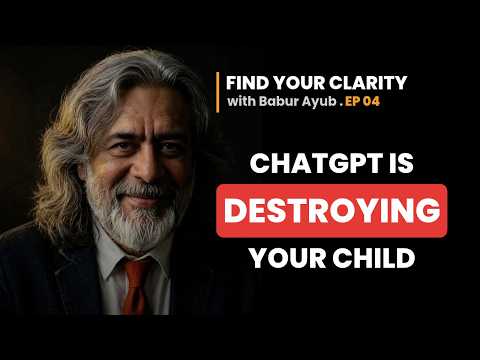
In Episode 3 of Find Your Clarity, host Khawar Shahzad talks with Babur Ayub about rich versus poor — and the answer is not about money alone. Babur argues that poverty is not only in the pocket, it is in the thinking and the feelings too: a person can be financially rich and emotionally, intellectually, spiritually or culturally poor, and the definition of rich has to be a package of all these areas, not money alone.
Babur explains why rich people think differently — they can afford to lose, so they think outside the box — and why the poor get poorer: the poor do not put all their energies and talent into work, while the same body, senses, oxygen and seasons are given to everyone. He illustrates it with his own life: born into a privileged family, he lost his father's money in the 1994 stock market crash, and rebuilt himself by selling custom-made shirts door to door in corporate offices, including the day he met a CEO who was sitting shirtless in his office.
The episode closes on failure and on being rich but poor inside: failure is a blessing if you learn from it — try, fail, try again, fail again, fail better — and real authority is not in arrogance but in kindness and in staying connected with people at every level, from sweepers and security guards to office boys.
Babur Ayub has 25+ years of leadership experience in Pakistan's retail and fashion industry, including Chenone, Hang Ten, Servis Group, Imperial Stores, Khas Stores and Onieo.
He is a lecturer at STEP IADM, a startup mentor, and the author of "Management by Qur'an". He appears in Find Your Clarity, the short-episode series by Muffled Minds in which each episode takes one big question everyone is confused about and looks for clarity.
This transcript was generated automatically with speech-to-text and lightly edited, so some words may be wrong, and passages that could not be made out are marked [unclear]. The first tab shows what is spoken in the video: Urdu written in Roman Urdu, with English kept as spoken. The English tab is a translation of the same transcript. The video is the authoritative version.
0:00 You actually are in a position to buy a lot many power sectors to control the audience, to control the country, like you see the politicians. Some people are financially rich but emotionally they are very poor. Ghurbat sirf jaib mein nahi, soch mein bhi hoti hai. Culturally rich nahi hai woh. Matlab, gaadi to aa gayi, libaas bhi achhe se achha brand, aapne outfit, branded outfit pehen liya, joota bhi achha khareed liya, bag bhi achha carry kar liya, lekin ab aap culturally us ko us ke saath align kaise karenge ke aap waqai ameer hain? Businessman ho to koi theka mujhe mil jaye, kisi wazeer ke saath baith ke, to wazeer ke saath baith ke, to wazeer ke paas kis cheez ka influence hai? The only criteria to choose a prime minister is one: that he can afford the expense of the election, or he can buy as many
0:44 members as he wants to be the head of the state. Everybody thinks that nobody is more wise than me. Why do the rich think differently? Once Shah Rukh Khan said, first become rich and then speak wisdom. Whatever you will speak, it will become wisdom. Why is the poor getting poorer and the rich getting richer? Failure is a blessing, but why not for poor? If you don't want to learn from failure, that will remain a curse. If you want to learn from your failure, if you have ever tried, failed, try again, fail again, fail better. Assalam-o-alaikum everyone, welcome to Muffled Minds series,
1:27 Find Your Clarity. In today's episode, we will talk about rich versus poor. It's not about money versus no money, we will test different aspects of that too. So once again, welcome sir. What do you think, what's your definition of rich versus poor? Koi ek definition to ho nahi sakti, sab ke experience ke mutaabik un ki apni subjective definition hai, lekin commonly is ko understood aise kiya jata hai ke agar aap ki jeibein paise hain, kitne paise hain, to ameer aur gareeb ka jo tasawwur hai duniya mein, taakat ke saath us ko munsalik kiya jata hai, to us angle se dekha jaye to,
2:11 this is economic side of richness and being poor. To economically to ek angle hai jismein, no doubt, in few third world countries, you gain power when you gain finance. When you are financially strong, you actually are in a position to buy a lot many power sectors to control the audience, to control the country, like you see the politicians. So, mera khayal hai ke this should not be the only angle ke jahaan par hum define karein ke rich kaun hota hai aur poor kaun hota hai. Kuchh log financially rich hain but emotionally they are very poor, aur is tarah hamare mulk mein to bahut examples milti hain ke jo murder cases hote hain, jo disturbed marriages hain, us mein in some cases, recent four five
3:09 years ke andar bhi aapne notice kiya hoga ke they people are known as the rich people, the males, but they have somehow gone into some criminal kind of activity, murder ho gaye un se, aur woh kya tha? Woh emotionally poor the. So I think this has to be a package, a combination of multiple areas, jis se hum define kar sakein ke yeh rich hai aur yeh poor hai. Is ki reflection khaali paison par nahi aani chahiye. So I believe ghurbat sirf jaib mein nahi, soch mein bhi hoti hai. Haan, soch mein bhi, jazbaat mein bhi,
3:49 jo aap ki intellectual richness bhi hai, intellectually poor bhi hai, spiritually rich bhi hai, spiritually poor bhi hai, to in sab ke apne apne impacts hain, implications hain, on society, on your individuality. So how do you judge a person, money-wise ya source-wise, ke woh source se rich hai? How do you judge? Agar main bilkul apni specific baat karoon, to main bhi isi muashre ka hissa hoon, aur main normally yeh dekhta hoon ke hum kin logon ko milna pasand karte hain. Hamara criteria milne ka kuchh bhi ho, lekin hamari choice kya hoti hai? Kis ko milna humne?
4:32 Jis se hamein kaam hai, koi jis ke saath hamara koi vested interest hai, jo hamare kaam mein hamari madad kar sakta hai, hamare connections ko expand karne mein hamari madad kar sakta hai, hamein kahin na kahin se financial benefit dilwa sakta hai, to unfortunately jo saare ka saara focus hai, woh shift ho ke aapke financial interests ke upar aa jata hai. Aapne aise bahut kam log dekhe honge jo is liye kisi ko milne ke liye ja rahe hain: bada qaabil aadmi hai, badi gehri soch hai, spiritually bada rich hai, is ke saath baithoon ga to badi cheezein learn karne ki opportunity milegi, aur main us ke saath do ghanta baith jaoon ga. Whereas in actuality, aap dekhein ke do ghanta baithne ke liye un ke paas time hi nahi hai. Everyone is so busy in making money, or in thinking about making money, ke woh intellectual
5:23 richness ke upar kaam nahi kar raha, ya us mein interest nahi le raha, woh emotional richness mein kuchh learn karne ki koshish nahi kar raha, culturally rich nahi hai. To gaadi to aa gayi, achhi se achhi aa gayi, libaas bhi achhi se achhi aa gayi, libaas bhi achhe se achha brand, aapne outfit, branded outfit pehen liya, joota bhi achha khareed liya, bag bhi achha carry kar liya, lekin ab aap culturally us ko us ke saath align kaise karenge ke aap waqai ameer hain? Ameer in a sense that it should not be labeled as the person who should get some kind of privilege. This should not be a privilege, paise zyada hone se us ko privilege mil rahi hai in some societies, whereas in other societies, aap bhi jaante hain, wahaan paiso se superiority nahi mil rahi, paiso se privilege nahi mil rahi, woh us ke knowledge se, us ke skill se, us ki manner se, us ki intellectual
6:21 capacity se us ko respect mil rahi hai, because that specific person, having all these other features, might be more beneficial for the society as a whole. To jabke hamare mulk mein, the first thing we look at, or we want to see in other people, if they are rich, if they are influential, if they can spend money, so you try to be in touch with them. Yaar, in ka circle achha hoga. Abhi hum off the camera baat kar rahe the, circles ki. To ab, aap ke circle agar karna hai, to aap ke circle, finance is one of the pivotal things. The protagonist idea behind connection development is that that person has so much influence that can benefit me financially.
7:07 The circle is such that I can also fall in that circle with him, and enjoy with him, with all the perks and privileges and all that. Ya businessman ho to koi aisa theka mujhe mil jaye, kisi wazeer ke saath baith ke, to wazeer kya hai? Wazeer ke paas kis cheez ka influence hai? Prime Minister ke paas kis cheez ka influence hai? Us ke paas sab se pehle paisa tha, ke he can afford to be the head of the state, not because he is more intelligent, or because he is intellectually very strong, or he is very deep. The only criteria to choose a prime minister is one: that he can afford the expense of the election, or he can buy as many members as he wants to be the head of the state. So, roughly speaking, yeh ek zamane ki zaroorat bhi to hai. Lekin jo third world countries hain, jahaan pe
8:01 aap morally bankrupt ho gaye hain, jahaan pe aap jhoot bolte hain, ya jahaan pe aap hypocrites hain, to wahaan pe in cheezon ki value zyada hai. Jab aap emotionally honge, jab aap emotional crisis mein aayenge, aur emotionally poor ho jaenge, to phir aap ka kya hoga? Aap ke ghar ke jhagde badh jaenge, aap ki jo rifts create ho jaenge, relationships ke andar, to aap ke bahut saare problems aayenge, because there you are not controlling the emotions. If you are rich, you are controlling, but a poor is being controlled by the emotions.
8:38 So what do you think, what would be the percentage of these things? Like, ek judge karta hai financially, ek judge karta hai ke how wise the other person is. Mera khayal hai, aaj kal ke zamane mein to koi wisdom ko utni ahmiyat hi nahi hai. Everybody thinks that nobody is more wise than me. Claim sab logon ka hai, ek kisi ek aadmi ka nahi hai. Abhi main aur aap baithe hain, ho sakta hai hum donon apni apni jagah pe bade smart hon, and yeh claim, yeh claim jo sick societies hain, us mein hota hai zyada, jo emotionally aur culturally sick hain, jo spiritually sick hain, un societies ke andar yeh claim, artificial claim zyada honge ke yaar,
9:23 kya sayana hoga, yaar mere se zyada sayana kaun hai? To is ko leke, jo societies ki formation hai, ya jo social culture establish karne ki baat hai, ya jo law ko apply karne ki baat hai, wahaan jahaan pe aap ki hypocrisy nahi hogi, jahaan pe jhoot ka culture nahi hoga, wahaan pe aap ko kam adalaton ki zaroorat padegi, kam judge chahiye honge, kyunke aap ki bahut saari cheezein controlled by the authority you have already established. Jahaan pe aap ne control nahi karna, jhoot bolne wale zyada hain, munafiqat karne wale zyada hain, chori karne wale zyada hain, to aap ko zyada adalatein chahiye, zyada judges chahiye, zyada faisle chahiye. Aap apne mulk mein dekh lein, kehte hain ke itna pipeline mein case pada hua hai ke jo agle 20 saal khatm hi nahi hoga,
10:08 Supreme Court ka ya High Court ka aur all that, to what is that? Yeh saari us vacuum ko hum ne fill kar liya hai, jo create hua tha, and that was good, ke woh create hua. Us vacuum ko hum achhi cheez se fill kar sakte the, moral grounds pe improvise karke, spiritual grounds pe apne aap ko behtar karke, culturally apne aap ko zyada cleanliness ke saath present karke, lekin hum ne to saari cheezon mein artificiality ko preference di hai, to artificiality will, you know, bring in nothing, not good results. But on the other hand, why do the rich think differently?
10:51 Ek aadmi can afford to lose the profit for one month, and if he can still live, if he can still afford to live without that profit of one month, he is called rich, because us ki tension us ki monthly profit sharing mein nahi thi, us ke paas itna sufficient tha, itna abundant hai woh ke us ko us ki problem face nahi hoti. Aur ek poor aadmi kya hai, ke jis ko jis ki salary na mile ek maheena, to us ka saare ka saara budget, saare ka saara khaandaani nizaam, poori ki poori us ki mental health, us ki jo mindset.
11:31 Poore saare disturb ho jata hai, woh khatam ho jata hai, ke yaar main is ek maheene mein kya karoon ga? To aap ka kya question tha? Why do rich people think differently? They should think differently because they have more capacity to afford more losses, or they can be more kind and they can spend more. Out of the box, you can say. Out of the box, you can say. To zaroori rich hona zaroori nahi hai. But yeh nahi hai, jo rich nahi hai, woh apne us circle mein usi box ke andar hi sochta rahega, jo us ke financial... Rich in what sense? Woh rich hai paiso mein?
12:09 To paiso mein jo rich hai, woh aap bade bakheel aap bhi nahi dekhe is muashre mein, jinka paise bahut zyada hain lekin woh welfare par spend hi nahi karte hain. Woh phir ameer hai? Ameer phir woh hai ke jo wahaan par, us us point par aa ke, morally and emotionally bhi rich hai. Emotionally agar rich hoga, to he'll be more sensitive. Abhi ek paros mulk mein ek [unclear] hue hain, theek hai, un ko agar aap example lein, un ki life ki, bahut se log bayaan kar rahe hain, aur woh printed aur woh established fact hai ke un ka jo net worth tha, us mein se 90% he had already devoted to the poor farmers. Whereas he could have purchased lot more properties,
12:59 Lot more supercars, lot more other things. He improved his life in a sense, in cosmetics and optics, in a sense. But he was actually rich in terms of he was more willing to spend on other people, those who deserved. Once Shah Rukh Khan said, first become rich and then speak wisdom. Whatever you will speak, it will become wisdom. What do you think? Okay, ek American senator tha, and in 1973-74, when the crisis in Wall Street was a crisis, the market crashed.
13:49 He was the one person who became rich, and all the rich of that time became poor, financially. We also relate to that. Yes. So, what was it that they said? Once I have got something and I have now established my power, so whatever I will say, that will become the truth, and nobody can challenge my truth. I mean, it takes long. Jo financial power hai, woh aap ko saath laati hai, aapke other establishments bhi, other powers bhi, woh us ko endorse karti hain, woh aapke, yaani us ko challenge karne ke liye woh.
14:40 Rukh hi maujood nahi hai, woh insaan hi maujood nahi hai jo us ko challenge karein aur us ko challenge karke apne talaqaat bigaad lein, aur phir us ke baad usi bande se unhon ne roz uthna baithna ho, to they deliberately, I think, they live a pretentious life, ke yaar theek hai, agar keh raha hai to theek hoga. Aur actually mein bhi agar aap dekhein, reality hai, woh yeh hai ke har bande ki ek apne experience ki base par truth hoti hai, aur us truth ko usne explore nahi kiya hota hai, us truth ko usne jiya hota hai, usmein jiya hota hai, usmein us pain mein se woh guzra hota hai. Only then he become so authoritative.
15:20 And can say loud ke ji yeh nahi, yeh hai. Shah Rukh ki aap baat karein, to unhon ne shuru ki pehli do teen filmon ke baad, kisi ne un ki mulaqaat Amitabh sahab se karwayi, to unhon ne baat ki ke yeh hamare waqt ke superstar hain, aur aap in se mile hain, aur aap apne waqt ke superstar honge. But aap apne waqt ke superstar honge, to aap rich kidhar se hain? Aap mindset rich hain.
15:59 Aur agar aap mindset rich hain, to phir aap ko pata hai ke meri manzil kya hai, aur mujhe kitni mehnat karni hai udhar pahunchne ke liye, aur phir kya kya mujhe sacrifices karni padengi. Do whatever it takes, phir baat hai ke kya sacrifices. And finally, if you see yourself in your life, that you have achieved that level of success, that yardstick has been crossed, to aap, you are one of the luckiest person. Abhi, matlab, kuch reels chal rahi hain, jismein ek aap ka younger version hota hai, ek aap ka present hota hai, to us mein aap ka younger version aap se pooch raha hota hai ke 'How are you doing?' To woh kuchh keh raha hota hai ke 'I have achieved that thing.' To ab woh jo present hota hai, woh apne younger version ko kehta hai ke 'Don't give up.'
16:46 Just jo aap struggle aap kar rahe ho, woh karte raho, you will succeed one day. To yeh again, woh mindset wali baat. Dekhein, main aap ko ek mukhtasar si batata hoon ke main jis family mein paida hua, wahaan pe woh saari facilities maujood thi, jo ek family mein ek bachche ko jo privileges chahiye hoti hain, jo facilities, woh saari maujood thi, aur main bada confident tha, maybe I was more confident at that time. I had invested in stock exchange. I had invested in the money of my father. I started to gain.
17:25 Every day I was making money. So I felt like this was a non-stop process, that it would never stop. In flow of money. But when the market crashed, I was sitting on stock exchange. Mujhe pata chala ke yeh to crash ho rahi hai, log apna share bech rahe hain, logon ko heart attacks aa rahe hain, aur ambulances ki aawazein aa rahi hain, to main bhi unhi logon mein baitha tha, baghair heart attack ke, aur main dekh raha tha ke mere haath se nikal ke ja rahi hai yeh opportunity, woh paise jo maine earn kiye the, and that was quite a big amount. Kisi era ki baat hai, '94.
18:03 '94. To woh crash Pakistan mein bada mashhoor hua tha, shayad political time tha, woh Benazir Bhutto sahiba ka. Achha, phir mere yeh haalaat ho gaye ke maine MBA bhi kiya, maine, mujhe dress sense bhi achhi, mere paas dresses aur shoes ki bhi tadaad beshumaar, lekin meri jeb mein paise khatm ho gaye. Ab aap ko koi mil raha hai, to you are rich because of your mindset, because you have seen all the good things in your life, jo aapke bachpan se aap ko groom karke, raise karke, aapke parents aap ko is stage par le aayein.
18:41 To lekin, mere paas paise nahi the, to us waqt maine ek idea, business ka, socha. Yaar, is tarah se to matlab main kisi se paise mangoonga, woh khatm ho jaenge, to mujhe kya karna chahiye? To mere paas ek idea tha: ek shirt. Maine kaha ke main dress shirt banata hoon, aap khud design karoonga, us ka collar kaisa hona chahiye, us ka body fabric, colour kaisa hona chahiye, aur is ke bechne ki strategy yeh hogi ke main us ko bag mein daloon ga, aur us bag ko leke main daftaron mein jaaoon ga, jo corporate offices hain, kyunke us zamane tak mere kaafi saare class fellows mukhtalif banks mein, koi manager lag gaya hua, koi kuchh.
19:21 To mere dimaag mein kya opportunity thi ke main un logon ke paas jaaoon ga, un ko boloon ga ke yeh dekho, maine shirt banayi, aur main is ko office pe deliver karta hoon. To yeh pehla concept tha, probably us zamane mein, ke aap customized services aise de rahe hain, jo aaj kal home delivery ka hai. Main aap ke ji, work place pe aap ko deliver karoon ga. Aap yakeen keejie, meri shirts bikni shuru ho gayin, aur mujhe achhe paise aane shuru ho gaye, aur woh log mujhe bade khushi se milte the ke yaar, kya idea leke aaye ho tum, hamara size lete ho, aur woh complaints bhi aati thi, jisko psychologically main handle karta tha. Kuchh real problems nahi hoti thi, kuchh fake problems hoti thi, kuchh logon ko psychological issues the, jiski wajah se woh reject kar dete the. Yaani, ek dafa ek office mein main gaya, jinko maine shirt bechi bhi thi.
20:06 Woh shirt, yaani itni khoobsurat aur itni zyada biki meri, ke unhon ne mujhe kaha, 'Aap zara aate hain mere paas.' Maine kaha, 'Ji, main koi ek ghante, dedh ghante ke baad pahunch gaya.' To jab main un ke office mein pahuncha, to woh shirtless the, unhon ne banyan pehni hui thi, to main un ko dekh ke ekdam, I was shocked. I said, 'Sir —' 'You are most welcome, please have a seat. Tea or coffee?' I was literally speechless. I didn't wear a shirt, so they hung the shirt on the side, this is the shirt, beautiful shirt.
20:42 I wore it, I said, 'It's such a beautiful shirt.' Mehengi bhi hai, poore jism mein mere khaarish ho gayi hai. Maine kaha ke main aap ko bulaoon aur aap ko mubarakbaad de doon ke kya kamaal, yeh actually hua. If it hadn't happened, I could explain it. I could explain it in my own lecture or training program. Main nahi bata sakta tha, but yeh maine khud experience kiya, to maine kaha ke maazrat karni chahiye, maine sorry bola, jaise ek riwaaj hai unka, 'Haan haan, koi nahi, masla nahi.'
21:25 'My job is very good, they can afford me without a shirt even, in this office, so no problem, no problem.' I was embarrassed, sarcastically I was responding to it, so I said, 'Sir, just give me a chance, I don't want to lose you, you are my best customer.' Us ke baad aaoonga, aap ko yeh hi shirt doonga, aur main aap ko phir main chaahoon ga ke aap pehnein, aur phir aap mujhe us ka feedback dein, ke is se aap ko faida hua. To, believe me, maine usi shirt ko, jo unhon ne mujhe waapis ki thi, us ko refresh kiya, aur repress kiya, repack kiya, same shirt, same shirt. Un ko main gaya, 'Sir, aap ke liye I have given it a special fabric treatment.'
22:14 So that yeh problem aayenda kisi ko na ho. To itni badi problem point out ki gayi hai, sir, aap ki wajah se to main bach gaya hoon, mera karobaar tabaah ho jaana tha. Unhon ne woh shirt next day pehni, un ka mujhe phone aaya ke 'Congratulations, you are very good manufacturer. Aaj mujhe ismein se khushboo bhi aa rahi hai, I love it.' I mean, yeh psychological hai, bahut saari treatments aap aisi karte hain, jismein you have to be smarter than the person you are facing. Woh aap baat kar rahe the na ke woh wisdom ki baat kar rahe the. In our society, you have to accept, first of all, the wisdom displayed by others. Aap us ke saamne us ko accept kar lein, agar aap wise hain, to phir aap apni wisdom ke saath aage badhein, play karein.
23:08 Aap is ko fit kar sakte hain mere experience ke upar, ke maine us waqt un se maazrat bhi ki. I knew ke there is no problem in my fabric, in my shirt, but because my customer is saying, and customer is always right, to maine us ko is se treat kiya. To aap mindset ki therapy bhi to kar sakte hain, aap us ko, aap ka jo emotional vacuum create hua hai, us ko aap ne kaise fill karna hai, aap ka jo economic vacuum create hua hai, to aap ko agar economic vacuum create ho gaya hai, to aap us ko udhaar paise leke, bank se paise leke, bank ke paise kha ke, us ke paise waapas na karke, bad debts mein convert karke bhi aap jee sakte hain, ya aap ek naya start bhi le sakte hain, brand new start-up ke taur pe, ke main, yaar, yeh kaam karoon ga, is pe mujhe itna business aa jayega.
23:55 Chaar saal mein main is kaam pe pahunch jaoon ga. To I think there are ways to handle, there are ways to manage, but mentally you should not be poor by mindset, you have to be strong. But on the other hand, why is the poor getting poorer, and the rich getting richer? Because poor is not putting in all their energies and all their talent into work. They're not translating their energy into productive activity. The thing is that the body is one of the same ones.
24:33 The senses have one of the same ones, oxygen sab ko utna hi share mil raha hai, nature ki taraf se, jitna ameer ko mil raha hai, utna hi ghareeb ko mil raha hai, darakht ke patte, chhaon, baarish ka mausam, thandak, garmi, sab hi ek jaisi mil rahi hai. Ab it's up to me, if I am poor, to work so hard and smart, ke main ek din counter kar sakoon, main ek din us mukaam par aa sakoon, jis mukaam par main kisi rich ko dekhta hoon, financially rich hai, jo woh pahunch gaya hai. Aur aap duniya mein dekhein, poori duniya mein, ke jo log is waqt iconic personalities hain, jo business tycoons hain, woh, they were all poor, aur kisi ameer aadmi ke bachche ko aapne koi business tycoon nahi dekha. Mujhe aap quote kar dein, koi example bata dein.
25:22 Yeh sab woh the, jinhone troubles ko face kiya, jinhone bhookh bardasht ki. Chahe woh Pakistan mein, chahe America mein, UK mein, duniya kisi kone mein, agar koi king ka bacha king hai, ya prince hai, aur baad mein king ban gaya, to woh us ka koi kamaal nahi hai, us ka kamaal hai jis ko khaana nahi mil raha tha, jis ko opportunity nahi mil rahi thi, jis ko khwahish thi. Aap woh jo hai, woh Rocky wale jo actor hain, badi mashhoor hain, First Blood aur woh Rocky aur woh saari filmein, John Rambo. Resemblance hai Pakistani actors se, jo unhon ne apni kahani bechne ki koshish ki thi.
25:59 Main banaoon ga, aap film banayein, main us mein hero aaoon ga, aur kahani yeh hogi. To us waqt ki un ki kahani yeh hai ke main un ke paas ek kutta tha, woh bhi unhon ne bech diya, khaane ko un ke paas cheezein nahi thi, kyunke unhon ne kaha, 'Kahani to aap ki badi achhi hai, story is very good, but we cannot take you as an actor, and that again as a lead actor.' To unhon ne kaha, 'Agar aap mujhe nahi lete, to main aap ko kahani nahi bechta, is ki story nahi bechoon ga.' And at last, un ko woh kahani bhi leni padi, un ko actor bhi lena pada, and he had such a strong belief in himself, ke he knew ke main kahani mein hero ke taur par aaoon ga, to yeh ek super hit.
26:38 Blockbuster ke taur par saamne aaye, aur woh bane. There are numerous examples. Mere dimaag mein bhi aa rahi thi, Mr. Bean ki. To jo rich is getting richer and poor is getting poor because of the mindset. This is the simple answer. So, is failure a shameful event? I think failure is a blessing, but why not for poor? If you don't want to learn from failure, that will remain a curse. If you want to learn from your failure.
27:16 If you have ever tried, failed, try again, fail again, fail better. Agar aap kisi match mein, hockey ke ya football ke match mein, das golon se haar gaye hain, to agla match agar aap do golon se haar rahe hain, to aap ko koi appreciate karega. That means that you improved. If you don't meet the failure, and if you don't know the art of failing better.
27:57 The art of failing better is very important. That means that your journey towards improvement has already begun, you are already on that track where one day you will definitely kiss the victory. To hamare yahaan par woh log us ko curse samajhte hain, aur woh un ke liye curse hi rehti hai, ke failure is a very good teacher, us se zyada achha to teacher koi nahi ho sakta. Agar aap ko abhi teen waqt ka khaana mil raha hai aur woh ek waqt mein convert ho jaye, to should it be a curse or a blessing? Mindset ki baat hai na. Ab aap ka mindset yeh kehta hai ke blessing.
28:37 Lekin bahut se logon ka mindset yeh kehta hai ke yeh to saza mil gayi hai, yeh to mulk ka nizaam hi kharaab hai, yeh to aise hai, yeh to aise hai. Bhai, aap apne hisse ka kaam, zimmedaari poori nahi kar rahe. Agar aap peeche reh gaye hain, aap ke poori energy thi, aap healthy hain, aap khaana khaate hain, aap ko bhookh lagti hai, aap ghoom-phir sakte hain, lekin aap consistent nahi, aap focused nahi, aap ko clarity nahi hai, to aap gareeb hi honge na? That's where you have to find the clarity. Yes, that's right. So for businessmen, for successful persons, failure could be the learning step towards your journey. Failure is one of the biggest rewards for them.
29:18 So where is that gap? Like the poor, un ko yeh understand karne mein kya mushkil? Jo hai woh emotionally bhi poor hai na, mindset ke saath saath. Matlab agar woh short temper bhi to hai na, agar un ko koi aap gali denge, kisi emotionally de-stable person ko, to woh aap ko jawab mein gaali de ga. To agar emotionally strong hai, one who is not being controlled by the emotions, who is controlling the emotions, jab aap us ke saath baat karenge, to woh aap ko gaali ke jawab mein gaali nahi dega. Ho sakta hai woh right time ka intezaar kare, ho sakta hai woh kisi aur tarah se apna.
29:57 Hisaab kitaab aap se barabar karein. Lekin agar aap aur hi daur par jhagad ke, gaali galoch karke, haalaat kharab karke, aap samjhenge ke main kaamyab ho gaya hoon, jo ke aksar hamare yahaan bhi log samajhte hain, ke yaar maine badla le liya hai, aisi ki taisi, to is tarah se to phir aap ki zindagi aisi guzregi. Main aap ki training session ka jo hai woh ek post thi aap ke haan, jo 'how to be a success' — taiyaari kar raha hoon main ke ek series hai, is ko shuru kiya jaye, aur is ke liye I'm preparing, aur I believe ke jo mere apne zindagi ke experiences hain, jiska hands-on experience hai, mujhe jin situations mein se main guzra hoon, jismein worst situations bhi thi, bahut zyada, jo jo abhi hum baat kar rahe the ke agar aap ko.
30:37 Worst situation mein aap trap ho gaye hain, to kya should... To mujhe aise lagta hai ke agar meri zindagi mein yeh worst time na aata, yeh dejection na aati, yeh jo failures na aate, to main kabhi learn hi nahi kar sakta. Main throughout my career, mujhe nahi pata ke main is qaabil tha ya nahi, main as general manager, as chief operating officer, in positions pe raha hoon, maybe I was not capable of handling all these affairs at the decision-making level, but still I know that was the mindset, and that was the teachings I got from my failure, that how to remain positive and how to remain emotionally, spiritually.
31:23 Economically, socially rich. I mean, that is a kind of therapy you do to yourself. Jab aap akele baithe hain, to aap soliloquy karte hain, aap apne aap se baat karte hain. You have the question, and you are the person who is giving the answer. So us mein agar aap apne aap ko teach karein, agar aap har waqt ro rahe hain, aap keh rahe hain ke maare gaye, lut gaye, barbaad ho gaye, aur pehchaan aap ki us tarah ki ban gayi hai ke yaar, jab banda rota hai, jab banda negative baat karta hai, to woh change nahi aayegi, woh na chances aate hain, na opportunities aati hain, na lottery lagti hai aise logon ki. Matlab, ek bande ki, ek bande ki approach hi negative hai. Usne zindagi mein koi kisi achhi si tasveer mein bhi woh galti nikaal dega.
32:14 Kisi khaane mein se bhi woh namak mirch ki shikayat kar dega, kisi kapde ki size mein bhi woh itraaz kar dega, kisi ki achhi shakal dekhega, to us ke bhi naak nakshe pe woh itraaz karega, to woh aadmi ki lottery lag jaye? Aapne kabhi suna hai zindagi mein aise kisi aadmi ki lottery lag gayi ho? Lottery to unhi logon ki lagti hai, ya opportunities unhi ko milti hain, ya kaamyab wahi log hote hain jo tolerate karte hain, jo logon ki imperfections ko, imbalances ko afford karte hain, un ko appreciate karte hain. To meri training ka bahut saara jo part hai, woh that will be covered based on my own experiences, and inshallah.
32:53 Very soon. Is mein ek example yaad aa gayi, matlab har cheez mein galti nikaalne se, ek doosre dost ko batata hai ke yaar, maine na udna seekh liya. To pehla dost na, us ko kehta hai ke maine kal ek banda dekha udte hue. Ab jab jisko bata raha hota hai, woh kehta hai ke haan, woh main hi tha jo ud raha tha. Kehta hai, 'Haan, main bhi kahunga, tedha ud raha tha.' To us ne galti nikaal li [unclear]. So that training session, will it be like online or some physical one? Ham online bhi hai, hybrid hai, online mein bhi ham kaam kar rahe hain, aur kuchh adaaron ke saath baat-cheet chal rahi hai, jismein ham yeh ek poora physical presentations bhi denge, proper achhi top corporate universities ke campuses ke andar, kuchh hamare jo professional corporate world hai, us ke logon ke saath.
33:44 It will be a hybrid model, jo young youngsters hain, jismein students hain, young employees hain, ya young crown princes hain, jo already ameer hain, already achhe businesses established hain, unke parents ne kiye hain, aur ab unhon ne take over karna hai, woh they are the main focus. To hum is ki date aur time, jo hai, woh description mein bhi share kar denge viewers ko. Right, right? So, one last question from my side: have you ever met rich people who were poor inside? Yes, a lot. So kya aap ka, kya un ko dekh ke kya aap ki kya soch thi? Kya soch rahe the aap? Kuchh nahi, un ko dekh ke aage nikal gaye, ke Allah kare ke jab hum kisi achhe mukaam pe hon, to aise na hon. I mean.
34:32 Jo main jab pehli dafa country head bana, to mere qareebi azeez mujhe milne ke liye office mein, to unhon ne dekha ke main bahar tha, office se bahar, aur ek security guard hai aur ek sweeper tha, aur woh hum teen log khade hue, cigarette pee rahe the, to us ne mujhe kaha ke country head jo hai, woh to aisa nahi hota, country head to is ka to badi authority aur badi power aur yeh woh. To maine us ko bola ke yaar, is waqt country head kaun hai? Us mein is waqt to aap hi hain. This is how I am, this is what I am, I just want to remain very humble. I know what is authority, and I know that is not in arrogance, that is, you know, in kindness.
35:23 Making good contact with all social levels, people belonging to all economic classes. Most of the valuable things you learn are from the people who have hands-on experience, whether they are sweepers, whether they are security guards, whether they are your office boys, and whatever they tell you, something really, really remarkable in terms of wisdom. Aap ki jab tak yeh willingness nahi hai ke aap ne seekhna hai, aur seekhne ke liye, you don't need to choose the teacher, you just need to be in that environment, where you are surrounded by people and everyone can teach you.
36:06 And you should be a willing student, that yes, if that experience is shared with me, I can further refine it and I can do it in a better way, whenever I am trapped in that kind of situation. To, I mean, jab main dekhta hoon aisa, jab main us position pe chala gaya tha, to main yahi samajhta tha ke yaar, haan ji, theek hai, aap ko control mila hua hai, theek hai, aap ke paas paise bhi zyada hain, theek hai, aap ko bade log salaam bhi karte hain, but yaar, aap apni auqaat mein to reh na. Thank you so much, sir. Mere kaafi points clear hue is ko leke, aur hopefully aap logon ke bhi points, jo hain, thoughts jo hain, Rich vs Poor ko leke, woh clear hue honge. If you haven't subscribed yet, please subscribe, like and share. See you in the next episode.
36:54 Allah Hafiz.
0:00 You actually are in a position to buy a lot many power sectors to control the audience, to control the country, like you see the politicians. Some people are financially rich but emotionally they are very poor. Poverty is not only in the pocket, it is in the thinking too. He is not culturally rich. I mean, the car has arrived, the clothes too are the best brand, you put on the outfit, the branded outfit, you bought good shoes too, you carried a good bag too, but now how will you align yourself culturally with it so that you truly are rich? If you are a businessman, you think, let me get some contract, sitting with some minister, and sitting with a minister, what influence does a minister have? The only criteria to choose a prime minister is one: that he can afford the expense of the election, or he can buy as many
0:44 members as he wants to be the head of the state. Everybody thinks that nobody is more wise than me. Why do the rich think differently? Once Shah Rukh Khan said, first become rich and then speak wisdom. Whatever you will speak, it will become wisdom. Why is the poor getting poorer and the rich getting richer? Failure is a blessing, but why not for poor? If you don't want to learn from failure, that will remain a curse. If you want to learn from your failure, if you have ever tried, failed, try again, fail again, fail better. Assalam-o-alaikum everyone, welcome to the Muffled Minds series,
1:27 Find Your Clarity. In today's episode, we will talk about rich versus poor. It's not about money versus no money, we will test different aspects of that too. So once again, welcome sir. What do you think, what's your definition of rich versus poor? There can be no single definition; everyone has their own subjective definition according to their experience, but commonly it is understood like this: if you have money in your pockets, how much money you have — the idea of rich and poor in the world is linked with power, so if you look at it from that angle,
2:11 this is the economic side of richness and being poor. So economically, that is one angle in which, no doubt, in a few third world countries, you gain power when you gain finance. When you are financially strong, you actually are in a position to buy a lot many power sectors to control the audience, to control the country, like you see the politicians. So, I think this should not be the only angle from which we define who is rich and who is poor. Some people are financially rich but emotionally they are very poor, and in our country you find many examples of this: the murder cases that happen, the disturbed marriages — in some cases, even in the last four or five
3:09 years, you must have noticed that they, the people known as the rich people, the males, but they have somehow gone into some criminal kind of activity, murders happened by them, and what was that? They were emotionally poor. So I think this has to be a package, a combination of multiple areas, from which we can define who is rich and who is poor. Its reflection should not come from money alone. So I believe poverty is not only in the pocket, it is in the thinking too. Yes, in the thinking too, in the feelings too,
3:49 there is also your intellectual richness, you are intellectually poor too, spiritually rich too, spiritually poor too, so all of these have their own impacts and implications on society and on your individuality. So how do you judge a person, money-wise or source-wise, whether he is rich by source? How do you judge? If I speak specifically about myself, I am also a part of this society, and I normally see who we like to meet. Whatever our criteria for meeting may be, what is our choice? Whom do we want to meet?
4:32 The one with whom we have some work, someone with whom we have some vested interest, who can help us in our work, who can help us expand our connections, who can get us some financial benefit from somewhere, so unfortunately all the focus shifts to your financial interests. You must have seen very few people who are going to meet someone because he is a very capable man, he has very deep thinking, he is spiritually very rich, if I sit with him I will get the opportunity to learn great things, and I will sit with him for two hours. Whereas in actuality, you see, they don't even have time to sit for two hours. Everyone is so busy in making money, or in thinking about making money, that he is not working on intellectual
5:23 richness, or not taking interest in it, he is not trying to learn anything in emotional richness, he is not culturally rich. So the car has arrived, the best of the best has arrived, the clothes too, the best of the best has arrived, the clothes too are the best brand, you put on the outfit, the branded outfit, you bought good shoes too, you carried a good bag too, but now how will you align yourself culturally with it so that you truly are rich? Rich in a sense that it should not be labelled as the person who should get some kind of privilege. This should not be a privilege; because he has more money, he is getting privilege in some societies, whereas in other societies, you also know, there money is not giving superiority, money is not giving privilege, he is getting respect because of his knowledge, his skill, his manner, his intellectual
6:21 capacity, because that specific person, having all these other features, might be more beneficial for the society as a whole. Whereas in our country, the first thing we look at, or we want to see in other people, is if they are rich, if they are influential, if they can spend money, so you try to be in touch with them. Man, their circle must be good. Just now we were talking off camera about circles. So now, if you want to join a circle, your circle — finance is one of the pivotal things. The protagonist idea behind connection development is that that person has so much influence that he can benefit me financially.
7:07 The circle is such that I can also fall in that circle with him, and enjoy with him, with all the perks and privileges and all that. Or if you are a businessman, you think, let me get some contract, sitting with some minister, so what is a minister? What influence does a minister have? What influence does the Prime Minister have? First of all he had money, that he can afford to be the head of the state, not because he is more intelligent, or because he is intellectually very strong, or he is very deep. The only criteria to choose a prime minister is one: that he can afford the expense of the election, or he can buy as many members as he wants to be the head of the state. So, roughly speaking, this is also a need of the times. But in the third world countries, where
8:01 you have become morally bankrupt, where you lie, or where you are hypocrites, there these things have more value. When you become emotional, when you come into an emotional crisis, and you become emotionally poor, then what will happen to you? The fights in your home will increase, the rifts will be created in relationships, so you will have many problems, because there you are not controlling the emotions. If you are rich, you are controlling, but a poor is being controlled by the emotions.
8:38 So what do you think, what would be the percentage of these things? Like, one judges financially, one judges how wise the other person is. I think, in today's times, nobody gives that much importance to wisdom. Everybody thinks that nobody is more wise than me. The claim is of all people, it is not of any one person. Right now you and I are sitting here, it is possible that both of us are very smart in our own places, and this claim, this claim is more in sick societies, which are emotionally and culturally sick, which are spiritually sick, in those societies this claim, artificial claims are more, like, man,
9:23 who could be more wise, man, who is more wise than me? So with this, the formation of societies, or the matter of establishing a social culture, or the matter of applying the law, there, where you will not have hypocrisy, where there will be no culture of lying, there you will need fewer courts, you will need fewer judges, because many of your things are controlled by the authority you have already established. Where you have no control, there are more people who lie, more who are hypocrites, more who steal, so you need more courts, you need more judges, you need more decisions. You can see in our own country, they say there is such a backlog of cases in the pipeline that it will not end in the next 20 years,
10:08 of the Supreme Court or the High Court and all that, so what is that? All this is the vacuum that we have filled, which was created, and that was good, that it was created. We could have filled that vacuum with a good thing, improving on moral grounds, making ourselves better on spiritual grounds, presenting ourselves culturally with more cleanliness, but we gave preference to artificiality in all things, so artificiality will, you know, bring in nothing, not good results. But on the other hand, why do the rich think differently?
10:51 A man can afford to lose the profit for one month, and if he can still live, if he can still afford to live without that profit of one month, he is called rich, because his tension was not in his monthly profit sharing, he had enough, he is so abundant that he does not face that problem. And what is a poor man, that if he does not get his salary for one month, then his entire budget, his entire family system, his entire mental health, his mindset.
11:31 Everything is disturbed, it is finished, what will I do in this one month? So what was your question? Why do rich people think differently? They should think differently because they have more capacity to afford more losses, or they can be more kind and they can spend more. Out of the box, you can say. Out of the box, you can say. So it is not necessary to be rich. But it is not like this that one who is not rich will keep thinking inside that same box, within his circle, which is his financial... Rich in what sense? Is he rich in money?
12:09 So the one who is rich in money, have you not seen many misers in this society, whose money is a lot but they do not spend on welfare at all. Is he then rich? Rich is then the one who, coming to that point, is also morally and emotionally rich. If he is emotionally rich, he will be more sensitive. Right now, in a neighbouring country, a [unclear] happened, okay, if you take them as an example, of their life — many people are describing it, and it is a printed and established fact that of their net worth, 90% he had already devoted to the poor farmers. Whereas he could have purchased lot more properties,
12:59 lot more supercars, lot more other things. He improved his life in a sense, in cosmetics and optics, in a sense. But he was actually rich in terms of he was more willing to spend on other people, those who deserved. Once Shah Rukh Khan said, first become rich and then speak wisdom. Whatever you will speak, it will become wisdom. What do you think? Okay, there was an American senator, and in 1973-74, when the crisis in Wall Street was a crisis, the market crashed.
13:49 He was the one person who became rich, and all the rich of that time became poor, financially. We also relate to that. Yes. So, what was it that they said? Once I have got something and I have now established my power, so whatever I will say, that will become the truth, and nobody can challenge my truth. I mean, it takes long. The financial power that you have brings with it your other establishments too, other powers too, they endorse it, you know, to challenge it.
14:40 That attitude does not exist at all, that person does not exist at all who would challenge it and spoil his relations by challenging it, and after that he would have to meet that same person every day, so they deliberately, I think, they live a pretentious life, like, man, okay, if he is saying it, it must be right. And actually, if you look at it, the reality is this, that every person has a truth based on his own experience, and he has not explored that truth, he has lived that truth, he has lived in it, he has passed through that pain in it. Only then he becomes so authoritative.
15:20 And can say loud, no, this is not it, this is it. If you talk about Shah Rukh, after he started, after his first two or three films, someone arranged his meeting with Mr. Amitabh, so he said that he is a superstar of our time, and you have met him, and you will be a superstar of your time. But you will be a superstar of your time, so how are you rich? You are rich in mindset.
15:59 And if you are rich in mindset, then you know what my destination is, and how much hard work I have to do to reach there, and then what sacrifices I will have to make. Do whatever it takes, then the question is what sacrifices. And finally, if you see yourself in your life, that you have achieved that level of success, that yardstick has been crossed, then you are one of the luckiest person. Right now, I mean, some reels are going around, in which there is a younger version of you, and there is your present, so in that your younger version is asking you, 'How are you doing?' So he is saying something like, 'I have achieved that thing.' So now the present one says to his younger version, 'Don't give up.'
16:46 Just whatever struggle you are doing, keep doing it, you will succeed one day. So this again is the mindset thing. Look, let me tell you a brief one: the family I was born in, there all the facilities were present that a child needs, the privileges, the facilities, all were present, and I was very confident, maybe I was more confident at that time. I had invested in the stock exchange. I had invested in the money of my father. I started to gain.
17:25 Every day I was making money. So I felt like this was a non-stop process, that it would never stop. In flow of money. But when the market crashed, I was sitting on the stock exchange. I came to know that the market is crashing, people are selling their shares, people are having heart attacks, and the sounds of ambulances are coming, so I was also sitting among those same people, without a heart attack, and I was watching that this opportunity was slipping out of my hands, that money which I had earned, and that was quite a big amount. It is a matter of some era, '94.
18:03 '94. So that crash became very famous in Pakistan, it was probably a political time, the time of Benazir Bhutto sahiba. Okay, then my situation became such that I did my MBA too, I had good dress sense too, I had countless dresses and shoes, but the money in my pocket finished. Now if someone meets you, then you are rich because of your mindset, because you have seen all the good things in your life, which groomed you from your childhood, raised you, your parents brought you to this stage.
18:41 But I had no money, so at that time I thought of a business idea. Man, this way, if I ask someone for money, it will finish, so what should I do? So I had an idea: a shirt. I said I will make dress shirts, you design them yourself, what the collar should be like, what the body fabric and colour should be like, and the strategy to sell it would be that I will put it in a bag, and taking that bag I will go to offices, the corporate offices, because by that time many of my classmates were in different banks, some had become managers, others something else.
19:21 So what opportunity did I have in my mind, that I will go to those people, I will tell them, look, I made a shirt, and I deliver it at the office. So this was the first concept, probably in those times, that you are giving such customized services, which today is home delivery. I will deliver it to you at your workplace. Believe me, my shirts started selling, and I started getting good money, and those people used to meet me very happily, saying, man, what an idea you have brought, you take our size, and complaints also used to come, which I used to handle psychologically. Some were not real problems, some were fake problems, some people had psychological issues, because of which they used to reject. I mean, once I went to an office, to whom I had also sold a shirt.
20:06 That shirt, I mean, it was so beautiful and it sold so much of mine, that they told me, 'You come to me for a bit.' I said, 'Yes, I will reach in about an hour, an hour and a half.' So when I reached their office, they were shirtless, they were wearing a vest, so seeing them suddenly, I was shocked. I said, 'Sir —' 'You are most welcome, please have a seat. Tea or coffee?' I was literally speechless. I didn't wear a shirt, so they hung the shirt on the side, this is the shirt, beautiful shirt.
20:42 I wore it, I said, 'It's such a beautiful shirt.' It is expensive too, my whole body started itching. I said that I will call you and congratulate you, what a marvel, this actually happened. If it hadn't happened, I could explain it. I could explain it in my own lecture or training program. I could not tell it, but I experienced it myself, so I said I should apologise, I said sorry, as is their custom, 'Yes yes, no problem, no problem.'
21:25 'My job is very good, they can afford me without a shirt even, in this office, so no problem, no problem.' I was embarrassed, sarcastically I was responding to it, so I said, 'Sir, just give me a chance, I don't want to lose you, you are my best customer.' After that I will come, I will give you this same shirt, and I will want you to wear it again, and then you give me its feedback, whether it benefited you. So, believe me, I took that same shirt, which they had returned to me, I refreshed it, and re-pressed it, re-packed it, same shirt, same shirt. I went to them, 'Sir, for you I have given it a special fabric treatment.'
22:14 So that this problem does not happen to anyone in future. So such a big problem was pointed out, sir, because of you I was saved, my business would have been destroyed. They wore that shirt the next day, I got their call saying, 'Congratulations, you are a very good manufacturer. Today I am even getting a fragrance from it, I love it.' I mean, this is psychological, there are many treatments like this that you do, in which you have to be smarter than the person you are facing. You were talking about wisdom. In our society, you have to accept, first of all, the wisdom displayed by others. You accept it in front of him, if you are wise, then you move ahead with your wisdom, play on.
23:08 You can fit this on my experience, that I apologised to them at that time. I knew that there is no problem in my fabric, in my shirt, but because my customer is saying, and the customer is always right, so I treated him with that. So you can also do therapy of the mindset, you can do it, the emotional vacuum that has been created in you, how you have to fill it, the economic vacuum that has been created in you, so if an economic vacuum has been created in you, you can live even by taking money on loan, taking money from the bank, eating the bank's money, not returning its money, converting it into bad debts, or you can also take a new start, as a brand new start-up, that, man, I will do this work, on this I will get this much business.
23:55 In four years I will reach this work. So I think there are ways to handle, there are ways to manage, but mentally you should not be poor by mindset, you have to be strong. But on the other hand, why is the poor getting poorer, and the rich getting richer? Because poor is not putting in all their energies and all their talent into work. They're not translating their energy into productive activity. The thing is that the body is one of the same ones.
24:33 The senses have one of the same ones, oxygen is being shared equally with everyone from nature, as much as the rich gets, the poor gets the same, the leaves of the trees, the shade, the rainy season, the cold, the heat, all are being given equally. Now it's up to me, if I am poor, to work so hard and smart, that one day I can counter it, one day I can reach that destination, the destination where I see a rich person, he is financially rich, who has reached there. And you look at the world, in the whole world, the people who are iconic personalities at this time, who are business tycoons, they, they were all poor, and you have not seen any business tycoon who is the child of a rich man. Quote me, tell me an example.
25:22 These were all those who faced troubles, who endured hunger. Whether in Pakistan, whether in America, in the UK, in any corner of the world, if a king's child is a king, or a prince, and later becomes a king, then that is no achievement of his, his achievement is the one who was not getting food, who was not getting opportunity, who had a desire. You know, the Rocky actor, he is very famous, First Blood and Rocky and all those films, John Rambo. There is a resemblance with Pakistani actors, who tried to sell their story.
25:59 'I will make it, you make the film, I will be the hero in it, and the story will be this.' So at that time their story is that I had a dog with me, they sold that too, they had nothing to eat, because they said, 'Your story is very good, story is very good, but we cannot take you as an actor, and that again as a lead actor.' So they said, 'If you don't take me, I will not sell you the story, I will not sell its story.' And at last, they had to take that story too, they had to take him as an actor too, and he had such a strong belief in himself, that he knew that I will come as the hero in the story, so this came out as a super hit.
26:38 Blockbuster, and they became. There are numerous examples. It was also coming to my mind, Mr. Bean's. So the rich getting richer and the poor getting poorer is because of the mindset. This is the simple answer. So, is failure a shameful event? I think failure is a blessing, but why not for poor? If you don't want to learn from failure, that will remain a curse. If you want to learn from your failure.
27:16 If you have ever tried, failed, try again, fail again, fail better. If in a match, in a hockey or football match, you have lost by ten goals, then if in the next match you are losing by two goals, then someone will appreciate you. That means that you improved. If you don't meet the failure, and if you don't know the art of failing better.
27:57 The art of failing better is very important. That means that your journey towards improvement has already begun, you are already on that track where one day you will definitely kiss the victory. So in our place, those people consider it a curse, and for them it remains a curse, that failure is a very good teacher, there can be no better teacher than it. If right now you are getting food three times a day and it converts to one time, then should it be a curse or a blessing? It is a matter of mindset. Now your mindset says it is a blessing.
28:37 But the mindset of many people says that this is a punishment, this is the fault of the country's system, this is like this, this is like that. Brother, you are not doing your share of the work, your responsibility fully. If you have fallen behind, you had full energy, you are healthy, you eat food, you feel hungry, you can move around, but you are not consistent, you are not focused, you have no clarity, then you will be poor, won't you? That's where you have to find the clarity. Yes, that's right. So for businessmen, for successful persons, failure could be the learning step towards your journey. Failure is one of the biggest rewards for them.
29:18 So where is that gap? Like the poor, what is difficult for them to understand? He is emotionally poor too, along with the mindset. I mean, if he is short-tempered too, if you abuse an emotionally de-stable person, he will abuse you back. So if he is emotionally strong, one who is not being controlled by the emotions, who is controlling the emotions, when you talk to him, he will not abuse you back in response to abuse. He may wait for the right time, he may settle his account with you in some other way.
29:57 But if you fight on some other course, abusing, spoiling the situation, you will think that I have become successful, which most people here also think, that man, I have taken revenge, like this and like that, then your life will pass like this. I was looking at a post of yours about your training session, which is 'how to be a success' — I am preparing to start a series, and for that I'm preparing, and I believe that my own life experiences, of which I have hands-on experience, the situations I have gone through, in which there were also worst situations, very many, which we were just talking about, that if you get trapped in a worst situation.
30:37 So I feel that if this worst time had not come in my life, if this dejection had not come, if these failures had not come, then I could never have learned. Throughout my career, I don't know whether I was capable or not, I remained in positions as a general manager, as a chief operating officer, maybe I was not capable of handling all these affairs at the decision-making level, but still I know that was the mindset, and that was the teachings I got from my failure, that how to remain positive and how to remain emotionally, spiritually.
31:23 Economically, socially rich. I mean, that is a kind of therapy you do to yourself. When you are sitting alone, you do soliloquy, you talk to yourself. You have the question, and you are the person who is giving the answer. So in that, if you teach yourself, if you are crying all the time, you are saying that we are ruined, we are looted, we are destroyed, and your identity has become such that, man, when a person cries, when a person talks negatively, then change will not come, neither chances come, nor opportunities come, nor does such people's lottery ever win. I mean, a person's, a person's approach itself is negative. He will find a fault even in a good picture in his life.
32:14 In any food, he will complain about the salt and chilli, in the size of any cloth he will object, if he sees a good face, he will object to their features too, so will the lottery of that man win? Have you ever heard in your life that such a man's lottery has ever won? The lottery is won only by those people, or opportunities are given only to them, or successful are only those people who tolerate, who afford people's imperfections, their imbalances, who appreciate them. So a big part of my training will be covered based on my own experiences, and inshallah.
32:53 Very soon. An example came to my mind in this, I mean, in finding faults in everything, he tells another friend that, man, I have learned to fly. So the first friend says to him that yesterday I saw a man flying. Now when he is telling the one he saw, he says yes, it was me who was flying. He says, 'Yes, I will also say, he was flying crooked.' So he found a fault [unclear]. So that training session, will it be like online or some physical one? We are online too, it is hybrid, we are also working online, and talks are going on with some institutions, in which we will also give a complete physical presentation, in the campuses of proper good top corporate universities, with some people of our professional corporate world.
33:44 It will be a hybrid model, which has young youngsters, in which there are students, young employees, or young crown princes who are already rich, already have good businesses established, their parents did them, and now they have to take over, they are the main focus. So we will also share its date and time in the description with viewers. Right, right? So, one last question from my side: have you ever met rich people who were poor inside? Yes, a lot. So what was your, what was your thinking seeing them? What were you thinking? Nothing, seeing them we moved ahead, that may Allah grant that when we are at a good position, we should not be like this. I mean.
34:32 When I first became a country head, my close relatives came to meet me at the office, so they saw that I was outside, outside the office, and there is a security guard and there was a sweeper, and we three people were standing there, smoking cigarettes, so he told me that a country head is not like this, a country head has great authority and great power and this and that. So I told him, man, who is the country head right now? In this, right now, it is you. This is how I am, this is what I am, I just want to remain very humble. I know what is authority, and I know that is not in arrogance, that is, you know, in kindness.
35:23 Making good contact with all social levels, people belonging to all economic classes. Most of the valuable things you learn are from the people who have hands-on experience, whether they are sweepers, whether they are security guards, whether they are your office boys, and whatever they tell you, something really, really remarkable in terms of wisdom. Until you have this willingness that you have to learn, and to learn, you don't need to choose the teacher, you just need to be in that environment, where you are surrounded by people and everyone can teach you.
36:06 And you should be a willing student, that yes, if that experience is shared with me, I can further refine it and I can do it in a better way, whenever I am trapped in that kind of situation. So, I mean, when I see like this, when I had gone to that position, I used to think that, man, yes, okay, you have got control, okay, you have more money too, okay, big people also salute you, but man, you should stay within your limits. Thank you so much, sir. Many of my points became clear on this, and hopefully your points too, your thoughts too, about Rich vs Poor, would have become clear. If you haven't subscribed yet, please subscribe, like and share. See you in the next episode.
36:54 Allah Hafiz.
Babur Ayub says rich is not money alone. It is a package of financial, emotional, intellectual, spiritual and cultural richness, and a person can be financially rich while being emotionally poor.
The episode's central idea is that poverty is not only in the pocket, it is in the thinking and the feelings too. A poor mindset shows in not putting all your energy and talent into work, and in being controlled by emotions instead of controlling them.
According to Babur Ayub, the poor do not translate their energy and talent into productive work, while the rich can afford losses and think outside the box. The same body, senses, oxygen and seasons are given to everyone, so the difference is the mindset.
No, the episode says failure is a blessing if you learn from it and a curse if you don't: try, fail, try again, fail again, fail better. Losing a match 10–0 and then 2–0 means you improved, and the art of failing better is how the journey to improvement begins.
After losing his father's money in the 1994 stock market crash, Babur started selling custom-made dress shirts door to door in corporate offices. One CEO, who was sitting shirtless in his office in a vest, returned a shirt, and Babur won him back by refreshing, re-pressing and re-packing the same shirt with a special fabric treatment — because the customer is always right.
Babur Ayub, a retail and fashion leader with 25+ years of experience in Pakistan's retail and fashion industry, a lecturer at STEP IADM, a startup mentor, and the author of "Management by Qur'an".
Find Your Clarity takes one big question and works through it. Here is what this conversation touches on.